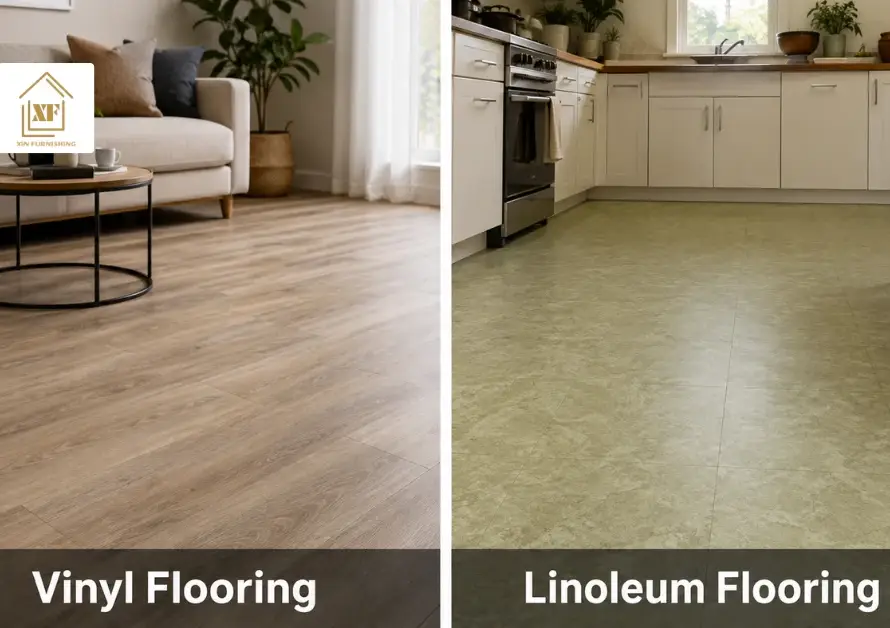
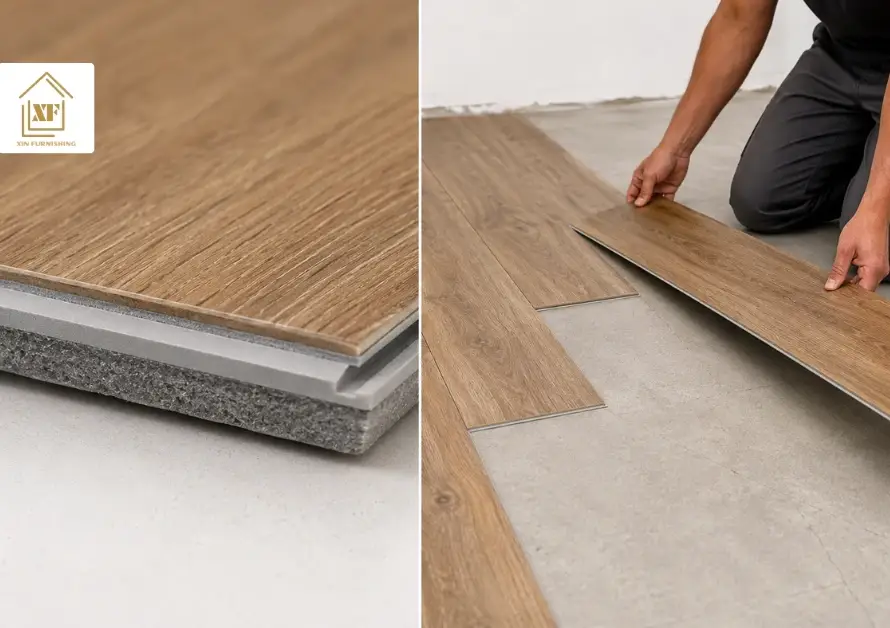
Vinyl vs laminate flooring costs about the same to install in Singapore. Vinyl runs around S$3.50 to S$8.00 per square foot, and laminate around S$3.00 to S$6.00, supply and installation included. The real cost gap shows up later. Laminate has a wood-fibre core that swells if water reaches it, and a swollen board must be replaced. Vinyl is PVC all the way through, so water cannot damage it.
Below, we compare both floors on price, lifespan, water, scratches, noise and looks, so you can pick the right one for your home in 2027.
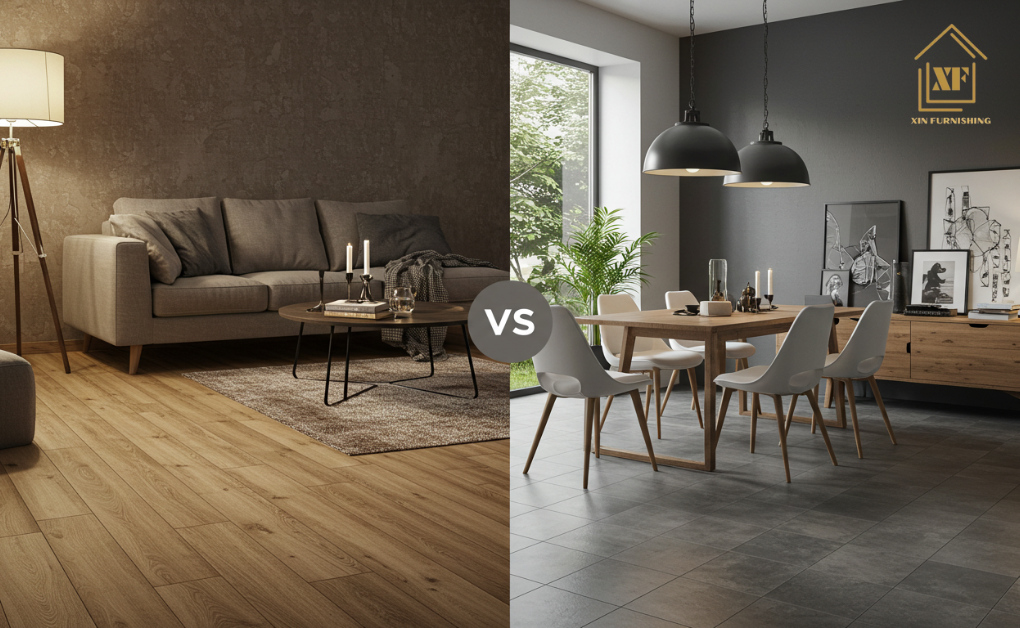
Vinyl Vs Laminate Flooring: Which Is Better
What is the difference between vinyl and laminate flooring?
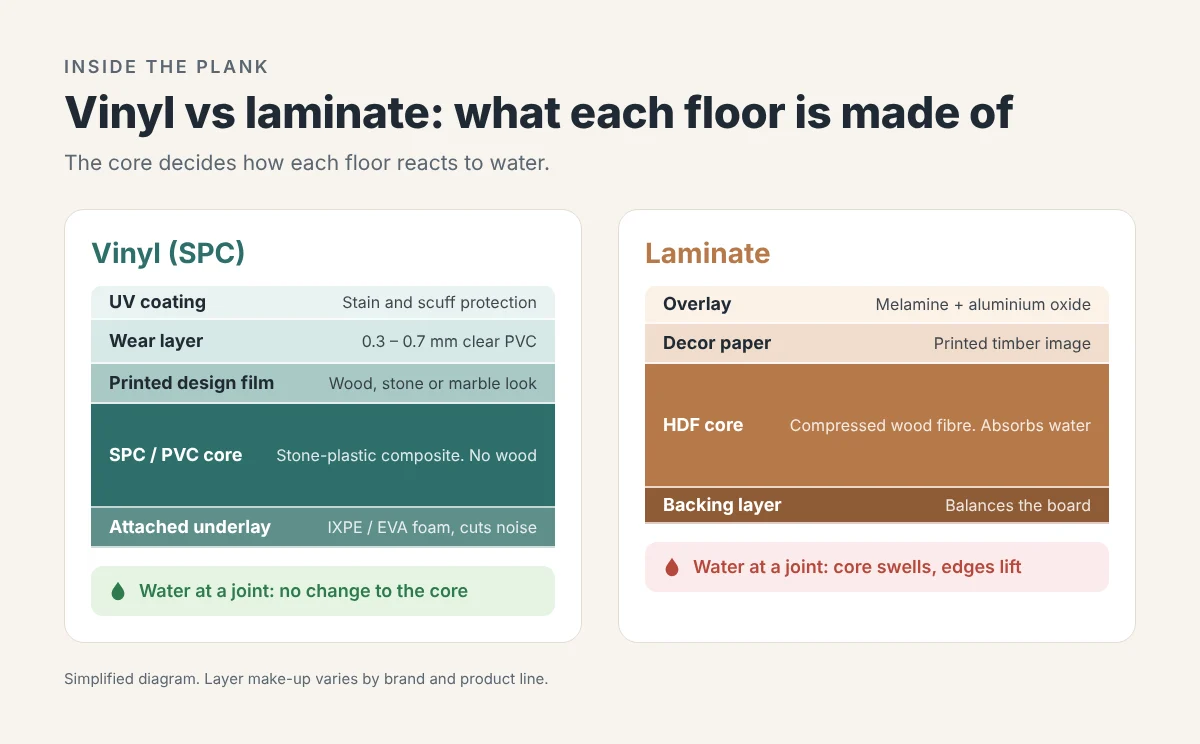
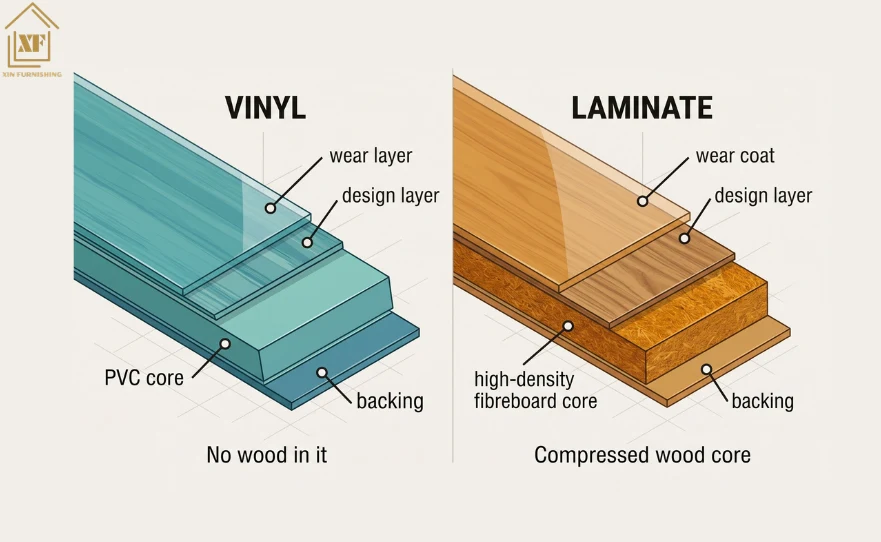
The difference is the core inside the plank. Laminate has a high-density fibreboard (HDF) core, which is compressed wood fibre, with a printed timber image and a hard clear coat on top. Vinyl has a PVC core, with a printed design layer and a clear wear layer on top. Both look like wood. Only one is affected by water.
- Laminate flooring is a wood-based floating floor that resists splashes on the surface but swells if water seeps into its joints.
- Vinyl flooring (LVT or SPC) is a plastic-based floor that is waterproof through the whole plank.
Every other difference in cost, lifespan and comfort follows from this. Our guide explains what vinyl flooring is and how its layers are built.
What are the pros and cons of vinyl vs laminate flooring?
Vinyl’s biggest strength is water resistance, and its main weakness is denting under heavy furniture. Laminate’s biggest strength is a hard, scratch-resistant surface at a low price, and its main weakness is water.
How much does vinyl vs laminate flooring cost per square foot in Singapore?
In Singapore, vinyl flooring costs about S$3.50 to S$8.00 per sq ft installed, and laminate about S$3.00 to S$6.00. Entry-level laminate is usually the cheapest option. Mid-range vinyl and mid-range laminate land close together once underlay, skirting and labour are added.
Figures are market estimates for 2026 to 2027 and change with brand, thickness and site conditions.
What drives the price up or down?
- Wear layer: Vinyl with a thicker wear layer (0.5 mm and above) costs more and lasts longer in busy rooms.
- Core type: Rigid SPC vinyl costs more than flexible LVT but hides small dips in the floor better.
- AC rating: Laminate rated AC4 or AC5 for heavy traffic costs more than AC3 home grade.
- Subfloor work: A bare BTO slab may need screeding first, adding roughly S$1,200 to S$2,200 depending on flat size.
See our full vinyl flooring cost guide for more detail.
How much does it cost to floor a whole HDB flat or condo?
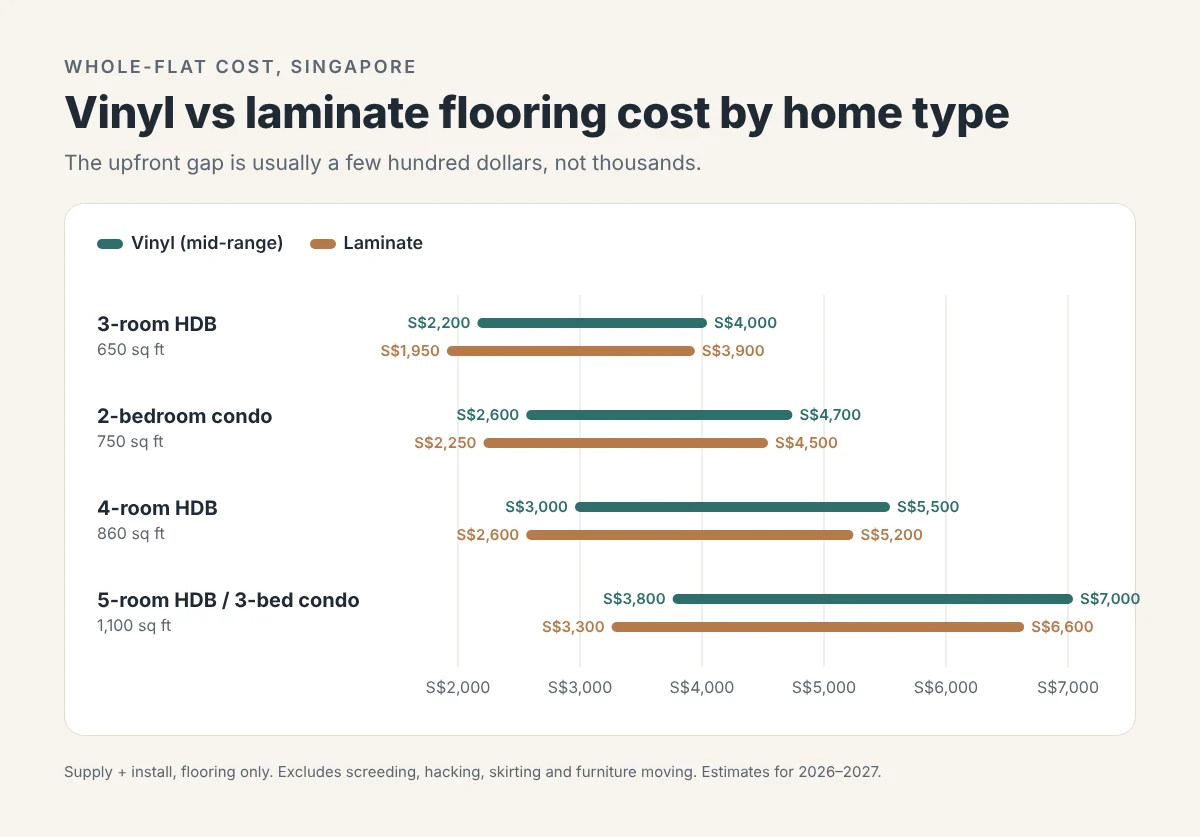
For a 4-room HDB flat of about 860 sq ft, vinyl costs roughly S$3,000 to S$5,500 and laminate roughly S$2,600 to S$5,200. The upfront gap for a whole flat is usually a few hundred dollars, not thousands.
Flooring only. Excludes screeding, hacking, skirting and furniture moving.
Which is cheaper over 10 years, vinyl or laminate?
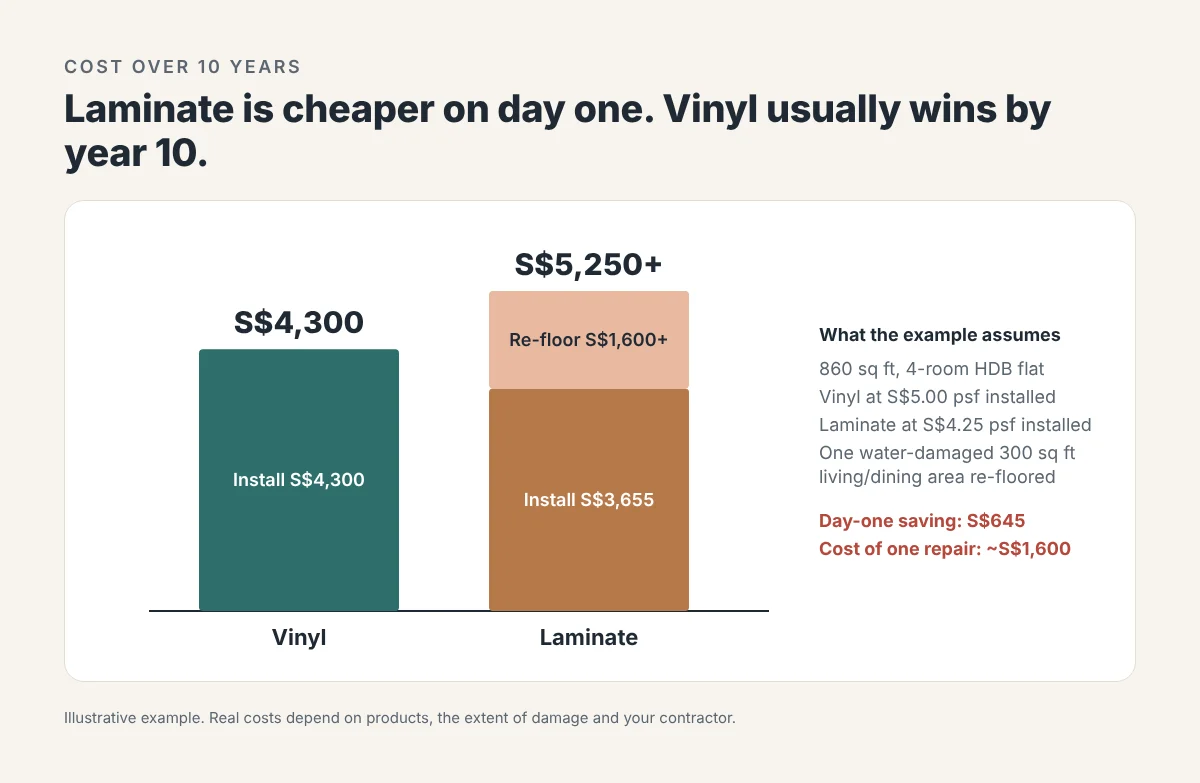
Vinyl is usually cheaper over 10 years. Laminate saves a little on day one, but a single water-damaged room means removal and re-flooring. That repair often costs more than the whole upfront saving. Vinyl in the same home is typically still in service after 10 to 15 years.
Here is a simple example for an 860 sq ft, 4-room HDB flat:
Illustrative only. Real figures depend on the products, the extent of damage and your contractor.
Is laminate flooring waterproof?
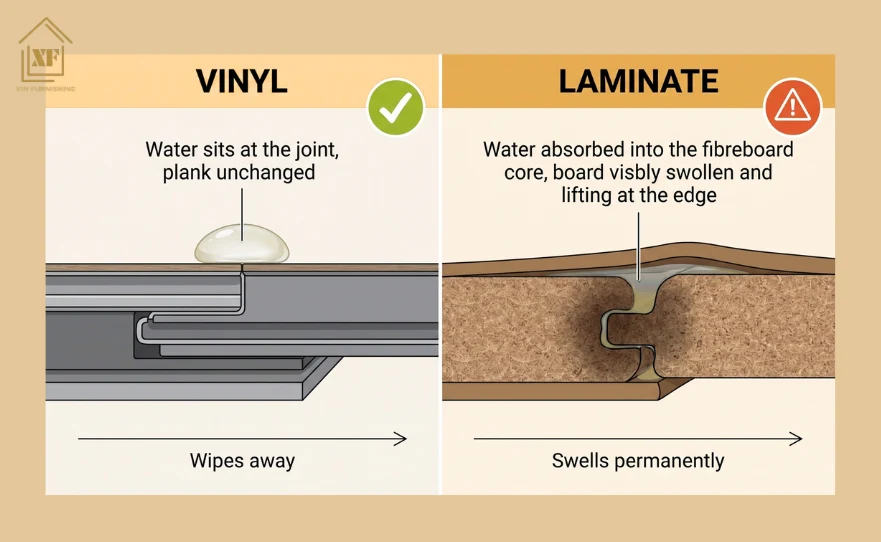
No. Most laminate is water-resistant on the surface only. A quick wipe-up is fine, but water that sits at a joint soaks into the fibreboard core. The board swells, the edges lift, and it does not go back down once dry.
Vinyl is waterproof through the entire plank. Daily mopping, a spill left overnight, or a dripping aircon unit does not change the material.
This matters in Singapore. Average relative humidity sits around 82%, based on Meteorological Service Singapore long-term data, and most homes are mopped every week. For most households, water is the factor that decides the comparison.
Which is more durable: vinyl or laminate?
Laminate resists scratches slightly better, while vinyl handles water, stains and spills far better. Laminate’s hard top coat suits homes with large dogs or rolling office chairs. Vinyl is softer, so very heavy furniture on small legs can dent it. Felt pads prevent most of this.
The bigger question is what happens after damage. A scratched vinyl plank still works and can be swapped on its own. A swollen laminate board is structural damage and must be replaced.
Which is quieter and more comfortable underfoot?
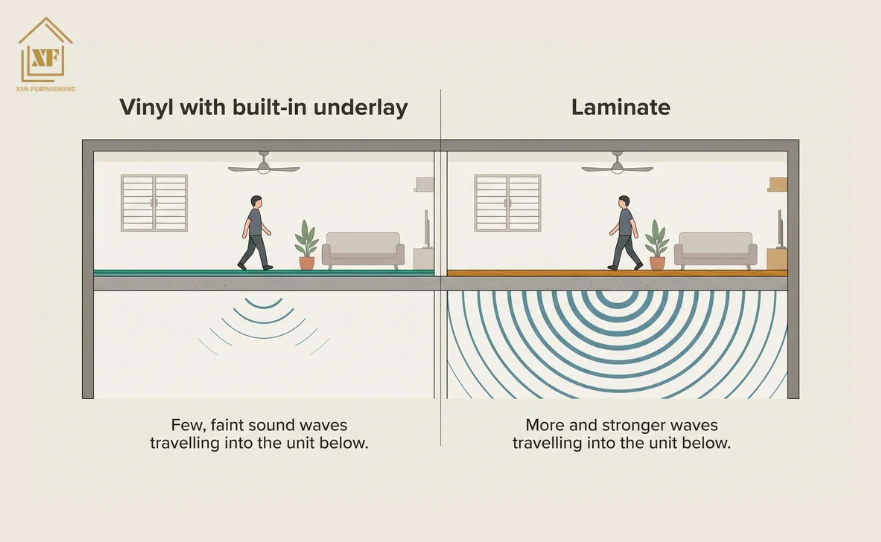
Vinyl is quieter and softer to walk on. It absorbs impact sound, while laminate’s hard surface reflects it and can sound hollow without a good underlay. In HDB flats and condos, footsteps carry to the unit below, and impact noise is a common neighbour complaint. Vinyl planks with a built-in underlay reduce this noticeably.
Which looks more like real wood?
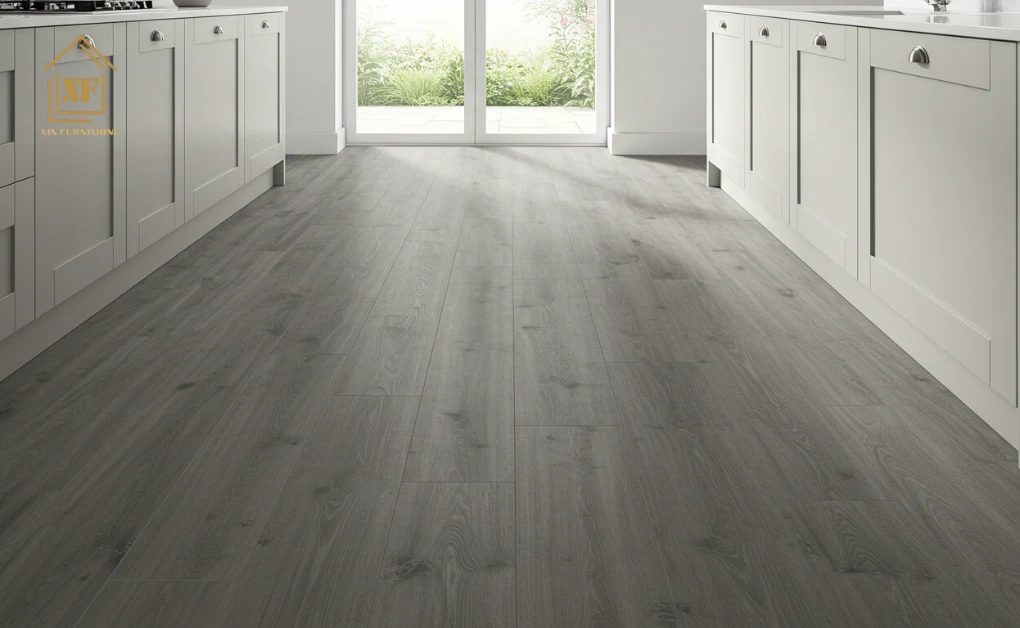
Both look very close to real timber from standing height. Laminate’s hard surface can hold a slightly crisper grain. Modern vinyl has closed most of that gap with embossed textures.
Vinyl also offers looks laminate cannot. You can choose stone vinyl flooring, marble, microcement and herringbone designs, in both tile and plank formats. Laminate is mostly limited to wood looks.
How do installation and repairs compare?
Both floors install the same way. They use click-lock planks laid as a floating floor, both can go over existing tiles without hacking, and a typical flat is done in one to two days. Our guide covers laying vinyl over existing tiles.
Repairs differ. Vinyl damage is usually cosmetic and limited to one plank. Laminate water damage often spreads along the joints, so a whole section may need to come up. Whichever you choose, keep a few spare planks from the same batch.
Vinyl or laminate: which should you pick for each room?
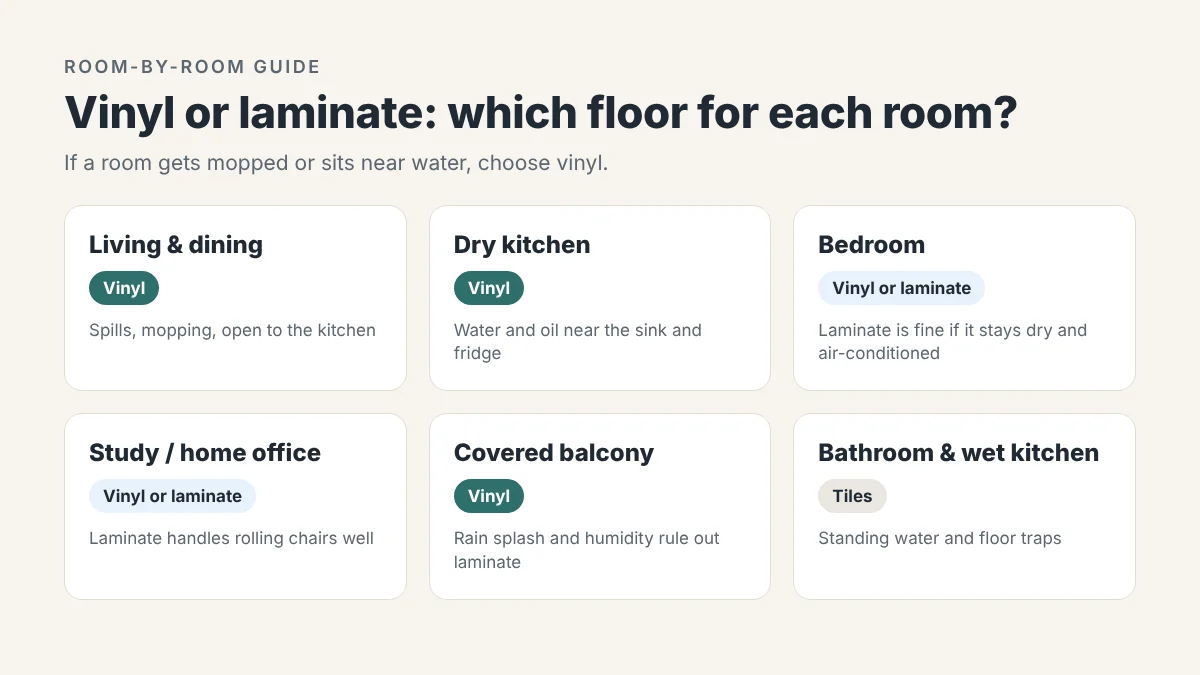
Pick vinyl for any room that gets mopped, spilled on or sits next to a wet area. Laminate only fits rooms that stay dry all year. Bathrooms should stay tiled, because they have a drainage slope and constant standing water.
When does laminate flooring still make sense?
Laminate is a fair choice in three cases:
- A dry bedroom or study, where you want a firmer floor and the lowest price.
- Homes with large dogs, where scratch resistance matters more than water resistance.
- A specific timber grain you have found in laminate and cannot match in vinyl.
Outside these cases, vinyl is the safer choice for a Singapore home.
Vinyl vs laminate flooring at a glance
Browse our full vinyl flooring range in wood, stone and microcement designs.
How can you tell if a floor is vinyl or laminate?
Look at a cut edge, for example at a skirting gap or aircon trunking cut-out. Laminate shows a brown, wood-fibre core. Vinyl shows a uniform plastic or stone-plastic core. Laminate also sounds harder and more hollow when you tap or walk on it.
Frequently asked questions
Is vinyl flooring cheaper than laminate in Singapore?
Not upfront. Laminate is usually S$0.50 to S$1.00 per sq ft cheaper to install. Over 10 years, vinyl is often cheaper, because it rarely needs replacing after water exposure.
Is vinyl better than laminate for Singapore homes?
For most rooms, yes. Vinyl is waterproof, quieter and easy to mop. Laminate’s fibreboard core can swell in Singapore’s humidity or after a spill.
Can I use laminate flooring in an HDB kitchen?
It is not recommended. Kitchens see regular spills and mopping, and water at the joints will swell laminate. Use vinyl in a dry kitchen and tiles in a wet kitchen.
Which lasts longer, vinyl or laminate?
Vinyl usually lasts longer in Singapore, around 10 to 15 years or more. Laminate often lasts 7 to 12 years in dry rooms, and much less if water reaches its core.
Is SPC flooring vinyl or laminate?
SPC (stone plastic composite) is a type of vinyl flooring. It has a rigid core made of limestone powder and PVC, so it is waterproof like other vinyl, unlike laminate.
Do termites attack laminate flooring?
Laminate’s core is wood fibre, so it can be at risk where termites are present. Vinyl’s PVC core gives termites nothing to feed on.
Can vinyl or laminate be installed over existing tiles?
Yes. Both can be laid as a floating floor over sound, fairly level tiles. This avoids hacking, saves cost and keeps dust and noise down.