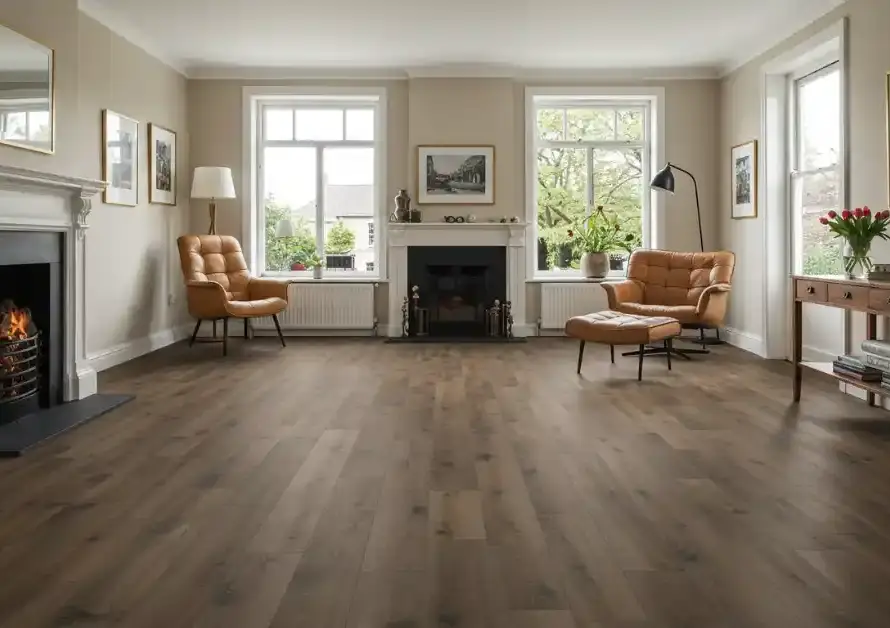
Yes, for most Singapore kitchens. It is waterproof, comfortable to stand on, and wipes clean, handling almost everything a kitchen throws at the floor.
Browse our complete vinyl flooring range for the best kitchen vinyl flooring ideas.
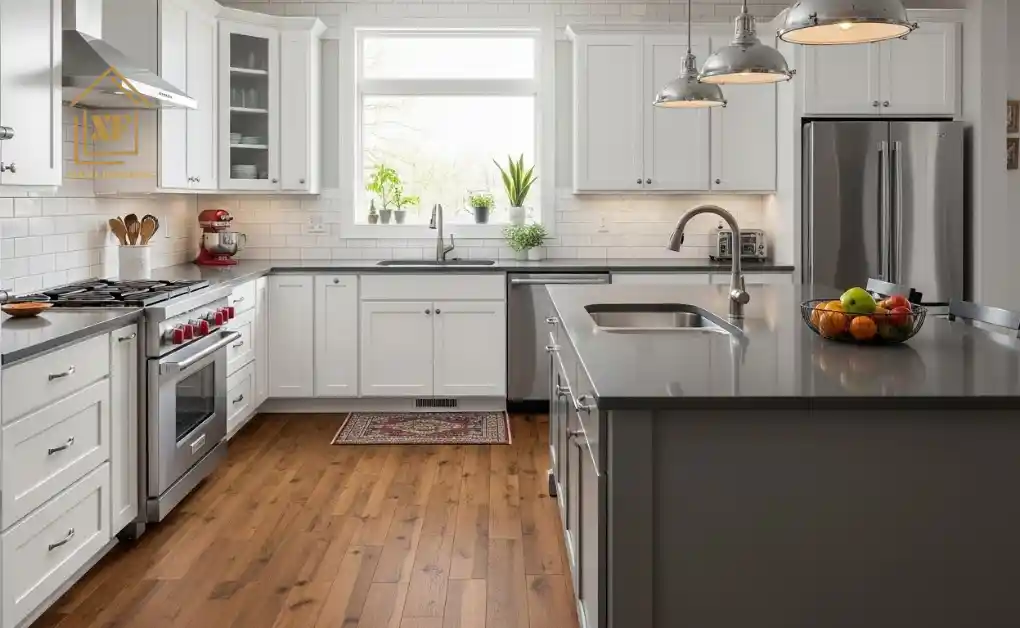
Is Vinyl Flooring Good for the Kitchen? Six Reasons Vinyl Suits A Kitchen
It is waterproof
A kitchen means spills, steam, and condensation, plus Singapore’s year-round humidity. Vinyl does not absorb any of it. Laminate swells at the joints and timber warps.
It is comfortable to stand on
Tile is hard and cold. Vinyl gives slightly underfoot, which you notice during a long cooking session.
Grease wipes off
The surface is non-porous, so cooking oil sits on top rather than soaking in. Mild dish soap and warm water clear it.
There is no grout
Kitchen tile grout darkens within a few years and never fully comes back. Vinyl has nothing to scrub.
It is quieter
Dropped utensils and dragged chairs carry to the unit below in a high-rise flat. Vinyl absorbs that; tile reflects it.
It grips when wet
Better than polished tile or stone, as long as you choose a matt finish rather than a glossy one.
Four Things Vinyl Does Badly In A Kitchen
Heavy cooking
Vinyl handles grease fine, but a decade of high heat and daily scrubbing wears it out faster than tile. If you cook with a wok most nights, tile the cooking zone.
Hot pans on the floor
Placing a tray straight from the oven on the surface can soften and mark it.
Heavy appliances
A fridge or oven on small feet can dent the plank. Load spreaders prevent it.
Properly wet areas
The service yard is the usual one. It holds the washing machine, the floor gets genuinely wet rather than splashed, and it should be tiled.
None of these rules out vinyl in a normal kitchen. They just tell you where the line is.
Vinyl, Tile, Or Both: Which Suits Your Kitchen
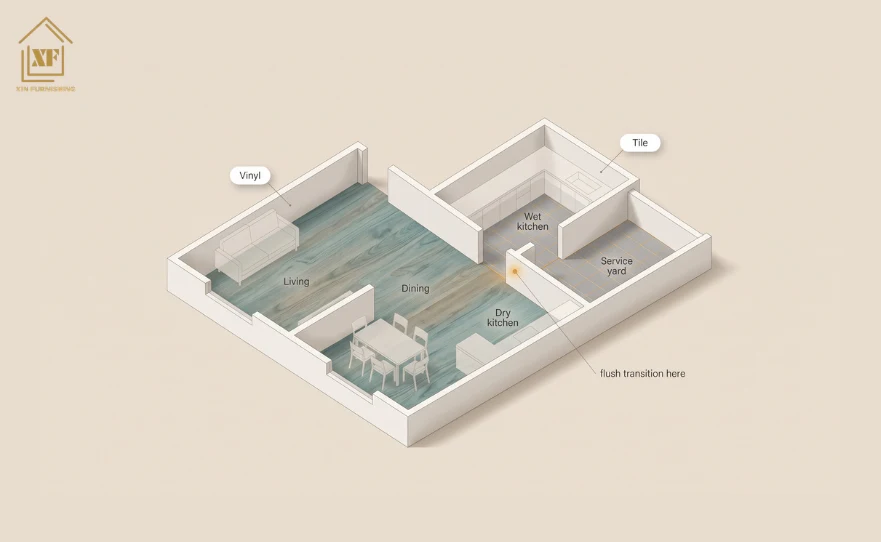
Many Singapore homes split the two: a dry kitchen for prep and light cooking, often open to the dining area, and an enclosed wet kitchen for heavy cooking and washing. Your layout changes the answer.
Choose vinyl if you have a dry kitchen or a normal mixed-use one, cook regularly but not intensively, want the floor to run through from the living area, or want the job done in a day without hacking.
Choose tile if you cook with a wok on high heat most nights, have a separate wet kitchen, or want the hardest surface available regardless of comfort.
Do both if your home has a dry/wet split. Use vinyl through the dry side and living areas, and tile in the wet kitchen and service yard, with a flush transition at the doorway.
The one specification that decides it: wear layer
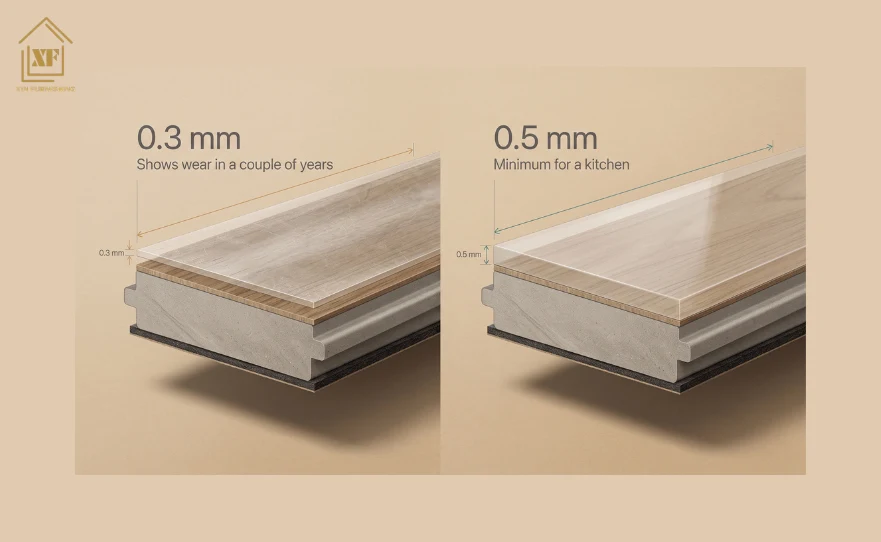
If vinyl is the answer, the wear layer determines whether it will still look good in five years.
General residential vinyl is often sold with a 0.3 mm wear layer. A kitchen is the hardest-working floor in the home, and 0.3 mm shows traffic paths within a couple of years. Ask for at least 0.5 mm, and choose a matt finish rather than gloss.
Everything else is preference. That one figure is not.
What Vinyl Costs In A Kitchen, Against Tile
Vinyl in a kitchen costs the same as anywhere else in the home: roughly S$3.50 to S$8.00 per square foot supplied and installed. A typical HDB kitchen of 70 to 90 square feet comes to around S$250 to S$700.
Tile runs S$6.00 to S$12.00 per square foot, plus hacking and disposal. Our vinyl flooring cost guide has the full breakdown.
Frequently Asked Questions
Is vinyl flooring waterproof enough for a kitchen?
Yes. The surface is waterproof, so spills, splashes, and mopping won’t cause damage. Still, avoid water standing at the joints for hours, which is why wet kitchens and service yards are better tiled.
Can I lay vinyl over my existing kitchen tiles?
Usually yes, if they are sound and reasonably level. That is the standard approach in a resale flat, and it avoids hacking entirely. Our guide covers laying vinyl over existing tiles.
Does cooking grease stain vinyl?
No. The surface is non-porous, so grease sits on top. It builds up gradually near the stove, and warm water with mild dish soap clears it.
Can you put a fridge on vinyl plank flooring?
Yes, with load spreaders under the feet. Lift it rather than dragging it.
How long does vinyl last in a kitchen?
10 to 20 years with a 0.5 mm wear layer and normal cooking. A thinner wear layer will show wear far sooner.
Is vinyl or tile better for a Singapore kitchen?
Vinyl is better for most homes because it’s comfortable, quiet, fast, and affordable. Tile if you cook heavily with a wok or have a separate wet kitchen.
Is vinyl slippery in a kitchen?
Less than polished tile or stone. A matt finish grips noticeably better than a glossy one, wet or dry.
Can I use vinyl in the kitchen and tile elsewhere?
Yes, and many homes do it the other way around too: vinyl through the living areas and a dry kitchen, and tile in the wet kitchen. Keep the heights close so the transition sits flush.