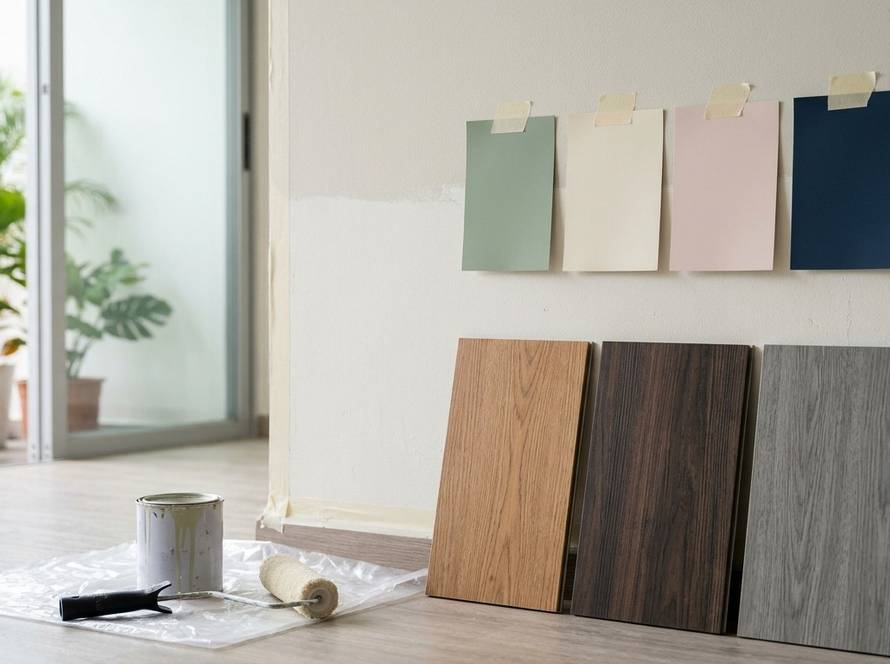
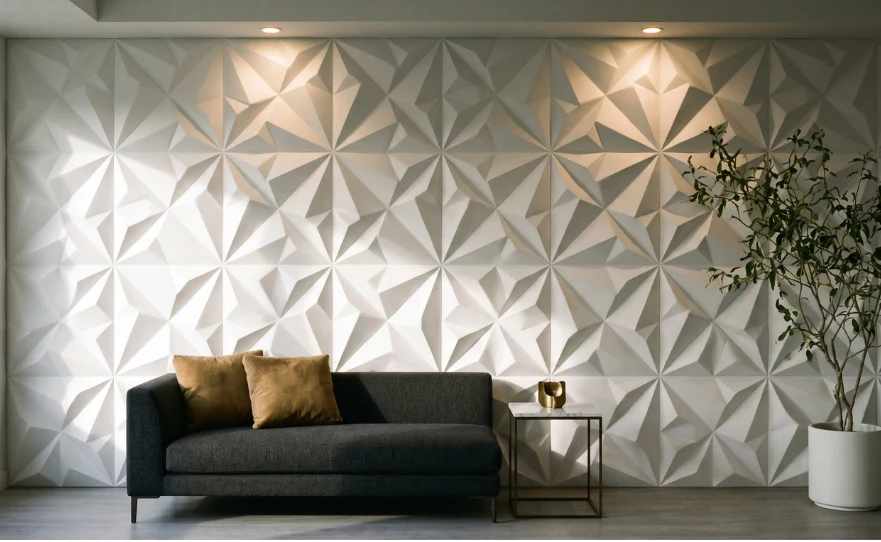
Choose your vinyl flooring colour in this order: room light first, then undertone, then how much dirt you are willing to see. Light to mid tones are the safest choice for most Singapore homes, and the colour chart below shows where each shade works and where it does not.
This guide covers vinyl flooring colours across wood, stone, and concrete looks; how to read an undertone; which shades suit HDB flats and condos; and how to test a sample properly before you order.
How To Choose Vinyl Flooring Colours IN SINGAPORE
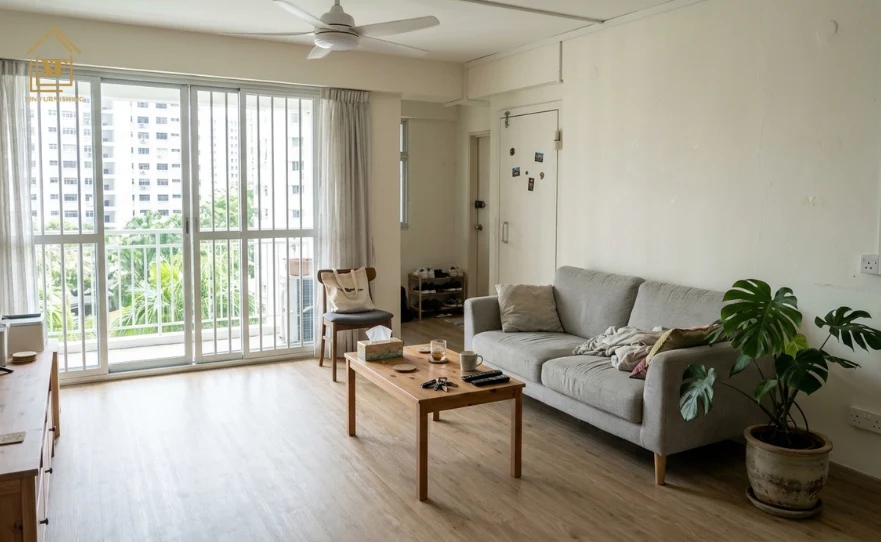
Four questions decide almost every colour choice.
How much natural light does the room get? A north-facing HDB bedroom with one window behaves very differently from a corner unit with floor-to-ceiling glass. Dark floors in a dim room make it feel smaller. Light floors in a bright room can look washed out.
How big is the space? Light floors make a compact flat feel larger. Dark floors need room to carry them.
What is already in the room? Furniture, walls, doors and kitchen cabinets are fixed or expensive to change. The floor should work with them, not fight them.
How much visible dirt can you live with? Every colour shows something. Dark floors show dust and footprints. Very light floors show dirt and scuffs. Mid tones hide the most.
How Lighting Changes Vinyl Flooring Colour
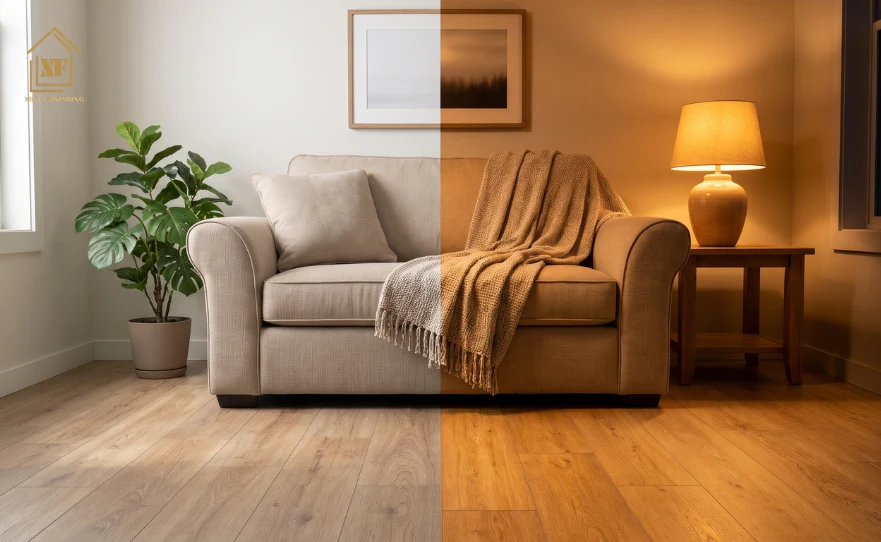
The same floor can look like three different colours in one day.
Daylight: In a room with strong direct sun, pale floors can look washed out and show undertones you did not see in the showroom. In a dim room, the same floor can look flatter and greyer.
Evening light: Warm LED bulbs bring out yellow and red tones. Cool white bulbs bring out blue and grey tones. A greige that looks perfect at noon can look pink or green at night.
Finish: A matt finish diffuses light softly and hides marks. Gloss reflects more light and brightens a dark room, but it shows scuffs and footprints.
Sun exposure: Prolonged direct sun can fade any printed floor over time. Curtains or blinds on west-facing windows help.
The practical fix is to test a large sample at home, in both daylight and your evening lighting, before you decide.
Vinyl Flooring Colour Chart
This chart groups the shades in our current range by colour family. Tones shift between ranges and under different lighting, so always judge the actual sample. Browse the full Wood Series 5mm, Wood Series 6.5mm, Stone Series and microcement series.
Light Vinyl Flooring Colours
Light oak, whitewashed wood and pale grey brighten a room and make it feel larger. That is useful in an HDB flat where natural light is limited, and floor area is tight.
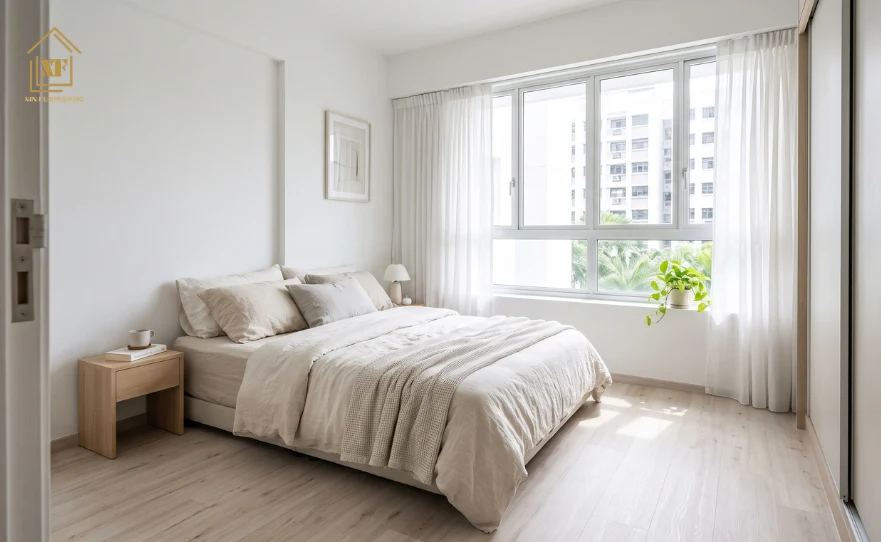
They also suit minimalist and Scandinavian schemes, where the floor is meant to recede rather than lead.
The trade-off is maintenance. Light floors show scuffs, grit, and spilt drinks sooner than mid-tones. If you have young children or pets, pick a light shade with a soft grain or texture, because pattern hides marks better than a plain surface.
Mid-Tone Vinyl Flooring Colours
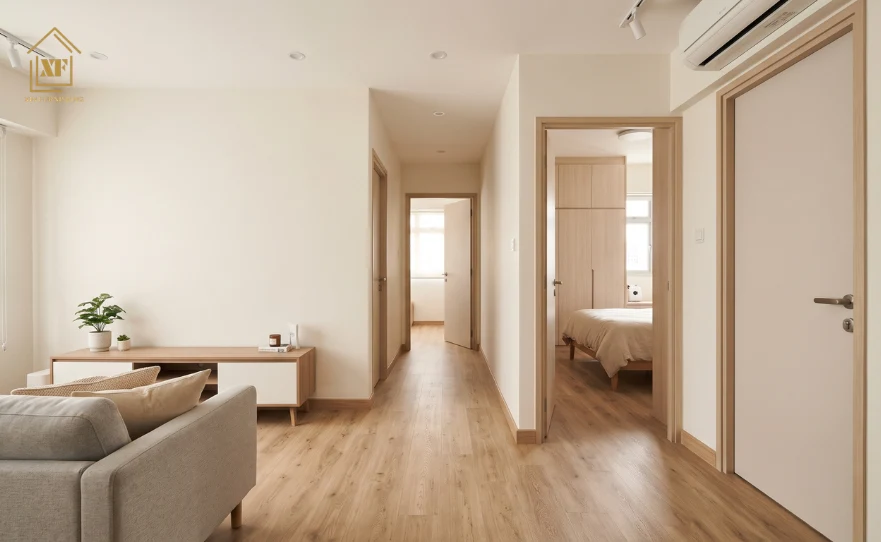
Mid-tone timber and warm greige are the most forgiving choices. They hide dust, hair and footprints, and they pair with almost any wall colour and furniture.
If you are unsure, start here. A mid-tone floor rarely looks wrong, and it is the easiest to match when you change furniture later.
Dark Vinyl Flooring Colours
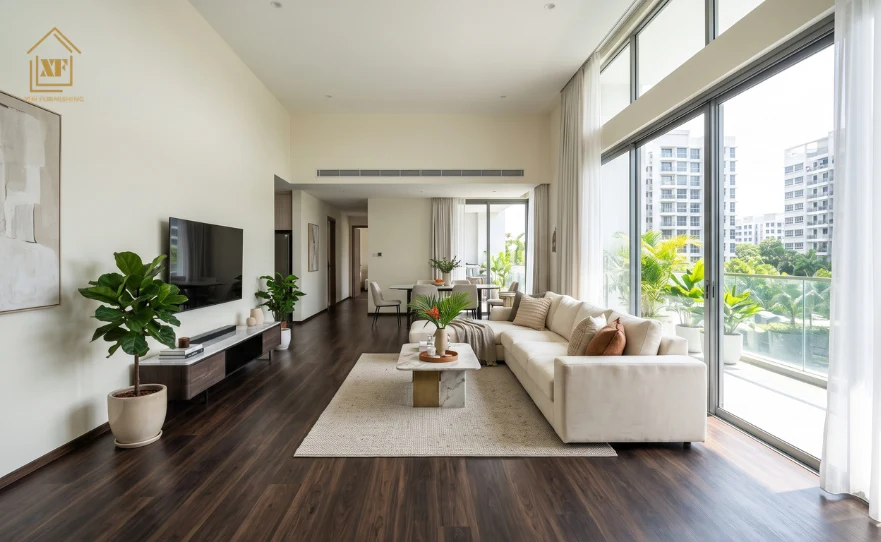
Dark walnut and deep charcoal look dramatic and expensive, and they ground a large living space well.
They need the right room. In a small or dim flat, a dark floor absorbs light and makes the space feel smaller. They also show dust and footprints more than any other colour, so expect to sweep more often.
If you want a dark look, keep walls and ceilings light, and use matt finishes. Gloss on a dark floor shows every mark.
Warm Vs Cool Undertones
Undertone is the hidden colour under the shade. Two greys can look nothing alike on the same wall.
Warm undertones lean yellow, red or beige. They suit timber furniture, cream walls and warm lighting.
Cool undertones lean blue or green. They suit white walls, modern furniture and cool daylight bulbs.
The simple rule is to match undertone to what is already in the room. A cool grey floor against warm timber furniture and cream walls looks disconnected, even when each piece looks good alone.
Lighting changes undertone too. A floor that looks neutral under showroom lights can look greener under warm home lighting, which is why a home sample test matters.
Matching Vinyl Flooring To Walls, Furniture And Cabinets
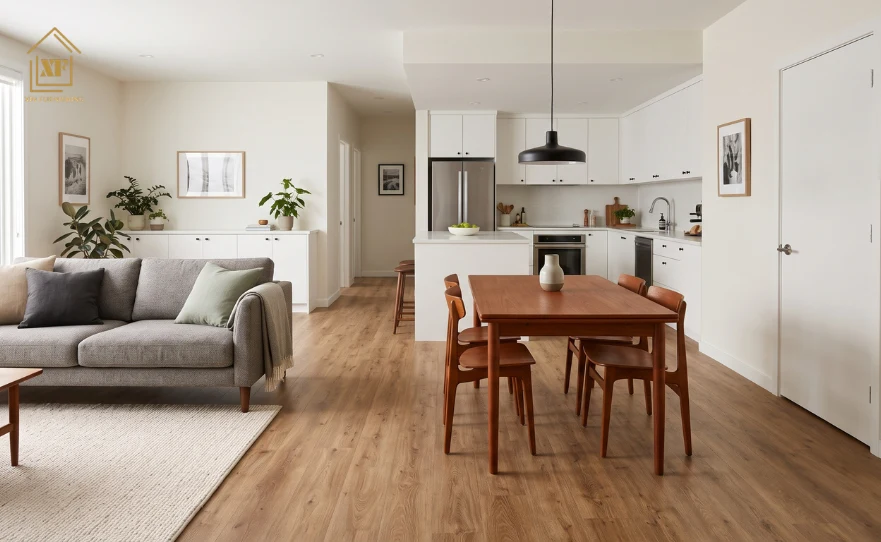
Lighter or darker than the walls? Usually a few shades darker, so the room feels grounded. A floor lighter than the walls can make a room feel taller and airier. What matters is a clear difference between the two, so the room does not look flat.
Sofa and large furniture: A lighter floor under your sofa feels open and airy. A darker floor adds drama and frames the seating area.
Timber furniture: Match undertones. Warm teak or oak furniture suits a warm-toned floor. A cool grey floor next to it can look disconnected.
Kitchen cabinets and doors: Check the floor against cabinet and door colours in the same light. White cabinets work with almost any floor. Dark or wood-tone cabinets need a floor that is clearly lighter or clearly different, not a near match.
Plank direction: Laying planks parallel to the longest wall, or toward the main window, makes a room feel longer. Straight lay is the cleanest choice for a compact flat.
Best Vinyl Flooring Colours By Interior Style
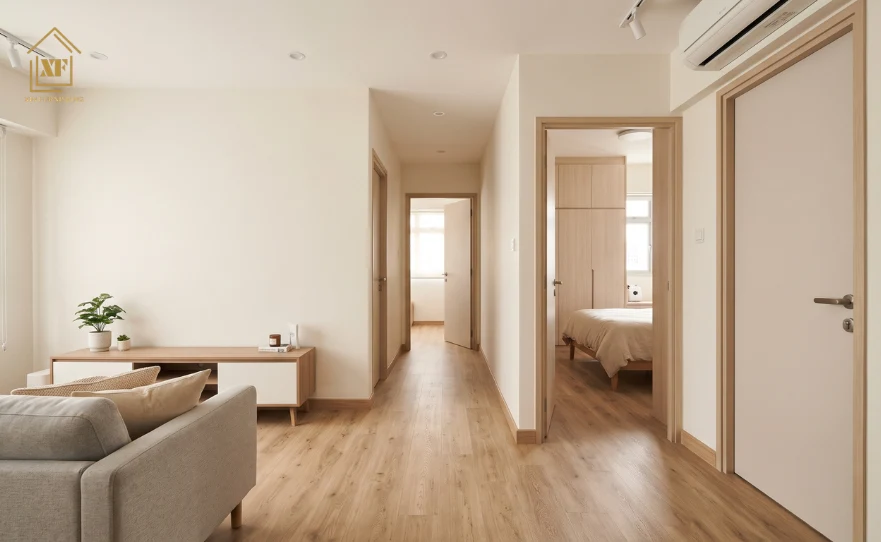
Japandi: Matt pale ash, light oak and soft greige. Warm, quiet tones with a subtle grain.
Scandinavian and Muji: Light oak, whitewashed wood and pale ash. Keep walls white or off-white.
Modern minimalist: Light grey, greige or fine-grained pale wood. Uniform designs with an even grain work better than rustic knots.
Industrial: Concrete-look grey or dark charcoal. Our microcement effect vinyl flooring guide covers this look in detail.
Contemporary: A versatile mid-tone wood is a safe base that suits most colour schemes.
Modern luxe: Deep walnut or white-and-grey marble looks, with matt or satin finishes.
Coastal: Whitewashed oak and sand tones, with plenty of daylight.
How To Test A Colour Before You Buy
- Get a large sample. A postcard-sized chip tells you very little, especially for stone and concrete looks.
- Look at it in daylight and in the evening. The same colour can shift a lot between the two.
- Place it next to your furniture, walls and cabinets. Judge it in the room, not in isolation.
- Check the finish. Matt hides marks better than gloss.
- Check the wear layer. We recommend at least 0.5 mm. On a plain light or dark colour, wear shows sooner. Our guide explains how to assess vinyl flooring quality.
- Ask how many unique faces the design has. More faces mean less obvious repeats, which matters most on plain colours.
Vinyl Flooring Colours And Cost
Vinyl runs S$3.50 to S$8.00 per square foot supplied and installed. Our vinyl flooring cost guide breaks down what affects the final price.
Common Colour Mistakes
- Choosing from a small sample under showroom lighting only
- Picking a dark floor for a small, dim flat
- Ignoring undertone and matching only the shade
- Choosing gloss when matt would hide marks better
- Buying a very light plain colour with a thin wear layer
Caring For Light And Dark Floors
Both need regular sweeping because grit wears down any floor. Mop with a damp cloth and a pH-neutral cleaner, and use less cleaner on dark or matt floors because residue shows. See our guides on cleaning vinyl floors and the best cleaning products for vinyl floors.
Frequently ASKED QUESTIONS
What is the most popular vinyl flooring colour in Singapore?
Light to mid-tone timber and light grey are the most common choices for HDB flats and condos, because they suit compact layouts and work with most furniture.
What vinyl flooring colour makes a small room look bigger?
Light oak, whitewashed wood and light grey. Running the same floor through adjoining rooms extends the effect.
Does dark vinyl flooring show dust?
Yes. Dark floors show dust, hair and footprints more than mid tones. A matt finish and regular sweeping help.
Do light vinyl floors stain easily?
They show scuffs and spills sooner, but vinyl itself is waterproof and easy to clean. A textured grain hides marks better than a plain surface.
Should vinyl flooring be lighter or darker than the walls?
Usually darker, so the room feels grounded. A floor that matches the walls can make a room feel flat.
How do I choose between warm and cool tones?
Match what is already in the room. Warm timber furniture and cream walls suit warm floors. White walls and modern furniture suit cool greys.
Does colour affect the price of vinyl flooring?
Vinyl runs S$3.50 to S$8.00 per square foot supplied and installed. The wear layer, thickness, and range usually matter more than the shade you pick.
Can I see the colours before I order?
Yes. Visit our Woodlands showroom or WhatsApp +65 9690 2060, and ask for a large sample to test at home in daylight and evening light.
Is grey vinyl flooring going out of style?
No. Grey has stayed popular because it is neutral and works with many colour schemes. The key is choosing the right undertone, warm greige or cool grey, to match your walls and furniture.
What are the best vinyl flooring colours for a BTO or rental unit?
Light to mid-tone neutrals such as light oak, ash and greige. They suit most furniture, open up a compact layout and are easy to live with for years.