Walk into most well-run commercial spaces in Singapore, and you’ll notice the floor without really thinking about it, it just looks right, clean, and consistent, even after years of use. That doesn’t happen by accident. It’s the result of choosing flooring designed for the environment it’s working in.
Commercial vinyl flooring in Singapore has earned its place as the dominant choice across retail outlets, restaurants, offices, and clinics because it handles the city’s heat, humidity, and long operating hours better than most alternatives, without the price tag or upkeep of stone, timber, or tile. But vinyl is a broad category, and specifying the wrong product for your space is a costly and entirely avoidable mistake. This guide covers what you actually need to know before making that decision.
Why Commercial Vinyl Flooring Works in Singapore
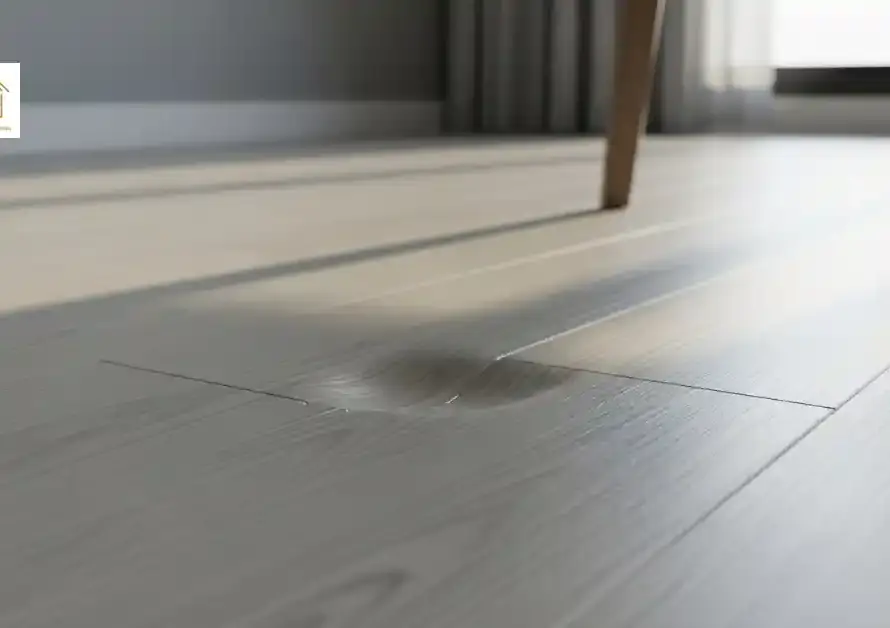
Singapore’s climate creates flooring challenges that are easy to underestimate. Humidity often sits between 70% and 90%, daily temperature swings from air-conditioning cycles stress materials, and moving from hot outdoors to cool interiors can cause warping in moisture-sensitive floors. Add long operating hours, heavy foot traffic, and frequent cleaning, and the specification bar gets high quickly.
Commercial vinyl clears it. Key advantages in Singapore include:
- Fully waterproof construction, no swelling, warping, or mould from moisture exposure
- Dimensional stability through temperature and humidity changes that would buckle timber or laminate
- Resistance to harsh cleaning chemicals used in F&B, retail, and healthcare spaces
- Slip-resistant surfaces that meet BCA and SCDF compliance requirements
- Lower installation cost than stone, hardwood, or porcelain, with faster turnaround
These aren’t just marginal benefits. In practice, they mean a durable vinyl flooring solution that stays looking great longer, requires less maintenance, and avoids premature replacement.
Types of Commercial Vinyl Flooring: Which One Fits Your Space?
LVT and SPC Vinyl Flooring — The Standard for Most Commercial Spaces
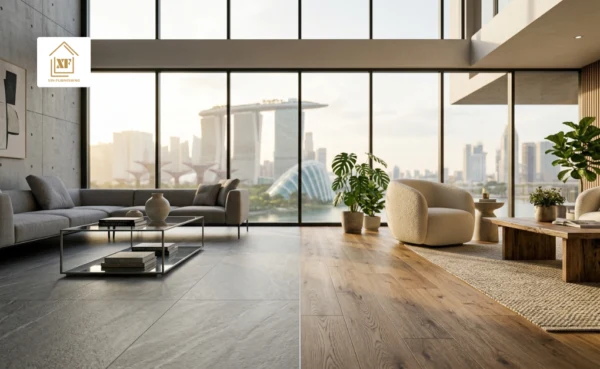
Luxury Vinyl Tile (LVT) and Stone Plastic Composite (SPC) are the most widely used commercial vinyl formats in Singapore. Both replicate the look of stone or timber, including popular wood vinyl flooring finishes, through multi-layer construction, including a wear layer, a printed design, a core, and a backing. They differ, however, in one key way.
SPC features a rigid limestone-powder core, making it far more dimensionally stable than standard LVT. In air-conditioned commercial buildings, where indoor cooling meets the humidity of outdoor conditions, SPC prevents the movement, edge lifting, and gapping that flexible vinyl can develop over time. For most commercial fitouts, SPC is the safer default choice.
The most critical specification for both formats is wear layer thickness:
- 0.3mm — Light commercial: private offices, meeting rooms, low-traffic zones
- 0.5mm — Standard commercial: retail outlets, F&B, medical clinics, co-working spaces
- 0.7mm+ — Heavy commercial: mall frontage, hotel lobbies, high-traffic corridors
Underspecifying the wear layer is the most common and most expensive mistake in commercial vinyl selection. A 0.3mm floor in a busy retail environment will start showing wear within 12–18 months. Matching the wear layer to your actual traffic levels is non-negotiable if you want your floor to last.
Sheet Vinyl — For Hygiene-Critical Environments
Unlike LVT and SPC, which come in tiles or planks with seams, sheet vinyl is installed as a continuous roll, creating a fully seamless surface. This makes it ideal for healthcare facilities, commercial kitchens, and childcare centres, where grout lines or joins can trap bacteria, moisture, and food debris.
In spaces subject to Singapore’s healthcare or F&B hygiene regulations, sheet vinyl often ensures compliance. For front-of-house or customer-facing areas, SPC or LVT is typically paired with sheet vinyl in service zones to balance aesthetics and hygiene.
Matching Vinyl to Your Business Type
1. Retail
Retail flooring needs to handle sustained customer traffic while maintaining a professional appearance that reflects the brand. LVT or SPC at 0.5mm to 0.7mm wear layer is standard, with the higher specification recommended for entrance zones and checkout areas where traffic concentrates. SPC flooring in Singapore’s larger retail units is particularly well-suited due to its rigidity, which reduces the risk of movement or gapping across wide floor spans.
2. F&B Outlets and Restaurants
Spills, grease, and frequent cleaning with strong agents make F&B one of the more demanding commercial environments for flooring. Slip resistance is a compliance requirement here; front-of-house areas should meet a minimum R10 rating, and service corridors benefit from sheet vinyl for hygiene. Any vinyl specified for F&B use should be verified as compatible with your cleaning agents and cleaning frequency before purchase.
3. Offices and Co-Working Spaces
Office environments prioritise appearance, acoustic comfort, and durability under chair castors. LVT with an acoustic backing layer performs well in open-plan offices in Singapore’s multi-storey commercial buildings, reducing impact noise transmitted to floors below. A 0.5mm wear layer is appropriate for most offices; co-working spaces with public access and higher traffic should move toward 0.7mm. Soft polyurethane castors on task chairs significantly extend wear layer life at desk positions.
4. Healthcare and Medical Clinics
For clinical areas, sheet vinyl’s seamless surface is the standard. For waiting areas and corridors in private clinics, SPC with a smooth, easy-clean surface and low-VOC certification is appropriate and visually more versatile. Verify that any product specified for healthcare use carries relevant hygiene certifications and meets Singapore’s indoor air quality requirements.
Singapore Compliance: What to Verify Before You Buy
Commercial flooring in Singapore must meet regulations that vary by sector. Before purchasing, confirm the following:
- Slip resistance: Minimum Pendulum Test Value (PTV) of 36 for general commercial areas. Wet zones, restrooms, kitchens, and outdoor areas adjacent to buildings require R10–R11 per DIN 51130. Always request the product’s test certificate, not just brochure claims.
- Fire safety: SCDF requires Class B1 or equivalent fire rating for commercial buildings. Ask for a Certificate of Conformity from an accredited testing laboratory before specifying any product.
- Indoor air quality: For BCA Green Mark projects, healthcare, or childcare environments, choose products with FloorScore or Singapore Green Label certification and confirmed low-VOC emissions.
Installation: Three Factors That Determine Long-Term Performance
1. Test for Moisture Before Anything Else
Moisture rising through a concrete slab is the main cause of edge lifting and adhesive failure in Singapore commercial projects, and it’s entirely preventable. The slab’s surface relative humidity should be below 75% before installation. Ground-floor units and older buildings are particularly vulnerable. If the moisture is too high, apply a moisture barrier first. Skipping this step is the most common reason commercial vinyl fails early.
2. Level the Substrate Properly
Vinyl needs a flat, clean surface with no more than 3mm variation over 1.8 metres. Dips, lumps, or cracks must be levelled with a floor compound. Any unevenness will show underfoot and cause uneven wear.
3. Choose the Right Installation Method
A floating installation clicks boards together over the substrate, is faster, and allows easier repairs. It’s suitable for lighter commercial use and for spaces that need flexibility. Glue-down adheres boards directly, providing more stability under heavy loads and high traffic. For spaces over 150sqm, healthcare environments, or areas with wheeled equipment, glue-down is the more reliable long-term method.
Conclusion
Commercial vinyl flooring rewards businesses that take specification seriously, and it shows up quickly on those that don’t. A floor that was correctly matched to its environment from day one will still be performing a decade later with minimal fuss. One that wasn’t will make itself known within the first year or two.
The decisions that matter most aren’t complicated: wear layer thickness, product format, moisture preparation, and the right installation method. Get those aligned with your actual space and operating conditions, and the floor takes care of itself.
If you’re not sure where to start, a site assessment with an experienced commercial vinyl specialist costs nothing and removes most of the guesswork before a single tile is ordered
Ready to find the right floor for your business? Explore our vinyl flooring in Singapore and get expert advice before you commit.
Frequently Asked Questions
1. Can vinyl flooring be installed over existing tiles without hacking?
Yes. SPC vinyl can be installed as a floating floor over existing ceramic tiles, provided they are flat, firmly bonded, and crack-free. The added floor height of 4–6mm needs to be accounted for at door thresholds and transitions to adjacent flooring areas.
2. How long does commercial vinyl flooring last in Singapore?
A correctly specified commercial vinyl floor with a 0.5mm or thicker wear layer typically lasts 10–15 years under standard commercial use. Proper cleaning practices, especially the products and equipment used, have a meaningful impact on how well the surface holds up over that period.
3. What does commercial vinyl flooring cost to install in Singapore?
Installed costs generally range from SGD 3.50 to SGD 8.00 per square foot for standard commercial LVT and from SGD 6.00 to SGD 12.00 per square foot for premium SPC with a 0.7mm wear layer. Project scale, floor preparation requirements, and product specification all affect the final figure.
4. What cleaning products are safe for commercial vinyl?
A pH-neutral commercial floor cleaner, when used with a damp mop, covers most routine cleaning needs. Avoid steam mops; the heat degrades the wear layer over time. Solvent-based cleaners and abrasive pads should also be avoided. Entrance mats at all external access points are among the most effective ways to reduce grit abrasion, the primary cause of surface wear.
5. Is commercial vinyl flooring suitable for outdoor areas?
Standard commercial vinyl is designed for indoor use only. UV exposure and surface temperatures in Singapore’s outdoor environment will degrade both the wear layer and the print layer over time. Specialist UV-resistant products are available for covered or semi-outdoor areas. Confirm outdoor suitability explicitly with your supplier before specifying.