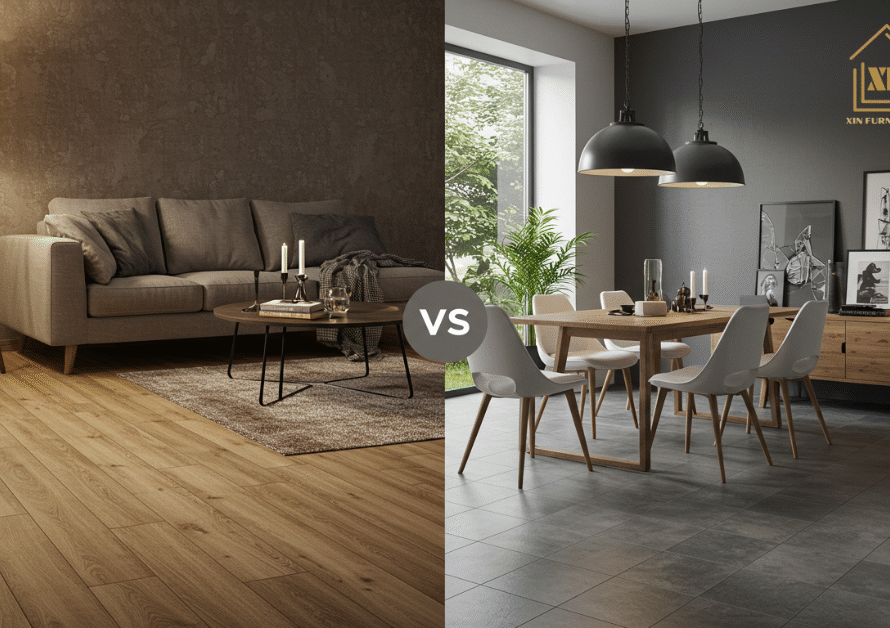
Ask three flooring suppliers what LVT is, and you may get three different answers. One will say it has a flexible core. Another will describe a rigid one. A third will use LVT and SPC interchangeably, or LVT and LVP. That matters when you are comparing quotes, because you may not be comparing the same product at all.
This guide explains what LVT is and what most guides skip: how it holds up in a Singapore flat once installed.
What Is LVT Flooring?
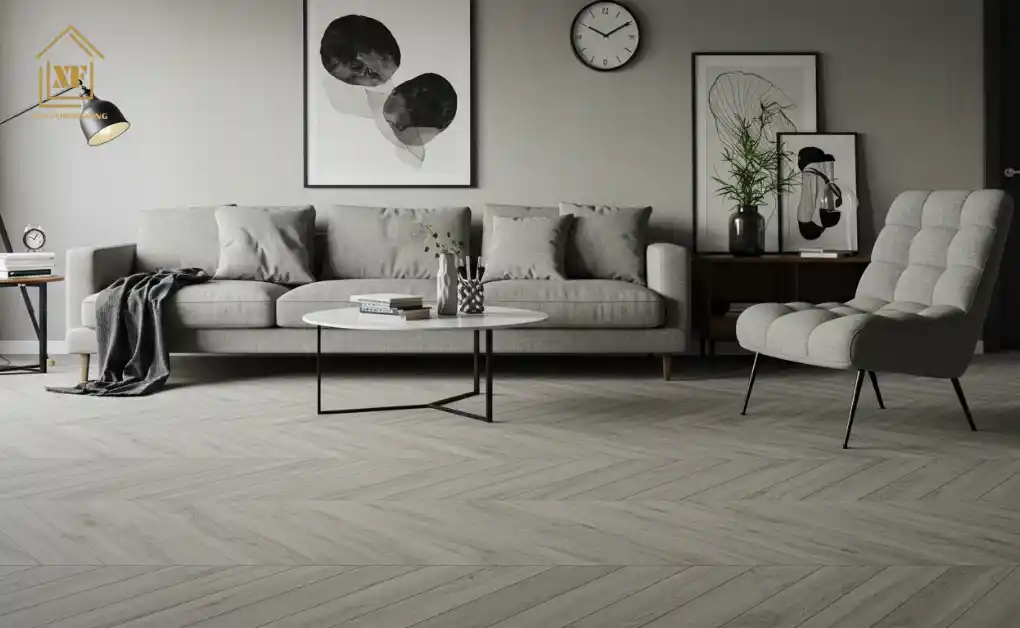
LVT stands for luxury vinyl tile. It is a multi-layer floor made from PVC, with a printed design layer that reproduces wood, stone or concrete, and a clear wear layer on top that takes the daily wear.
What separates LVT from other vinyl is its flexible core. That flexibility makes it softer, warmer, and quieter underfoot than a rigid-core floor.
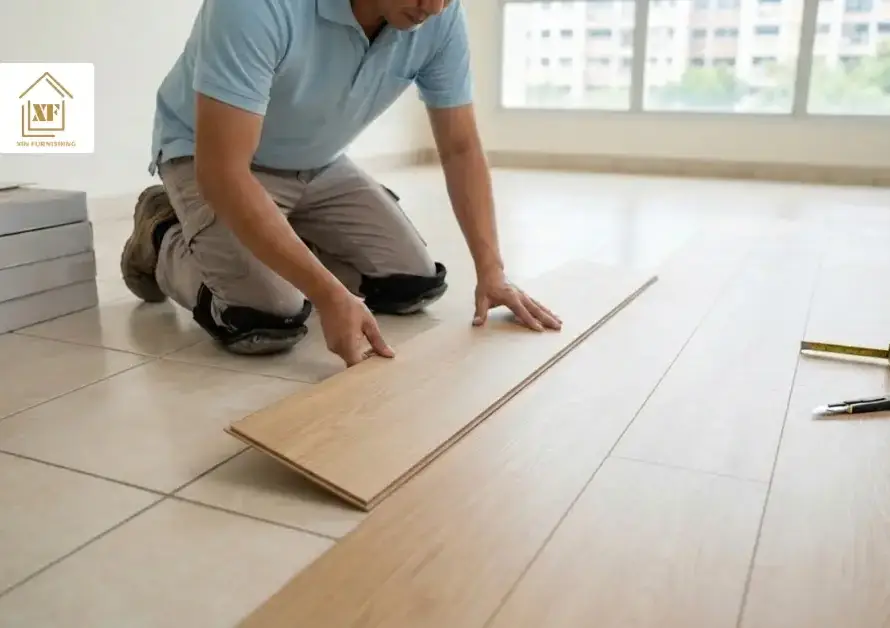
It is sold in both tile and plank formats, is fully waterproof on the surface, and in most Singapore homes is laid over existing tiles without hacking.
What Is LVT Made Of? The Five Layers Explained
The wear layer is the figure to ask for
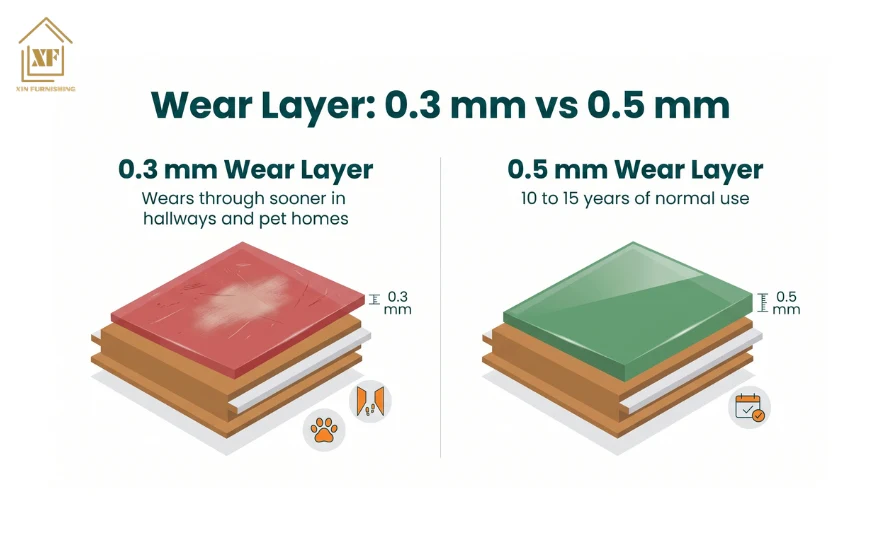
Residential LVT typically ranges from 0.3 mm to 0.55 mm, and the difference is invisible in a showroom. A 0.3 mm layer wears through far sooner in a hallway or a home with pets. Every plank we supply uses a 0.5 mm wear layer.
Thickness is a separate question. Most LVT sits between 2 mm and 6.5 mm overall. Thicker planks feel more solid and can carry a built-in underlay, but they add height at your doorways.
Does LVT Gap In Singapore’s Heat?
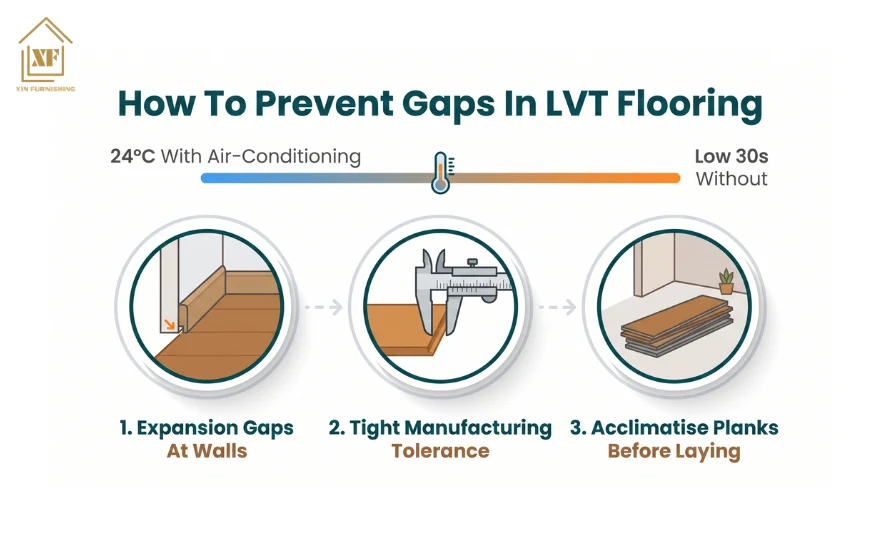
Singapore floors live through a daily cycle: 24°C under air-conditioning, low 30s without it. Every material expands and contracts through that cycle, and LVT’s PVC core moves more than SPC’s limestone core does.
Handled badly, that shows up years later as slight gaps at the joints, or edges lifting in a room that never sees air-conditioning.
Three things prevent it, and all three are installation decisions:
- Expansion gaps at the walls. A floating floor needs room to move. Skirting covers the gap, and skipping it is how joints get pushed apart.
- Manufacturing tolerance. Planks made to tight tolerances fit with less gap variance, and that difference compounds over years. This is the real difference between a budget plank and a properly specified one.
- Acclimatisation. Planks should sit in the space before they are laid, not come off a lorry and go straight down.
If a room in your home runs hot all day with no air-conditioning, say so at the site measurement. It changes what we specify, and it is a question worth asking any supplier.
Why LVT Suits Singapore Homes
- Humidity does not affect it
- No hacking
- Installed in a day
- Quieter than tile
- Comfortable underfoot
- Costs a fraction of the alternatives
How Long Does LVT Flooring Last?
With a 0.5 mm wear layer and normal household use, LVT flooring lasts 10 to 15 years, and longer in bedrooms and low-traffic rooms. A thinner 0.3 mm wear layer wears through far sooner in hallways or homes with pets. A level subfloor and gentle cleaning extend the life further.
LVT costs about S$3.50 to S$8.00 per square foot supplied and installed, a fraction of engineered timber (S$8 to S$20) or marble (from S$15).
LVT vs LVP: Is There Any Real Difference?
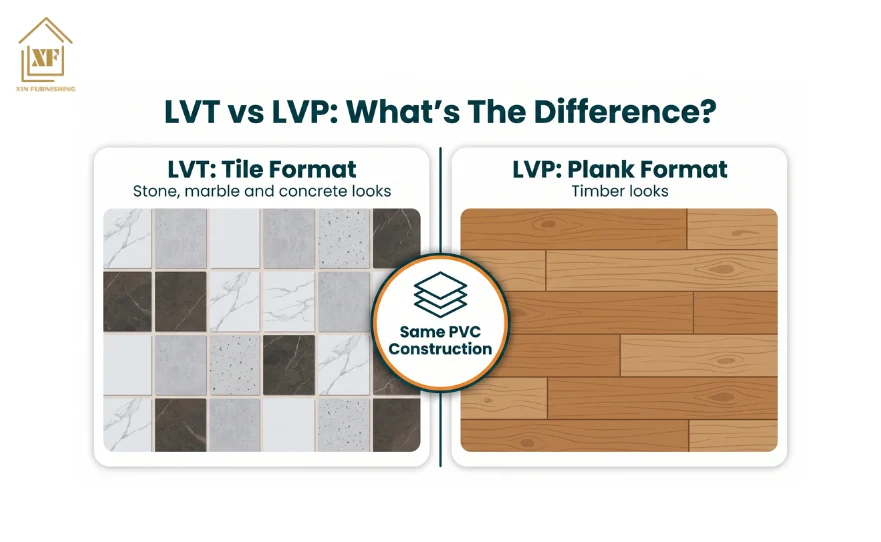
Most people think LVP and LVT are the same thing. Mostly they are, but the format is what separates them.
Quick tips:
- LVP (luxury vinyl plank): same construction as LVT, in a long, narrow plank format that mimics timber boards.
- LVT (luxury vinyl tile): tile or square format, usually used for stone, marble and concrete looks.
- Why people mix them up: many suppliers use LVT as the umbrella term for both, so the two names are used interchangeably.
- Which to pick: choose our wood vinyl flooring for a plank look, or our stone vinyl flooring for a tile look.
Explore our wood vinyl flooring for plank format; and stone vinyl flooring for tile format.
Where Can You Use LVT Flooring In Singapore?
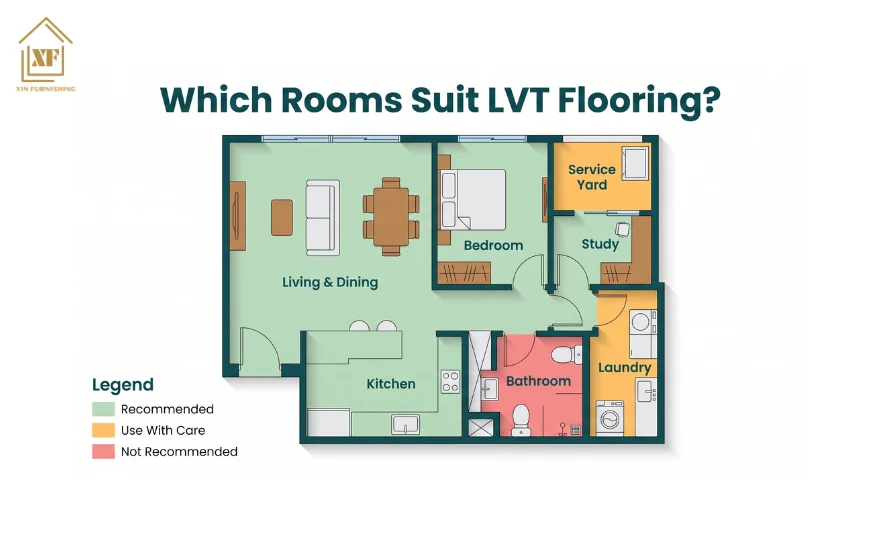
Recommended: living and dining rooms, bedrooms, study rooms, hallways, kitchens, offices, shops and cafés.
Use with care: service yards and laundry areas. Splashes are fine; standing water sitting at the joints for hours is not.
Not recommended: full bathrooms. You will find UK and US guides recommending LVT for bathrooms, and in those markets the advice holds, because their bathrooms are largely dry. A Singapore bathroom is laid with a gradient to a floor trap and is wet daily. Water works into the joints over time. Tiles remain the right choice here, no matter what a supplier tells you.
Bomb shelters keep their original finish, since the door and structure need to stay accessible. See the household shelter guidelines before changing anything inside.
Frequently Asked Questions
What does LVT stand for?
Luxury vinyl tile. It is a multi-layer PVC floor with a printed design layer and a clear protective wear layer, sold in tile and plank formats.
Is LVT the same as vinyl flooring?
Vinyl is the umbrella term, covering LVT, SPC, WPC and sheet vinyl. Our guides explain what vinyl flooring is and the full range of vinyl flooring types.
Is LVT better than SPC?
For bedrooms, living rooms and anywhere comfort and quiet matter, LVT is the better floor. SPC has the edge in unconditioned rooms that heat up daily and under very heavy furniture. Both are waterproof.
Can LVT be installed over existing tiles?
Yes, and it is the standard approach for HDB and condo renovations. The tiles need to be sound and reasonably level first.
Is LVT safe and non-toxic?
Ask your supplier for the emissions certification. Reputable manufacturers produce phthalate-free planks made from virgin vinyl with low VOC emissions, and they can provide documentation on request.
Which is better, LVT or LVP?
Neither is better overall. LVT and LVP are the same flexible vinyl floor cut into different formats, so durability, waterproofing and cost are almost identical. Choose LVP (plank) for a timber look, or LVT (tile) for stone, marble and concrete looks. What matters more is wear-layer thickness (we recommend 0.5 mm) and a level subfloor, not the name.