You find a vinyl floor you love. The colour is perfect. The price feels right. Then you see it. 5mm. 6.5mm. Wear layer. SPC core. And just like that, a simple home decision starts feeling like a university exam.
Most homeowners shopping for vinyl flooring in Singapore feel this same frustration. Not because they aren’t smart enough, but because nobody ever just explains how thick it should be in a way that actually makes sense.
Knowing how thick your vinyl flooring should be affects how your floor feels underfoot, how long it lasts, and how well it holds up against daily life at home. Get it right, and your floors stay looking great for years. Get it wrong, and you will feel it every single day.
Figuring this out does not take long either. Four simple things about your home are all you need, and once you know them, the right thickness becomes obvious. No more guessing, no more confusing product numbers.
How Thick Should Vinyl Flooring Be? 4 Factors That Actually Matter
1. The Room You Are Living In
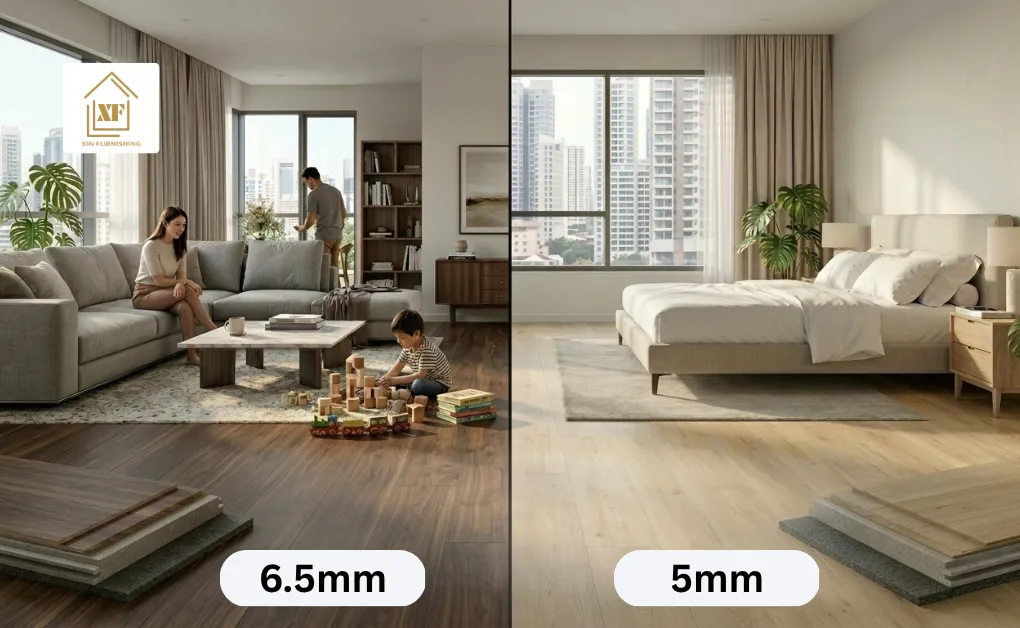
Not every room in your home needs the same vinyl flooring thickness. Your living room takes a beating every single day. People walk through it, kids play on it, and furniture sits on it for years. A thicker floor, like Wood Vinyl Flooring 6.5mm, handles that kind of pressure without wearing down quickly.
A bedroom is a different story. The traffic is light, the stress on the floor is minimal, and 5mm does the job without any issues.
2. The Condition of Your Subfloor
HDB concrete subfloors are rarely perfectly smooth. There are small dips, rough patches, and uneven areas that you cannot always see but will definitely feel once the floor is down.
Thicker vinyl sits over those imperfections much better. 5mm will show them more. If your subfloor is in rough shape, going thicker saves you from feeling every bump through your new floor.
3. Sound and Comfort Underfoot
Thick vinyl flooring is quieter. It absorbs the sound of footsteps better than a thinner floor, which matters a lot in condos and HDB flats where noise travels between units. It also feels softer and more comfortable to walk on for long periods.
If you spend a lot of time on your feet at home or have young kids running around, the difference between 5mm and 6.5mm is something you will notice every day.
4. Your Budget
5mm costs less than 6.5mm. If you are flooring a large space or watching your budget, 5mm is not a bad choice. It performs well, but it just works better in rooms that do not take heavy daily use.
In high-traffic areas, the extra durability of 6.5mm is worth it. In a spare bedroom or study, you probably will not notice the difference anyway.
5mm vs 6.5mm Vinyl Flooring Thickness: What Actually Changes
Most people expect the difference to be huge. It is not. You are talking about 1.5mm. But that small gap adds up in ways you actually feel and live with.
1. How They Feel Underfoot
6.5mm has a noticeably softer and more solid feel when you walk on it. It does not flex as much, and it does not feel hollow under your feet. Wood Vinyl Flooring 5mm is still comfortable, but on harder subfloors like HDB concrete, you will occasionally feel the floor give slightly underfoot, especially in areas where the subfloor is not perfectly even.
2. How Long Do They Last
Both will last for years with normal care. The difference shows up in high traffic areas over time. 6.5mm holds up better in spaces that see constant daily use. 5mm wears well, too, but in a busy living room or hallway, it may start showing wear sooner.
3. How They Handle Noise
This is where thicker vinyl earns its price in Singapore homes. Noise between floors is a real concern in HDB flats and condos. 6.5mm absorbs footstep sound better and makes a noticeable difference in how quiet your home feels. 5mm does dampen sound, but not to the same level.
4. What They Cost
6.5mm costs more per square foot. The gap is not dramatic, but across a large space it adds up. If budget is a concern, 5mm in the right rooms is a completely reasonable choice, and you will not be sacrificing much by going thinner in low-traffic areas.
Which Vinyl Flooring Thickness Works Best for Each Room in Singapore
Not every room needs the same floor. Here is a simple breakdown of what works where.
- Living Room: 6.5mm is the right choice here. The traffic alone justifies it, and in an HDB flat or condo, the noise difference is something the whole household will appreciate.
- Bedroom: Bedrooms are low-traffic by nature. You walk in, you walk out, and the floor mostly just sits there. 5mm works perfectly well here and saves you money across what is usually a decent-sized space. Spend the extra budget where the floor actually takes a beating.
- Kitchen: The kitchen sees more foot traffic than most people account for. It also takes spills and dropped items regularly. 6.5mm is the better and safer long-term choice for this room.
- Home Office: If you are working from home daily and rolling a chair across the floor, 6.5mm holds up better over time. If it is a room you use occasionally, 5mm is completely fine.
- Spare Room or Study: 5mm is enough. The traffic is minimal, and the savings across a smaller space make the choice straightforward.
5mm vs 6.5mm Vinyl Flooring Thickness: Full Comparison
Here is a quick side-by-side look at how both options compare.
| 5mm | 6.5mm | |
| Feel Underfoot | Comfortable | Solid and stable |
| Durability | Good for light use | Better for heavy use |
| Noise Absorption | Moderate | Noticeably quieter |
| Subfloor Coverage | Shows imperfections more | Hides them better |
| Wear Layer | 0.3mm minimum | 0.3mm to 0.5mm recommended |
| Installation | Standard | More forgiving on uneven floors |
| Cost | Lower | Higher |
| Best For | Bedrooms, studies, spare rooms | Living rooms, kitchens, home offices |
What to Check Before Buying Vinyl Flooring in Singapore
1. Always ask for the wear layer thickness
The total thickness number is on every product listing, but the wear layer is not always shown upfront. Ask for it before you commit. For a home that sees regular daily use, anything below 0.3mm is not worth your money, regardless of how good the price looks.
At Xin Furnishing, both our wood and stone vinyl flooring collections come in 5mm and 6.5mm, so you can pick the right thickness without compromising on the look you want.
2. Get a sample before you decide
Colours and textures look different on a screen than they do on your actual floor under your home lighting. Most suppliers in Singapore will give you a sample. Take it home, put it in the room, live with it for a day before making a final call.
3. Check the subfloor before installation day
Do not leave this to the installer to flag on the day. Walk the room yourself, feel for uneven patches, and let your supplier know the condition upfront. It affects which product works best and avoids surprises on installation day.
4. Factor in the full cost, not just the per sqft price
The floor price is only part of it. Installation, underlayment if needed, and removing your existing floor all add up. Get a full quote that covers everything so the final number does not catch you off guard.
Conclusion
It really comes down to where you are laying it and how the space gets used. High traffic rooms, rough subfloors, and noisy buildings point toward 6.5mm. Quieter rooms with light use are perfectly fine with 5mm.
You do not have to pick one thickness for your entire home, either. A lot of Singapore homeowners mix both, going thicker in the living room and kitchen and saving on bedrooms and spare rooms. That is often the most practical approach.
Pick the room, match the thickness, and you are sorted. Still have questions about what works best for your home? As a trusted vinyl flooring supplier in Singapore, we have helped hundreds of homeowners make the right choice and we can help you too.
FAQs
1. Does thicker vinyl flooring last longer?
Not automatically. Durability comes from the wear layer, not the total thickness. A 5mm floor with a thick wear layer will outlast a 6.5mm floor with a thin one. When you are comparing products, always check the wear layer thickness alongside the total thickness. They are two different numbers and both matter.
2. What is a wear layer, and why does it matter?
The wear layer is the protective top coating that handles daily wear. For a Singapore home, look for at least 0.3mm. If you have kids or pets, 0.5mm is worth going for.
3. Will vinyl flooring raise my floor level too much?
This is worth checking before you buy. HDB regulations set a limit on total floor finish thickness, and adding vinyl on top of existing tiles brings you closer to that limit. It can also affect whether your doors still swing freely. Measure your current floor height and factor in the vinyl flooring thickness before committing.
4. Can vinyl flooring handle Singapore’s humidity?
Yes, this is actually one of its strongest points. Vinyl does not absorb moisture, so it will not warp or crack the way timber or laminate can. SPC core vinyl stays stable even in rooms that get warm and humid regularly.
5. How long does vinyl flooring actually last?
With normal care, quality vinyl flooring lasts between 15 and 20 years. The wear layer thickness plays the biggest role in that. Thicker wear layers hold up longer in busy rooms. Regular cleaning and avoiding dragging heavy furniture across the surface will keep it looking good for the full lifespan.