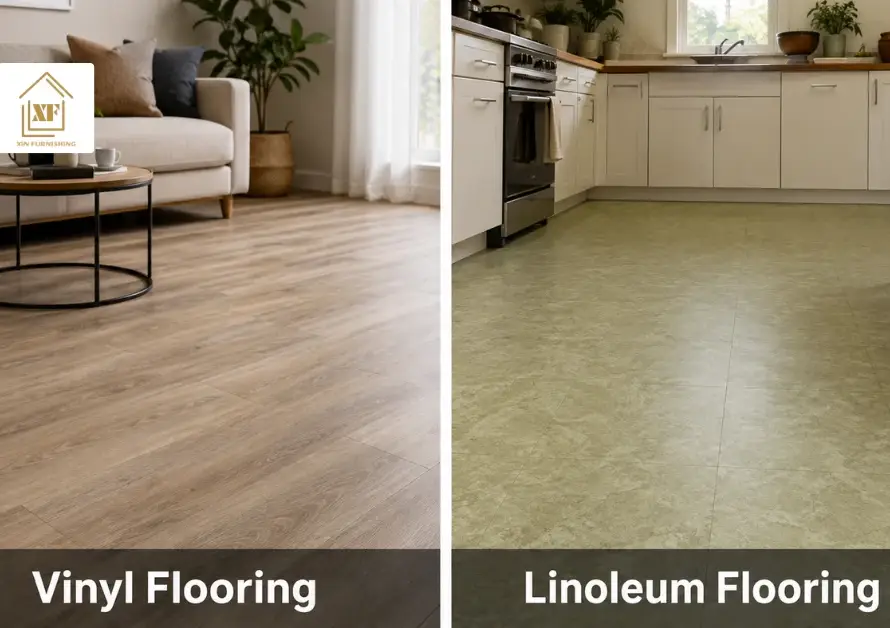
Walk into ten newly renovated HDB flats in Singapore today, and most of them will have vinyl floors. It has quietly become the default choice for BTOs, resale flats and condos.
But “vinyl flooring” covers several very different products. Some are rigid, some are flexible. Some cost twice as much as others. Picking the wrong one can leave you with hollow-sounding floors or planks that dent under a sofa leg.
This guide explains what vinyl flooring is, what it is made of, where it works in a Singapore home, and how to choose the right one.
What Is Vinyl Flooring?
Vinyl flooring is a synthetic floor covering made mainly from PVC (polyvinyl chloride). A high-resolution printed layer gives it the look of wood, stone, marble, or concrete, and a clear protective layer on top handles daily wear.
It is 100% waterproof on the surface; it does not swell like timber or laminate, and in most cases it can be laid straight over existing tiles. That combination suits Singapore’s climate and renovation timelines well.
What Is Vinyl Flooring Made Of?
Most modern vinyl planks are built from four layers:
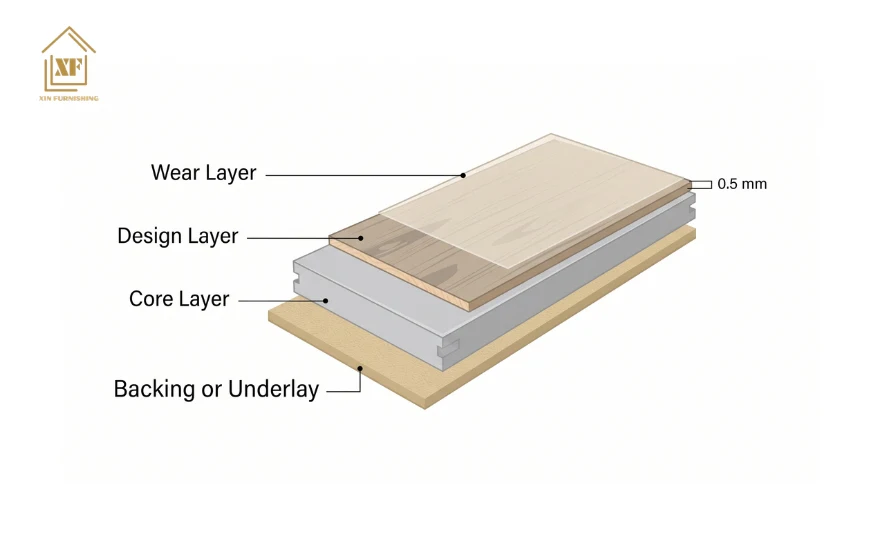
The wear layer is the number that matters most. It decides how long the floor survives daily use. A thin 0.3 mm wear layer scuffs through far faster than a 0.5 mm one, especially in a living room or a home with pets. Ask every supplier for this figure. All our planks use a 0.5 mm wear layer.
The core decides how the floor feels and behaves. That is where the different types come in.
The Main Types Of Vinyl Flooring
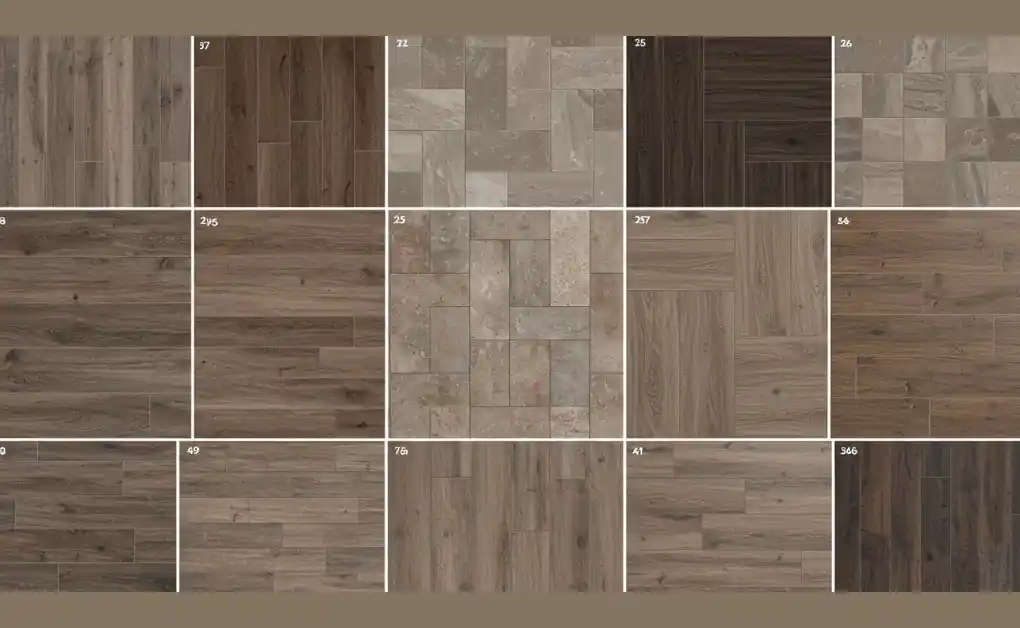
The core is what separates one type from another.
LVT (luxury vinyl tile) has a flexible PVC core. It feels slightly softer and warmer underfoot, absorbs footstep sound well, and copes better with minor unevenness in older resale flat screeds. This is what we supply.
SPC (stone polymer composite) replaces that with a rigid limestone core. It is harder underfoot and slightly noisier, but very dimensionally stable.
WPC (wood polymer composite) uses a foamed wood-plastic core and sits between the two.
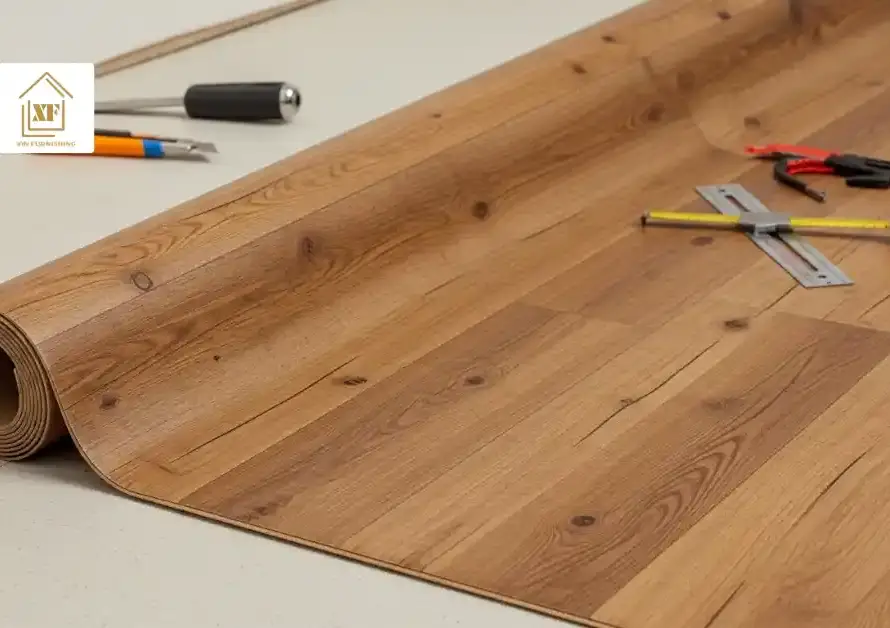
Sheet vinyl comes in wide rolls and is glued down for a seamless surface, which is why clinics and commercial kitchens use it.
Read our guide to the types of vinyl flooring for a full comparison.
Why Vinyl Flooring Suits Singapore Homes
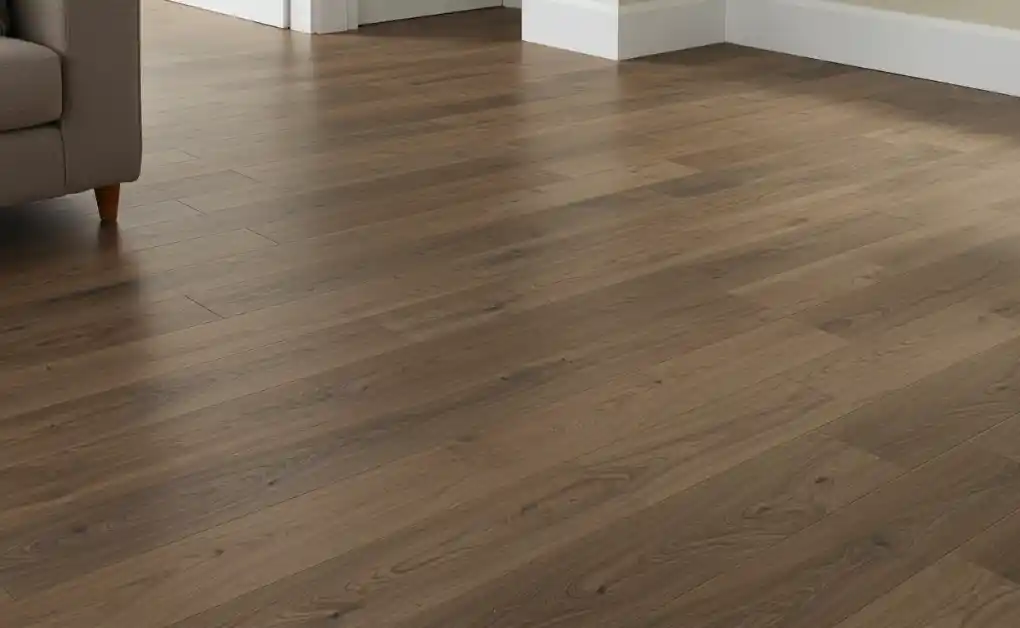
It handles humidity
Timber and laminate swell and warp in constant high humidity. Vinyl does not absorb water, so spills, mopping and damp air are not a problem.
No hacking in most cases
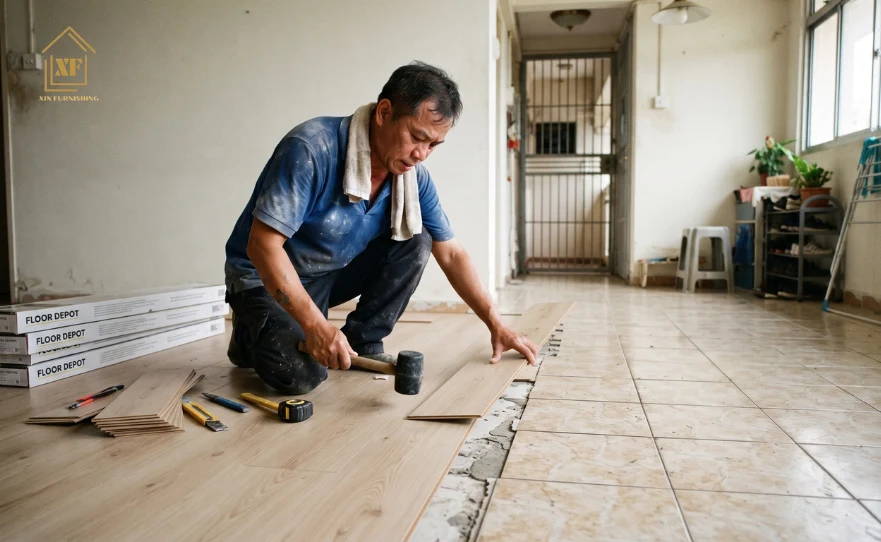
Vinyl can be laid over existing tiles. That saves the cost, dust, noise and permit trouble of hacking, and it keeps your renovation moving.
It is fast
Most homes are completed in a single day with a click-lock system. Some jobs need cement screeding or self-levelling first, which adds a day or two.
It is quieter than tile
This matters in high-rise living, where impact noise travels to the unit below.
It costs far less than the alternatives
Typical supply-and-install prices run from about S$3.50 to S$7.00 per square foot, or roughly S$2,600 to S$4,500 for a 4-room HDB flat. Timber and stone cost two to five times that. Our vinyl flooring cost guide breaks down every line item.
The designs have improved enormously
Modern planks use embossed textures aligned to the printed grain, so the surface you feel matches the pattern you see. From a standing height, a good wood-look plank is hard to tell from timber.
It suits the way Singaporeans live
Shoes come off at the door, homes are cleaned often, and floors take daily mopping. Vinyl handles all of it.
We cover each of these in detail in our guide to the benefits of vinyl flooring.
How To Choose The Right Vinyl Flooring
- Check the wear layer first, and treat 0.5 mm as your minimum for a home you will live in for years.
- Match the plank to the room, with thicker options where comfort and sound matter, and a thinner profile where doorway height is tight.
- Check the total thickness, since thicker planks feel more solid but add height at your doorways.
- Look at the click system, because a good mechanical lock keeps the joints tight for years.
- See the texture in person, as matt and embossed finishes hide everyday marks far better than glossy ones.
- Ask what voids the warranty, not just how long it lasts.
- Check who is laying it, and whether the installers are in-house or subcontracted.
Installation itself is straightforward. After a site measurement, the subfloor is prepared and levelled where needed, then the planks are click-locked together as a floating floor. Most homes are walkable the same day. Our guide to installing vinyl plank flooring covers the full process.
How Long Does Vinyl Flooring Last?
With a good wear layer and normal home use, expect 10 to 15 years, and often longer in bedrooms and low-traffic rooms. Three things determine it: wear-layer thickness, subfloor levelness, and how you clean the floor.
Follow our guide on how to clean vinyl floors to get the full life out of yours.
Which Rooms Is Vinyl Flooring Suitable For?
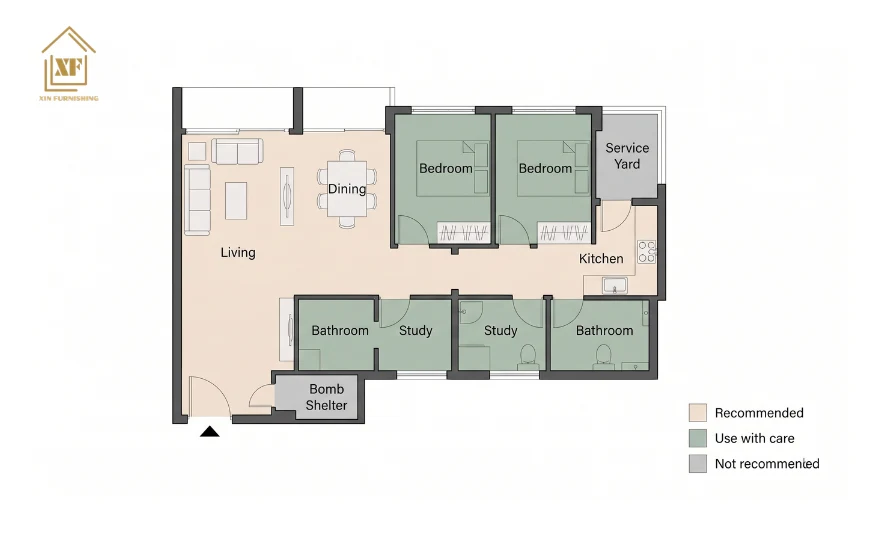
Recommended: living rooms, bedrooms, study rooms, hallways, kitchens, offices, retail shops, cafés and showrooms. Kitchens and entryways take the most traffic in a Singapore home, which is why stone vinyl flooring is a popular choice for those areas.
Use with care: service yards and laundry areas. Vinyl handles splashes, but avoid standing water at the joints for long periods.
Not recommended: full bathrooms and shower areas. Bathrooms are laid with a gradient to a floor trap and get constant standing water, so tiles remain the right choice there. Be cautious with any supplier who tells you otherwise.
Bomb shelters usually keep their original finish, since the door and structure must remain accessible.
Book A Free Site Measurement In Singapore
Photos only tell you so much. You need to feel the texture, thickness, and sound underfoot.
Xin Furnishing Pte Ltd is a direct supplier and installer of premium vinyl flooring in Singapore, with our own in-house installation team. We also provide cement screeding and self-levelling, so one contractor handles the whole job. Every floor comes with a 0.5 mm wear layer, a Unilin 2G click system, and a 15-year residential warranty across our wood, stone, and microcement ranges.
Visit our showroom at 101 Woodlands Ave 12, #01-02 Polaris @ Woodlands, or WhatsApp +65 9690 2060 for a free site measurement and quote.
Frequently Asked Questions
Is vinyl flooring waterproof?
The plank surface is 100% waterproof, so spills and mopping are not an issue. That is different from the whole floor system being submersible, which is why full bathrooms are still tiled.
What is the difference between vinyl and LVT?
LVT is a type of vinyl flooring. “Vinyl” is the umbrella term covering LVT, SPC, WPC and sheet vinyl. LVT specifically means luxury vinyl in plank or tile format with a flexible core.
Is vinyl flooring better than laminate?
For Singapore’s humidity, usually yes. Laminate has a compressed fibreboard core that can swell if water gets in. Our vinyl vs laminate comparison covers the full trade-off.
Can vinyl flooring be installed over existing tiles?
Yes, in most cases. This is the standard approach for HDB and condo renovations, and it avoids hacking entirely. The tiles need to be sound and reasonably level first.
Does vinyl flooring scratch easily?
Not with a decent wear layer. It resists everyday scuffs from shoes, chairs and pets. Dragging furniture without felt pads usually causes damage.
Is vinyl flooring safe and non-toxic?
Ask your supplier for the product’s emissions certification. Reputable manufacturers now produce phthalate-free planks with low VOC emissions, and you can request the certificates.
How long does installation take?
Most homes are completed in a single day. Add a day or two if the subfloor needs screeding or self-levelling.
Is vinyl flooring suitable for HDB flats, BTOs and condos?
Yes, for all three. In HDB flats, it is laid over existing tiles, so no hacking is needed. In BTOs, it goes down after the main renovation works. In condos, it is usually straightforward, since no hacking means fewer management restrictions. Commercial spaces need a heavier commercial-grade build.