A dent in vinyl flooring can be hard to ignore. It might come from a chair dragged slightly too far, a heavy item placed in one spot for too long, or simple daily use. Over time, these marks can make an otherwise neat home feel worn and uneven. In Singapore, where heat and humidity can soften vinyl, dents tend to form more quickly than expected.
Most dents don’t mean your flooring is permanently damaged. As professional vinyl flooring Singapore, we provide this information to help homeowners understand how to fix dents in vinyl flooring, saving time and money while avoiding unnecessary replacement. This guide explains how to deal with dents properly, helping you restore the look of your vinyl flooring with a careful, practical approach.
Understanding Your Floor Damage
Before trying to fix the problem, take a moment to understand what you’re dealing with. Not every mark on vinyl flooring is the same, and knowing whether you’re looking at a dent or a surface scratch can save time and prevent further damage.
What Causes Dents in Vinyl Flooring
Vinyl is strong, but it can still compress under pressure. Common causes of vinyl flooring dents include:
- Heavy furniture: Chairs, tables, and cabinets can leave indentations, especially when they are dragged or placed in one spot for a long time.
- Every day knocks: Dropped items, shoes, or children’s toys can press into softer areas of the floor.
- Busy areas of the home: Spaces like living rooms, corridors, and dining areas experience constant foot traffic, which can slowly cause the vinyl to sink.
- Heat and humidity: In Singapore’s climate, vinyl can soften slightly, making it more likely to show pressure marks.
Is It a Dent or a Scratch?
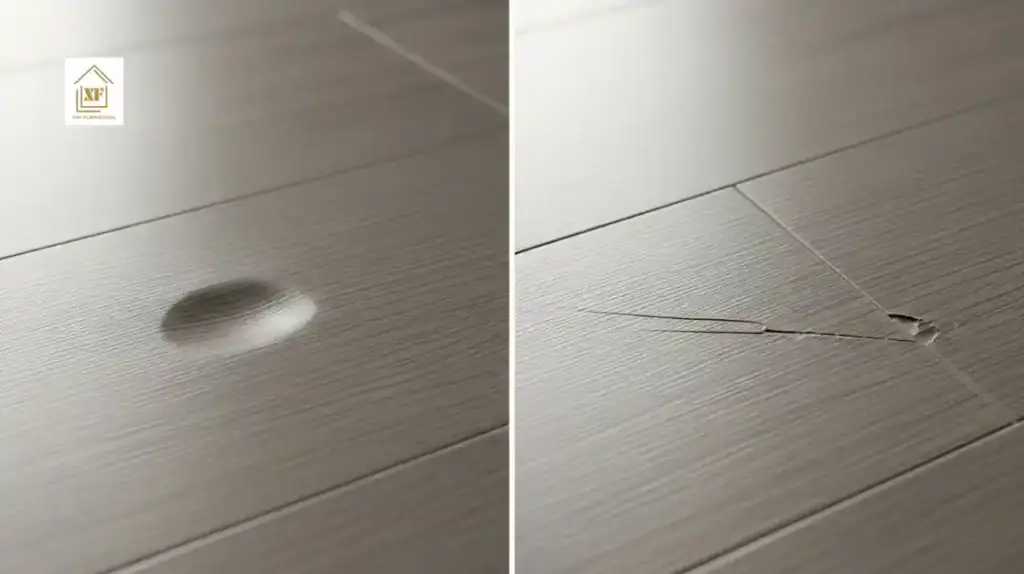
The way the floor is damaged affects how it should be fixed.
- Look closely: Dents appear as shallow dips in the flooring, while scratches sit on the surface and may break the finish.
- Feel the area: Run your fingers over the mark. A dent often feels smooth and may rise slightly when pressed. A scratch usually feels rough or uneven.
Taking a few minutes to identify the damage helps you choose the right repair method and avoids turning a small issue into a bigger one.
Simple At-Home Solutions for Vinyl Floor Dents
Most dents in vinyl flooring can be fixed at home with simple techniques. You don’t need special equipment or professional help, just a careful approach and a few common household items.
Tools You’ll Need for Vinyl Flooring Dent Repair
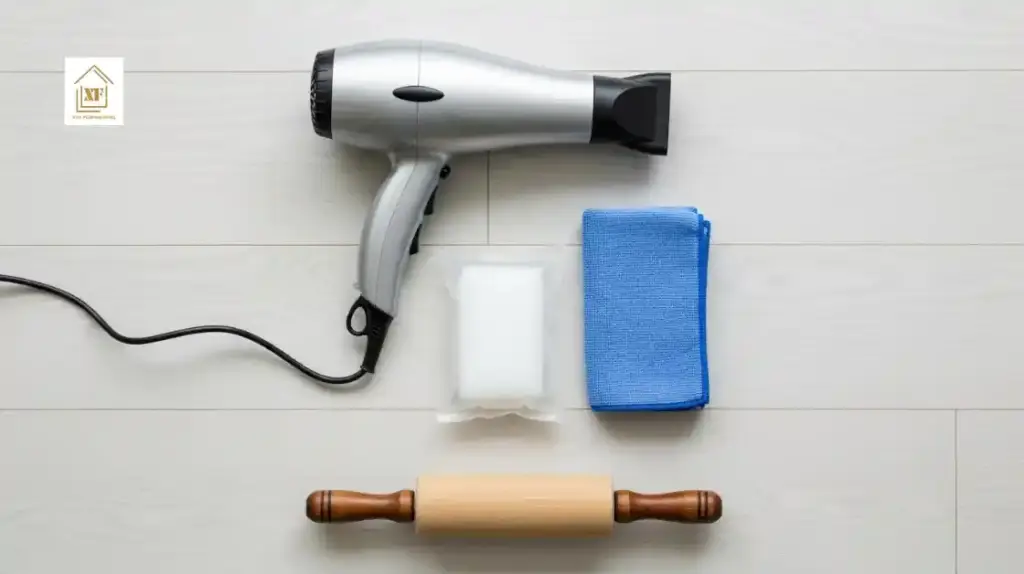
- A hairdryer
- A soft cloth or towel
- An ice pack
- A rolling pin or any smooth, heavy object
- Optional: heavy books or small weights
Avoid using sharp tools, knives, or hard metal objects on vinyl flooring and do not overheat the vinyl, as this can permanently cut or tear the surface.
Method 1: Use Heat to Lift the Dent
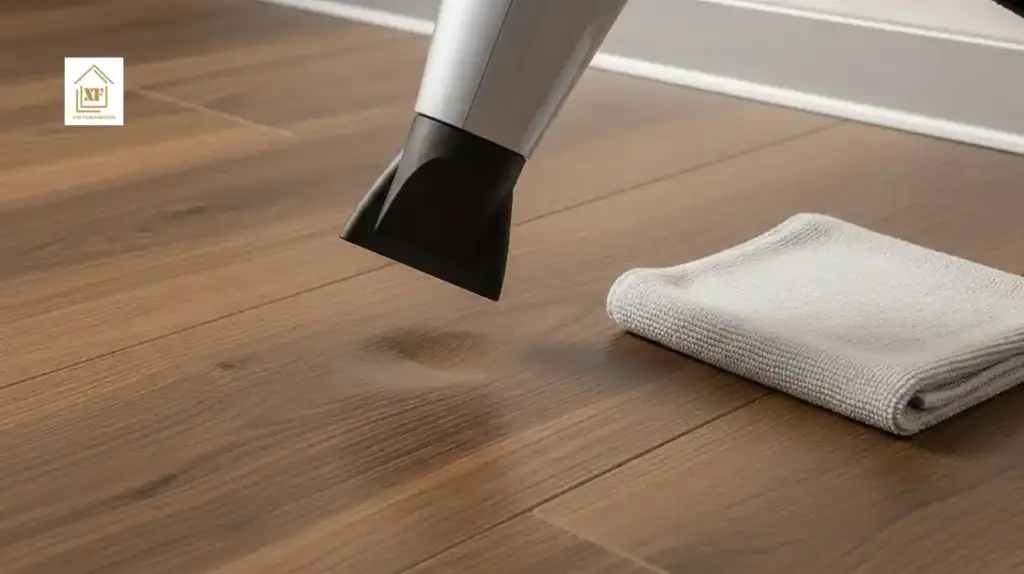
Vinyl softens when warmed, which helps it return to its original shape. Hold the hairdryer about 10–15 cm away from the vinyl and use a warm, not hot, setting to avoid overheating or warping the floor.
How to do it:
- Set a hairdryer to a warm (not hot) setting and heat the dented area for about 30–60 seconds.
- Place a soft cloth over the spot.
- Press gently with your hand to smooth the surface.
- Allow the area to cool on its own.
Best for: small to medium dents where the vinyl hasn’t been cut or torn.
Method 2: Use Cold for Shallow Dents
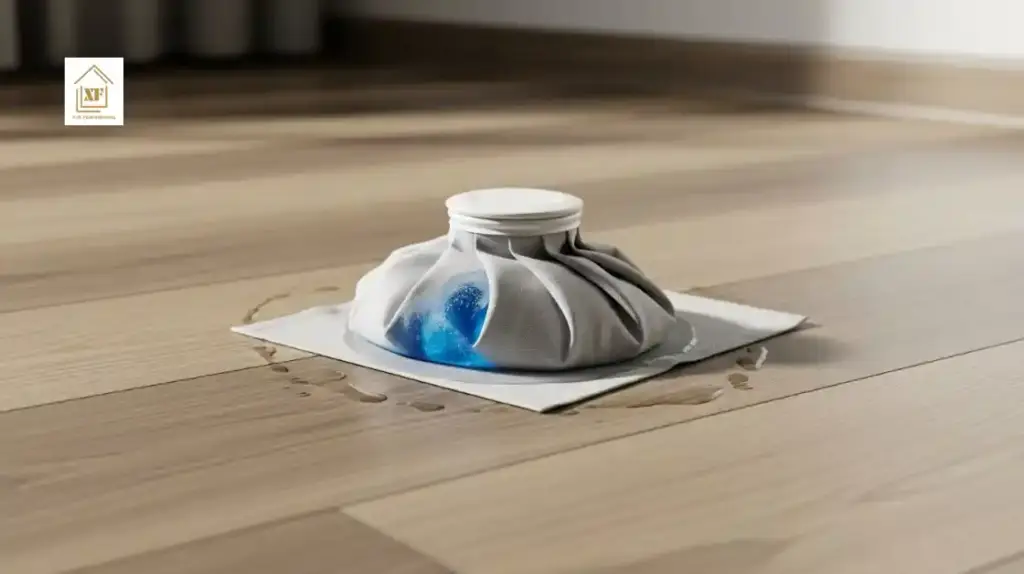
Cooling can help vinyl tighten slightly, which may reduce lighter dents. This method works best for very shallow or recent dents. Deeper or long-standing dents may not fully lift using cold alone.
How to do it:
- Wrap an ice pack in a cloth to prevent moisture damage.
- Place it on the dent for a few minutes.
- Remove the ice pack and lightly press the area with a cloth.
This method can be repeated if needed. It works especially well in Singapore homes, where warmer conditions make vinyl more flexible.
Method 3: Flatten Deeper Dents with Gentle Pressure
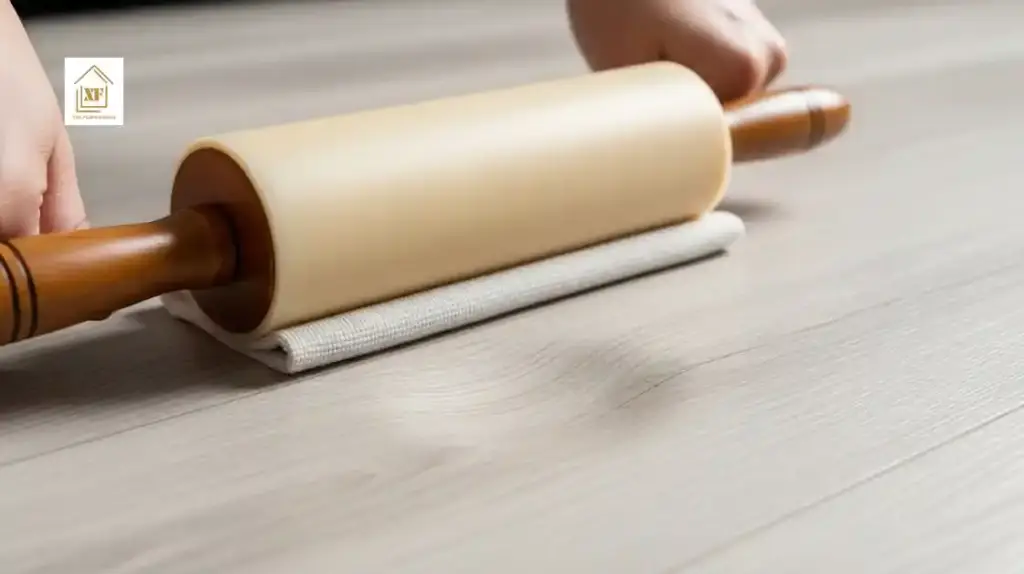
For dents that don’t respond to heat or cold alone, light pressure can help.
How to do it:
- Gently warm the dent with a hairdryer.
- Cover the area with a soft cloth.
- Roll a rolling pin slowly over the dent, using steady and even pressure.
- Stop regularly to check the surface and avoid pressing too hard.
This approach helps spread the compressed vinyl back into place without damaging the floor.
When a Dent Needs Professional Repair
Not every dent can be fixed at home. Deeper damage may require professional vinyl floor repair, as some issues go beyond surface compression and need expert attention to prevent further problems.
You may want to contact a flooring professional if:
- The dent stays in place even after using heat or gentle pressure
- The vinyl layer is cracked, torn, or no longer level
- Several dents appear in the same area, making repairs uneven or patchy
In these situations, a trained installer can assess whether a repair or partial plank replacement is the best option. While DIY methods work well for minor dents, professional help makes sure the floor remains smooth, stable, and visually consistent.
How to Prevent Dents in Vinyl Flooring
Once your floor is smooth again, a few small habits can help keep it that way. Preventing dents is much easier than fixing them, and it doesn’t require major changes to your home.
- Add furniture pads: Place soft pads under chairs, tables, and heavier pieces to reduce pressure on the vinyl.
- Use rugs in busy areas: Rugs work well in living rooms, dining spaces, and corridors where foot traffic is highest.
- Lift furniture when moving it: Avoid dragging items across the floor. Lifting them, even slightly, prevents unnecessary pressure marks.
- Be careful with heavy items: Distribute weight evenly and use protection when placing heavier objects on softer vinyl surfaces.
With these simple steps, your vinyl flooring can stay neat, even, and attractive for many years, even in a busy Singapore home.
Conclusion
Dents in vinyl flooring are common in many Singapore homes, but they don’t always require costly repairs or replacement. By first understanding the type of damage, whether a dent or a surface scratch, you can choose the right approach. Most minor dents can be restored at home using simple vinyl flooring repair methods, such as gentle heat, cold, or light pressure.
For deeper or widespread dents, calling a professional is the safest option. A vinyl flooring contractor in Singapore can assess the damage and carry out repairs or partial plank replacement, ensuring your floors remain smooth, even, and long-lasting.
Finally, small preventive steps, such as using furniture pads, rugs, and lifting rather than dragging heavy items, can greatly reduce the chances of dents returning. With proper care and the right approach, your vinyl flooring in Singapore can stay polished, attractive, and dent-free for years to come.
FAQs
1. Does vinyl flooring dent easily?
Vinyl flooring is generally durable, but it can dent under heavy weight or long-term pressure. Furniture, appliances, and sharp impacts are the most common causes. Thicker vinyl with a strong core tends to resist dents better than thinner options.
2. Can I use silicone on vinyl flooring?
Silicone is not suitable for fixing dents in vinyl flooring. It does not restore the material’s shape and can leave residue that affects the surface finish. Using heat, light pressure, or vinyl-specific repair methods is a safer option.
3. Can you replace just one piece of vinyl flooring?
Yes, in many cases, a single vinyl plank or tile can be replaced, especially with floating vinyl flooring systems. The key is having a matching replacement. Professional installation is recommended to ensure a seamless result.
4. What type of vinyl flooring is best for preventing dents?
Luxury vinyl planks (LVP) with a rigid core and thicker wear layer offer better resistance to dents. These options are especially suitable for busy Singapore homes with heavy furniture and frequent foot traffic.
5. Does Singapore’s climate affect vinyl flooring dents?
Yes. Heat and humidity can soften vinyl slightly, making it more prone to pressure marks. Proper installation, good airflow, and preventive measures help reduce this risk.