Renovating your HDB flat or condo? You’re probably staring at flooring samples in a showroom, trying to figure out which one can handle Singapore’s heat, humidity, and daily family wear, all without blowing your renovation budget.
Vinyl and linoleum are both “resilient flooring,” built to flex, resist damage, and withstand daily use. They often get grouped together because they look similar and do the same job, which is exactly why so many people end up comparing vinyl flooring vs linoleum before deciding. But underneath, they’re made very differently, and that difference matters even more in a hot, humid climate.
In this guide, we’ll break down vinyl vs linoleum flooring in detail, from moisture resistance and lifespan to cost and HDB rules, so you can pick the right option for your home with confidence.
Material Composition and Eco-Friendliness
Before picking between vinyl and linoleum, it helps to know what’s actually under your feet.
What Are They Made Of?
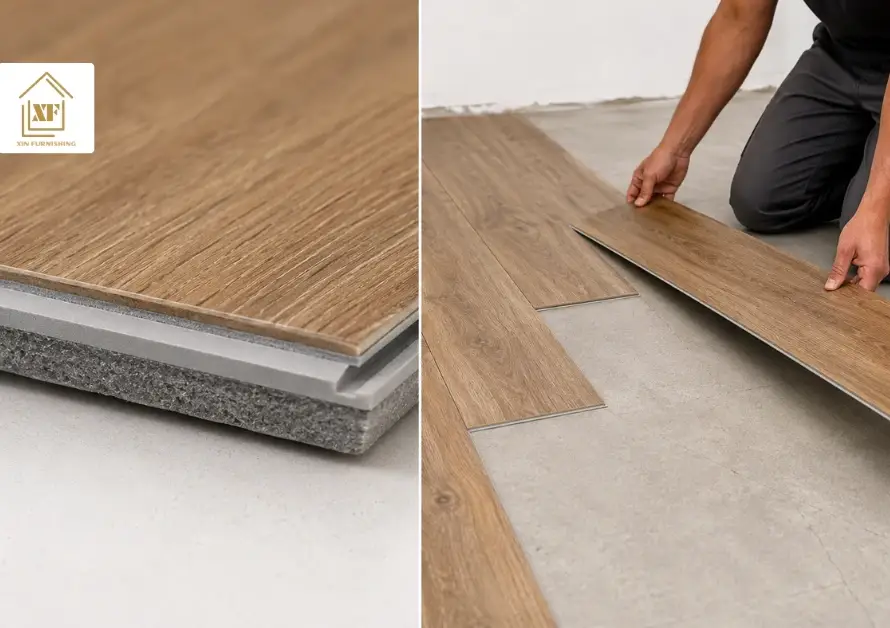
Vinyl flooring is made from a type of plastic called PVC (polyvinyl chloride). It’s built in layers: a backing layer on the bottom, a printed design layer in the middle, and a clear protective layer on top. It also comes in several different builds, including standard sheet vinyl, SPC (Stone Plastic Composite), and WPC (Wood Plastic Composite), each behaving a little differently.
Linoleum, on the other hand, is made almost entirely from natural materials: linseed oil pressed from flax seeds, cork dust, wood flour, and mineral pigments, all pressed onto a jute backing. It leans on plant-based and mineral ingredients rather than plastic.
Sustainability and Health
Vinyl’s plastic base means it doesn’t break down naturally and is harder to recycle. However, many premium vinyl products sold in Singapore carry the strict Singapore Green Label certification. This guarantees they meet low-VOC standards for indoor air quality and are completely free from harmful heavy metals and phthalate plasticisers.
Linoleum is fully biodegradable since it comes from natural, renewable materials. The linseed oil in it also gives it natural resistance to mould and mildew, keeping the surface hygienic without extra chemicals.
Performance in Singapore’s Tropical Climate
Flooring here has to deal with sudden rain, sticky humidity, and rooms that swing between cold air-conditioning and warm afternoons. Here’s how each material holds up.
Moisture and Humidity Resistance
Not all vinyl handles moisture the same way; it really depends on the type you pick.
Vinyl Flooring:
- SPC and click-lock LVT are genuinely waterproof. These have a solid core that keeps water out entirely, so standing water or spills won’t damage them even if left unattended for a while. Understanding the differences between SPC vs LVT flooring can help you choose the right option for your space.
- Sheet and peel-and-stick vinyl are only water-resistant, not waterproof. Water can seep in through the seams over time, especially in humid conditions.
- SPC is the safer bet for wet-prone rooms. For kitchens, bathrooms, and windows exposed to rain, its waterproof core gives you the most protection.
Linoleum needs a bit more protection to hold its own here.
Linoleum Flooring:
- High humidity is its biggest weakness. Since it’s made from natural, absorbent materials, prolonged moisture exposure can affect the surface over time.
- Standing water left too long can cause warping or curling at the edges.
- It needs a dry, well-sealed environment to hold up. With proper sealing and good airflow, it performs reliably, but skipping that step in a tropical climate shortens its lifespan.
Thermal Comfort Underfoot
How a floor feels underfoot comes down to what’s inside it, not just the surface.
Vinyl Flooring:
- SPC vinyl has a dense stone core, so it feels harder and cooler, closer to tile, which some people love, and others find a bit cold with the air-con on.
- WPC vinyl uses a foamed core, so it feels noticeably softer and warmer, more comfortable to stand on for long periods.
- Core type makes a bigger difference than most people expect. Since “vinyl” covers such a wide range of products, it’s worth asking your supplier specifically about SPC versus WPC rather than assuming they all feel the same.
Linoleum takes a simpler approach; its comfort is built into the material itself.
Linoleum Flooring:
- Natural cushioning is part of the material, not an add-on. Its organic, slightly springy ingredients give it a built-in softness that vinyl usually needs extra layers to match.
- It feels warmer than SPC vinyl even with the air-con running, since natural materials hold onto a bit more warmth than vinyl’s synthetic core.
- Great for rooms where you’re on your feet a lot, like kitchens.
Maintenance and Care
Cleaning routines differ quite a bit between the two materials.
Vinyl Flooring: Upkeep here is about as low effort as flooring gets; a regular sweep and an occasional damp mop is really all it takes to keep it looking fresh. The protective wear layer does a lot of the work too, shrugging off most everyday spills and stains before they can set in.
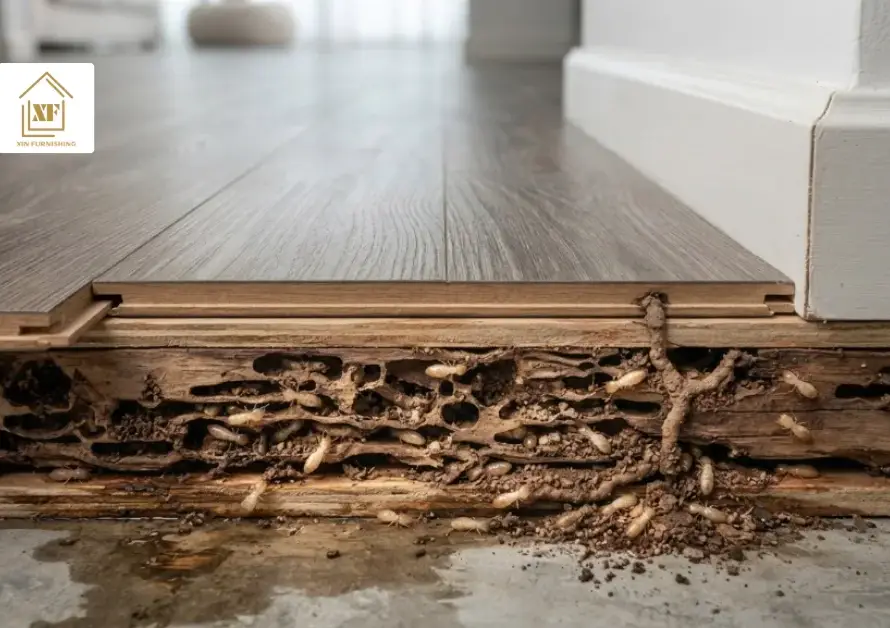
Linoleum Flooring: Linoleum’s a little more high-maintenance, but the extra care isn’t much of a hassle once it’s part of your routine. Stick to pH-neutral cleaners; harsh or acidic products will wear down the surface faster than they should. The upside is that same linseed oil that makes it biodegradable also gives it a natural resistance to mould and pests, so once it’s properly sealed, it takes care of itself in that department.
Lifespan and Long-Term Durability
How long a floor lasts isn’t just about the material; it also depends on how well it hides everyday damage.
Wear and Tear Resistance
Vinyl’s top layer, the wear layer, protects it from scratches caused by furniture legs, pet claws, and daily foot traffic. It’s measured in mil or mm, and a thicker layer generally means better scratch resistance. Once a deep scratch pierces through it, though, the damage is permanent; it exposes the printed design underneath, and there’s no sanding it back to normal.
Linoleum works differently. It’s a homogeneous material, meaning the colour and pattern run all the way through to the jute backing underneath. Because of that, scratches don’t expose a different layer the way they do with vinyl; the material underneath looks the same as the surface, so marks tend to blend in rather than stand out.
Expected Lifespan
With normal use, vinyl flooring typically lasts 10 to 20 years, depending on the wear layer quality and how much daily wear it takes on.
Linoleum tends to last 20 to 40 years, sometimes longer, when properly sealed and maintained. It actually gets tougher with age, since the linseed oil keeps oxidising when exposed to air, gradually hardening the floor over the decades.
Singapore Market Analysis: Costs & Availability
Performance is only half the decision; cost and availability matter just as much.
Pricing Breakdown
Vinyl flooring in Singapore typically ranges from S$3 to S$8 per square foot for materials, with installation adding S$1 to S$3 per square foot. All-in, most vinyl projects land around S$6 to S$13 per square foot, depending on the type, thickness, and brand.
Linoleum tends to cost more, usually S$6 to S$12 per square foot for materials, with installation running S$2 to S$5 per square foot. Since it’s often imported and needs more skilled installation, material and labour costs both run higher than vinyl.
Sourcing and Supplier Availability
Vinyl is widely available across Singapore and has become the go-to flooring choice for HDB, BTO, and condo renovations, thanks to its humidity resistance and quick installation. Most showrooms, hardware stores, and contractors carry multiple brands, making it easy to shop around and get quick quotes.
If you’re comparing options from a local specialist, Xin Furnishing offers LVT across wood, stone, and microcement finishes, backed by multi-year warranties. The full vinyl flooring collection covers styles suited to HDB, condo, and landed home renovations.
Linoleum is much harder to find for residential use. Most local suppliers stock it for commercial or healthcare spaces rather than homes. If you want it for your home, you may need to special-order it through a specialist supplier, which adds time and cost to your renovation.
HDB Renovation Rules for Vinyl and Linoleum Flooring
Both materials are generally accepted for HDB flats, but a few practical rules apply.
Permits & Hacking
- No permit needed for overlays, laying new flooring directly over existing tiles.
- A formal permit is required if you’re hacking away old tiles or cement screed first.
Floor Height & Clearance
- HDB caps combined floor finish and screed thickness at 50mm.
- Overlays typically add 3 to 6mm of height, so check door clearance before committing to this route.
Wet Areas & Waterproofing
- Hacking bathroom floor or wall tiles is strictly prohibited within the first 3 years of a flat’s TOP date to protect the original waterproofing membrane underneath.
- In older resale flats, hacking a wet area means the waterproofing membrane needs to be properly reinstated.
Renovation Timings
- General work is allowed on weekdays and Saturdays, 9 am to 6 pm. Noisy work like hacking must stop by 5pm on weekdays.
- No renovation work is allowed on Sundays or public holidays.
Always check the latest HDB guidelines or confirm directly with your contractor, since rules can change.
Design and Aesthetic Options
Once you’ve weighed durability, climate, and cost, the last question is simple: which one do you actually want to look at every day?
Texture and Realism
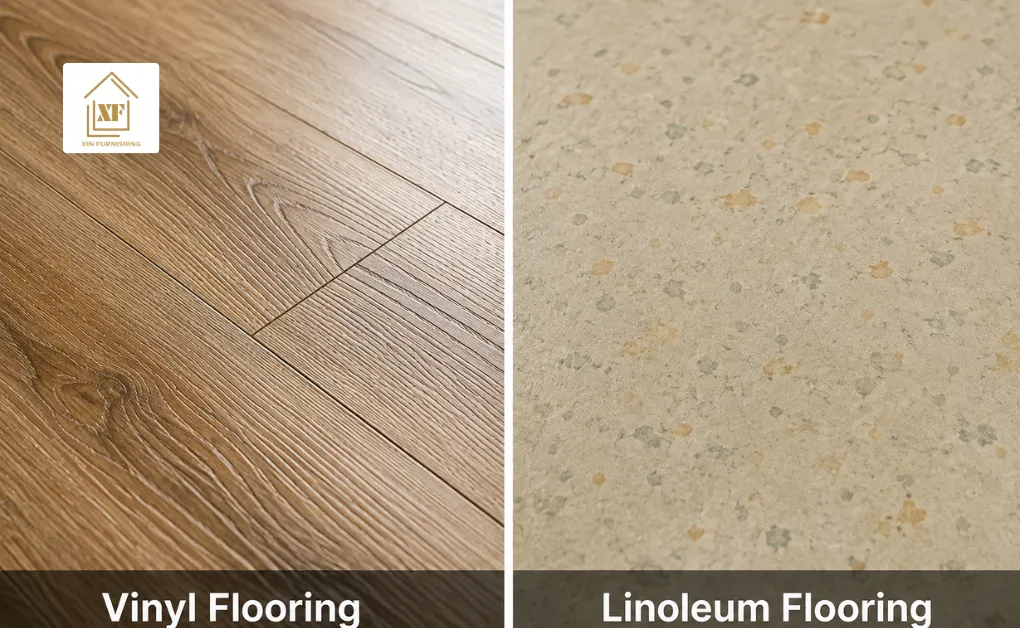
Vinyl can closely copy real wood grain or natural stone, right down to the texture underfoot. Premium vinyl uses a technique called EIR (Embossed-in-Register), where the surface texture lines up exactly with the printed image beneath it, which is why high-quality planks are often hard to tell apart from real hardwood at a glance.
Linoleum takes a different approach, with a smoother, matte finish rather than trying to mimic other materials. It often has a slightly marbled or speckled look, sometimes called a “jaspé” pattern, giving it a distinct, natural character.
Colour and Pattern Range
Vinyl offers a huge range of colours and patterns, from wood vinyl flooring that mimics natural timber tones to stone vinyl flooring with realistic textures, plus bold custom designs.
Linoleum leans toward solid, vibrant tones rather than detailed patterns, since its colour is mixed directly into the material before pressing rather than printed on. The look is simpler and more uniform, though the palette, from earthy tones to bold mid-century colours, is broader than most people expect.
Format and Installation Style
Vinyl usually comes in planks or click-lock tiles that snap together without glue, making for a fairly quick installation.
Linoleum is typically sold in large sheet rolls, glued down across the floor and hot-welded at the seams to create a fully seamless, waterproof surface. It’s a clean, joint-free finish, but it takes more time and a more experienced installer than vinyl.
Linoleum Flooring vs Vinyl Flooring: Quick Comparison
| Feature | Vinyl Flooring | Linoleum Flooring |
| Best For | Kitchens, bathrooms, budget-friendly renovations | Bedrooms, living rooms, eco-conscious homes |
| Upfront Cost | Lower | Higher |
| Lifespan | 10 to 20 years | 20 to 40 years (hardens over time) |
| Water Resistance | Excellent for SPC/click-lock LVT; good for sheet vinyl | Moderate, prone to warping if unsealed |
| Maintenance | Low effort, resists standard stains easily | Moderate, needs pH-neutral cleaners |
| Aesthetics | Closely mimics wood/stone textures | Smooth, marbled, or solid matte look |
| HDB Permit | No permit needed for direct overlay | No permit needed for direct overlay |
| Eco-Friendliness | Plastic-based (PVC), but low-VOC certified | Natural, biodegradable, naturally mould-resistant |
Which Flooring Is Right for You?
| If your priority or situation is… | Best choice | Why it fits |
| A busy family with young kids or active pets | Vinyl | Strong scratch resistance and easy stain cleanup. |
| Renting or doing a budget renovation | Vinyl | Lower upfront cost and quick installation over old floors. |
| A moisture-heavy bathroom or kitchen | Vinyl (SPC/LVT) | Waterproof cores handle Singapore’s humidity well. |
| A cosy bedroom or living room | Either | Comes down to preference, wood-look vinyl vs. matte linoleum. |
| A long-term “forever home” | Either (Linoleum preferred) | Linoleum hardens and gets tougher with age. |
Conclusion
For most Singapore homes, vinyl is the better overall choice. It costs less upfront, resists moisture reliably in our humid climate (especially SPC and quality LVT), and is easier to source and install quickly. If you want a practical, budget-friendly floor that holds up to daily life in an HDB flat or condo, vinyl is the safer bet.
Linoleum is the better choice if sustainability and long-term durability matter more to you than upfront cost. It lasts up to twice as long, is fully biodegradable, and hides scratches better over time, but it needs more care and costs more to install here.
Whichever way you lean in the linoleum vs vinyl flooring decision, take time to get samples, check HDB requirements, and speak with a flooring contractor who understands Singapore’s climate before making a final decision. If you’re leaning toward vinyl, Xin Furnishing can help you shortlist the right finish and thickness for your flat or condo. Get in touch for samples and a personalised recommendation.
FAQs
Can you install vinyl flooring directly over existing linoleum?
In most cases, yes, as long as the linoleum is clean, level, and free of major damage like bubbling or peeling. Confirm with your installer before skipping the removal step; an uneven or damaged surface underneath can telegraph through the new vinyl over time.
How can I tell if my existing floor is vinyl or linoleum?
Check the backing and pattern. Linoleum typically has a jute backing and colour that runs through the full material, while vinyl usually has a cloth or foam backing with a printed top layer. If you don’t want to pry up a corner, a quick visual cue also helps: linoleum tends to have a duller, more matte look up close, while vinyl usually looks glossier thanks to its printed finish. A flooring contractor can identify it quickly if you’re unsure.
Does linoleum flooring contain asbestos?
Not anymore. Modern linoleum is completely natural and safe. While some international manufacturers added asbestos to flooring products before the 1980s, Singapore completely banned asbestos in building materials in the late 1980s. If you are renovating a very old resale flat built before 1991, it is always recommended to have the existing floors professionally tested before hacking.
Is linoleum flooring making a comeback?
Yes, to a degree. Vinyl overtook it in popularity decades ago, but linoleum is seeing renewed interest from homeowners who prioritise natural, eco-friendly materials, even though it still makes up a smaller share of Singapore’s residential market.
Can vinyl or linoleum be installed directly over existing floor tiles?
Often yes, provided the tiles are flat, secure, and free of cracks, saving you the cost of hacking up the old floor. A good way to check is to tap along the tiles; a hollow sound usually means the tile underneath has come loose, and any visible cracking or lippage (uneven edges between tiles) is a sign that repair is needed before new flooring goes on top.