You walk into your home, and something feels off. A tiny bump under your vinyl floor that wasn’t there last month. A faint musty smell near the skirting, one that wasn’t there before either. So you do what most of us do, you grab your phone and type “do termites eat vinyl flooring” at 11 pm, heart racing a little, already picturing the worst.
Vinyl hides things well, maybe too well. What looks fine on top could be sitting over real damage underneath, and in Singapore’s heat and rain, that happens more often than most homeowners realise.
This guide walks you through what’s actually going on beneath your floor, the warning signs to watch for, and what to do if you find something in your own home.
Can Termites Actually Eat Vinyl Flooring?
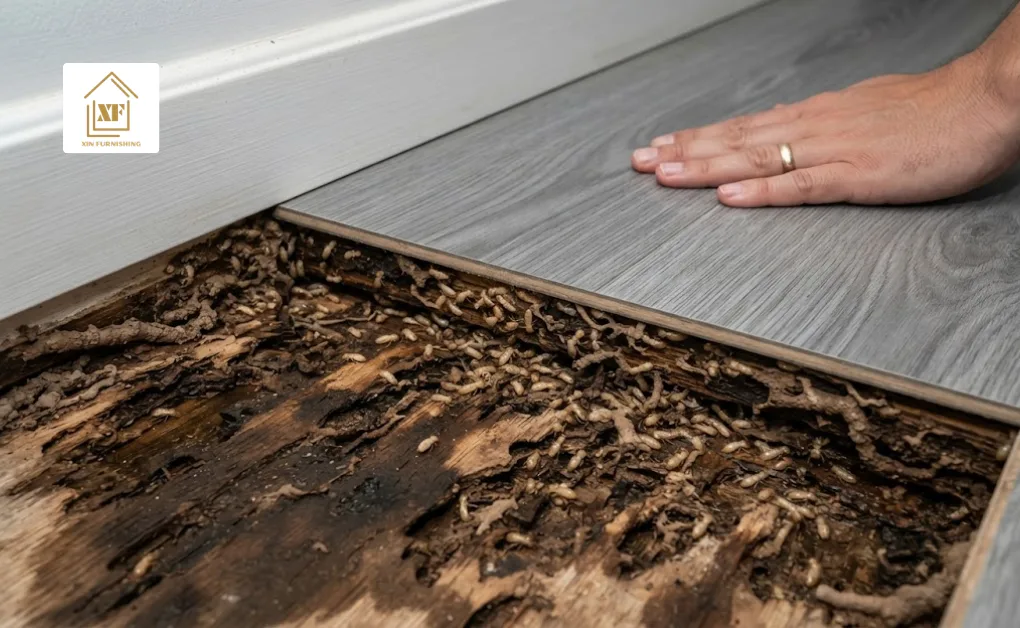
No, termites don’t eat vinyl. It has no wood fibres, so there’s nothing in it for them to feed on. If you’re worried your floor itself is being chewed up, you can relax about that part.
The real target is any timber near or under it, skirting boards, door frames, cabinets, or, in some homes, plywood underlayment, which termites can feed on freely. Your vinyl can look brand new on the surface while nearby wood is being hollowed out.
This is exactly why so many homeowners in Singapore get caught off guard. It isn’t the vinyl that fails them; it’s what’s hiding beneath it.
How Termites Get Past Vinyl Flooring in Singapore Homes
Termites don’t need to break through vinyl. They simply go around it. Risk does vary by home type. Landed properties face the highest exposure due to direct soil contact and garden areas, while HDB flats and condos are more likely to see termites travel through shared pipe openings or ground-floor access points. Here are the main ways they reach the wood near your floor.
Gaps, Edges, and Skirting
Vinyl isn’t one solid sheet glued down everywhere. It has edges and small gaps near the skirting boards, and termites are experts at finding them. A tiny crack near a wall or doorway is often all they need to slip in and start building a path toward nearby wood.
Moisture That Draws Them In
Singapore doesn’t get a break from this. Coptotermes gestroi, the termite behind most of the damage here, needs constant moisture to survive. Our weather never really gives it a reason to slow down. There’s no winter, no dry season long enough to matter, so colonies stay just as active in December as they do in July.
Water finds its way in through window frames, cracks in exterior walls, even a slow leak in a pipe you didn’t know was there. It sits and collects near skirting or door frames, and over time that softens the wood, which is exactly what termites are looking for.
Waterproof vinyl flooring helps here too, though not the way people assume. It won’t stop moisture from reaching the wood nearby. What it does do is keep your actual flooring from soaking it up the way some materials would.
Warning Signs Your Vinyl Floor May Be Hiding a Termite Problem
Termites rarely announce themselves outright, but your home usually gives off small clues before things get serious. These are the signs worth paying attention to.
Bubbling or Uneven Flooring
If part of your vinyl floor looks puffy, wavy, or slightly lifted, that’s not normal wear and tear. It can mean that moisture or nearby damage has affected the surface underneath. Even a small bump is worth checking.
A Hollow Sound When You Tap the Floor
Try gently knocking on different spots on your floor. A solid area sounds firm and dull. A hollow, empty sound can point to termite damage in nearby timber, though it can also mean loose adhesive or an installation gap. It’s worth a closer look either way.
A Musty Smell or Damp Patches
A musty smell or a damp patch on your floor isn’t always just bad airflow; it can also be a warning sign. If the smell keeps coming back even after cleaning, it’s worth looking closer.
Small Holes or Mud Tubes Near the Skirting
Termites build thin, pencil-sized mud tubes to travel safely between soil and wood. If you spot these near your skirting boards, or notice tiny holes in the wood trim, that’s a strong sign termites are already active in your home.
What Happens If Termites Are Left Untreated
A termite problem rarely stays small. What starts as a few insects feeding on nearby timber can turn into a full colony within months, spreading further into skirting, door frames, furniture, and other wooden fixtures around your home.
By the time the damage shows up, like crumbling skirting or soft spots you can push your finger into, the real cost is already much higher than a new vinyl sheet. You could be looking at replacing timber fixtures, repairing structural wood, or in serious cases, dealing with damage that affects your home’s resale value.
For most homeowners, this isn’t just about money. It’s about the home you’ve worked hard for, the memories built inside it, and the peace of mind that comes from knowing your family is safe. Termites keep working in the background, taking a little more each day until the problem is too big to ignore.
How to Protect Your Vinyl Flooring From Termites
Protecting your home doesn’t take much, just a few consistent habits and knowing when to bring in help.
Regular Termite Inspections
The easiest way to catch termites early is to have your home checked before you notice any signs. A trained inspector can spot activity near your vinyl floor that you’d never see on your own, often years before real damage shows. Checking once a year is a smart habit, especially for older homes or properties that have had past leaks or renovations.
Keep Moisture Under Control
Termites need damp conditions to survive, so fixing leaks quickly and keeping air moving through your home matters more than people realise. Check under sinks for slow leaks, clear gutters so rainwater drains properly, and make sure water doesn’t pool near your home’s foundation after heavy rain.
What to Expect When You Call a Professional
A pest control expert will usually check your skirting, door frames, and any moisture-prone areas, sometimes using tools that detect movement or soft spots without lifting your vinyl. If termites are found, they’ll explain your treatment options clearly based on how serious the problem is. Treating a small problem early usually costs far less than dealing with major repairs later, so a quick inspection today can save you a much bigger bill down the road.
Why Vinyl Is Still the Smarter Choice Against Termites
Compared to solid timber flooring, vinyl has a real advantage here. Solid wood floors give termites a direct meal: the flooring itself. Vinyl doesn’t, which is one reason it’s become such a practical choice for humid, termite-prone climates like Singapore’s, a flooring choice that works with the climate instead of against it. If you’re weighing flooring options that can handle Singapore’s humid climate, our vinyl flooring collection is a good place to start.
Conclusion
Vinyl flooring won’t get eaten by termites, but that was never really the question that mattered. The real risk sits in the timber around it, skirting, frames, and fixtures, and it’s easy to miss until the problem has already grown.
A small bump, a hollow tap, a smell that won’t go away, these are small clues your home is trying to give you. Catching them early usually means a simple fix. Waiting usually means a much bigger one.
If you’re planning a renovation or replacing your existing flooring, choosing the right supplier can make all the difference. As a trusted Vinyl Flooring Supplier in Singapore, Xin Furnishing is here to help you find a flooring solution that suits your home, lifestyle, and budget.
FAQs
Can termites live in HDB flats, or is it only landed homes?
Yes. While landed homes near soil are at higher risk, HDB flats can still get termites, especially through shared walls, pipe openings, or wooden fixtures like door frames and cabinets. Termites don’t need direct soil contact if there’s enough moisture indoors.
Who’s responsible for termite treatment: the homeowner, MCST, or Town Council?
It depends on where the termites are found. If they’re confined to your own unit, including furniture, flooring, door frames, or wall cavities inside your flat, treatment is your responsibility as the owner or tenant. If the infestation is in common areas like corridors, staircases, or void decks, it falls under the Town Council for HDB blocks, or the MCST for condominiums.
What are the early signs of termites in an HDB flat?
Look out for pencil-width mud tubes on walls or skirting, discarded wings near windows or doors, hollow-sounding wood when tapped, and bubbling or warped paint. Termites eat wood from the inside out, so damage is often more advanced than it looks by the time it’s noticed.
How much does termite treatment cost in Singapore?
It depends on the treatment method and how far the infestation has spread. As a rough guide: inspections run around S$80 to S$200, spot treatments for a single affected area are typically S$150 to S$500, and full baiting or soil barrier systems for larger infestations can range from S$800 to S$3,000 or more. Getting an inspection first is the only way to know which category your situation falls into.
Does home insurance cover termite damage in Singapore?
Generally, no. Home insurance in Singapore is private, not government-provided, and most policies treat termite damage as a maintenance issue rather than a sudden or accidental event. The compulsory HDB Fire Insurance only covers fire damage to the flat’s structure, not termites. A few private plans do offer pest control as an add-on benefit, so it’s worth checking your policy’s fine print.
Can termites come back after treatment?
They can, especially if the moisture or entry points that attracted them in the first place aren’t fixed. This is why follow-up checks and prevention steps matter just as much as the initial treatment.