You saved up, you planned, and you finally got the keys. Now the renovation is actually happening. Then someone asks: “Do you want vinyl click flooring or glue-down vinyl?” and just like that, the excitement stops.
Nobody warned you that this decision even existed. The more you research, the more confusing it gets. One article says click-and-lock, another swears by glue-down, and every showroom salesperson recommends whatever they have in stock. Meanwhile, you are just trying to get your floor right without wasting money or making a choice you will regret every single day for the next ten years.
If you’ve been searching for Click-and-Lock vs Glue-Down Vinyl Flooring, you’re not alone. Many Singapore homeowners struggle to understand which option offers better value, durability, and long-term performance.
That stress is completely unnecessary. Both options are great. They just suit different homes, lifestyles, and budgets. Once you know which one fits yours, the answer becomes obvious.
This guide breaks it all down honestly. HDB rules, Singapore humidity, real pricing, and everything in between. By the end, you will know exactly which floor belongs in your home.
Click and Lock vs. Glue-Down Vinyl Flooring: What Is the Actual Difference?
When you walk into a flooring showroom, both options look almost the same. Same designs, same finishes, same thickness options. But the way they are made and installed is completely different. That difference is what changes everything for your home.
What Is Click-and-Lock Vinyl Flooring?
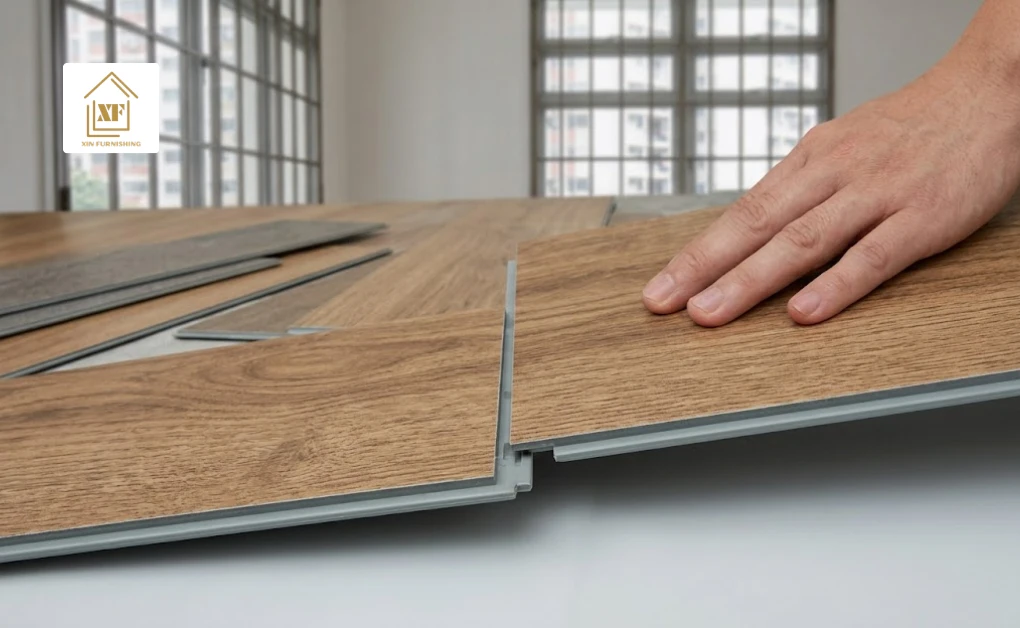
Click-and-lock vinyl planks work as an interlocking vinyl flooring system; each plank snaps into the next like puzzle pieces, with no glue, no nails, and no special tools needed. Available in realistic designs, including wood-look vinyl flooring and stone finishes, the planks float above your existing floor without being stuck to anything. So if one plank gets scratched or damaged, you can pop it out and replace just that one piece without touching the rest of the floor. It comes in 4mm, 5mm, and 6mm thickness options. The thicker the plank, the better it feels under your feet and the more sound it absorbs. Some click-and-lock planks even come with an underlay already attached at the bottom, which saves you an extra step during installation.
What Is Glue-Down Vinyl Flooring?
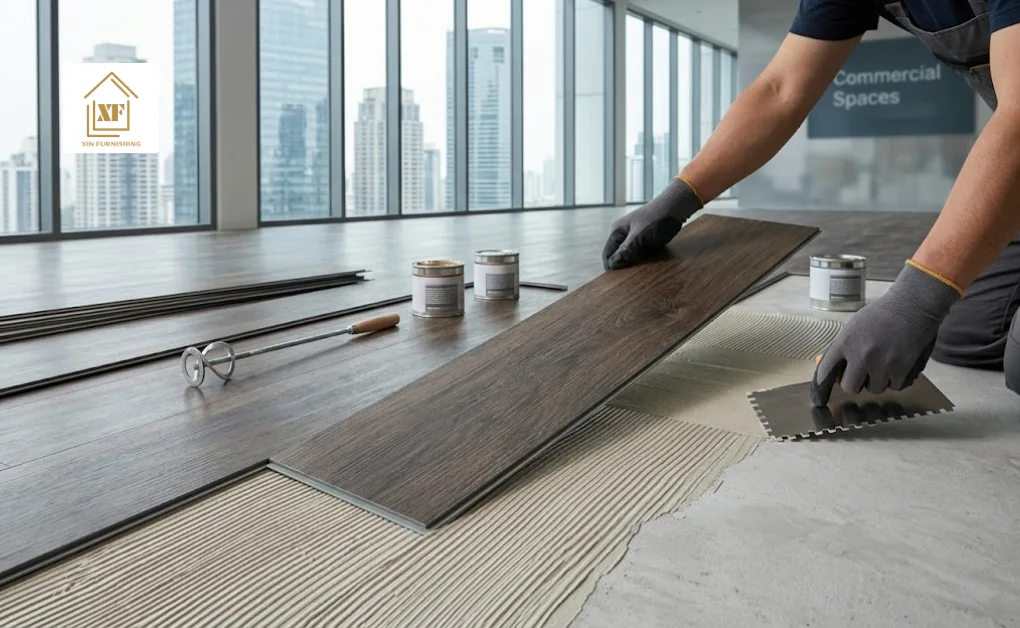
Glue-down vinyl plank flooring is stuck directly onto your floor using strong adhesive. Once it is down, it is not going anywhere. It sits very close to the ground, feels firm and solid when you walk on it, and does not move or shift at all. This type is very common in shops, offices, and commercial spaces because it handles heavy foot traffic really well. The one thing you need to know before choosing glue down is this. Once it is installed, taking it out is a big job. It involves scraping, solvents, and professional labour. So before you go this route, make sure you are ready to commit to it long term.
Click-and-Lock vs Glue-Down Vinyl Flooring: Head-to-Head Comparison
Sometimes you just need the facts laid out in front of you. No long explanations, no back and forth. Just a clean side-by-side look at how both options stack up against each other.
| Feature | Click and Lock | Glue Down |
| Installation Method | Snaps together, no glue needed | Requires adhesive and a professional installer |
| Subfloor Requirement | Tolerates minor unevenness | Needs a flat and clean surface |
| Individual Plank Repair | Single planks replaced easily | The full section must be lifted and reglued |
| Noise Underfoot | Can sound hollow without an underlay | Solid and quiet underfoot |
| Humidity Performance | Good, needs expansion gaps | Very good, dimensionally stable |
| Typical Use Case | HDB, condos, bedrooms, rentals | Shops, offices, commercial spaces |
| Permanence | Flexible, easy to change later | Permanent, built to stay |
| Overall Feel Underfoot | Slight give and bounce | Firm and grounded |
These are the specs. But specs alone do not tell the full story. What really matters is how these differences play out inside an actual Singapore home. That is where things get interesting.
Living in Singapore Changes Everything: Here Is What You Really Need to Think About
Generic flooring advice is written for everywhere and nowhere at the same time. Singapore is different. The humidity, the HDB regulations, the compact living, and the tropical heat all affect how your floor performs and how long it lasts.
1. HDB Flats: The Noise Rule That Most People Miss
Click and Lock:
If you live in an HDB flat, a good quality underlay is not optional. It absorbs the impact from daily foot traffic and stops that noise from travelling down to your neighbour below. HDB requires all flooring to meet impact noise transmission standards, and your underlay helps you meet that requirement without any stress.
Glue Down:
Glue-down transfers more impact directly into the subfloor. If your contractor does not prep the surface properly before installation, that extra impact becomes a noise problem fast. Always confirm your vinyl flooring contractor handles the surface preparation before work begins.
2. Singapore Heat and Humidity: Which Floor Actually Survives?
Click and Lock:
Every time you lay vinyl-click flooring, a 5-10mm expansion gap needs to be left along every wall. Vinyl naturally expands in Singapore’s heat, and without that gap, the planks have nowhere to go. They push against each other, buckle, and lift. Most homeowners only find out about this mistake after it has already happened.
Glue Down:
Because glue-down bonds directly to the subfloor, it resists that thermal movement much better. For rooms that go from hot outdoor air to strong air conditioning and back again throughout the day, glue-down stays flat and stable without any fuss.
3. Landlords and Rental Homes: The Repair Cost Nobody Talks About
Click and Lock:
Tenants are hard on floors. But with click-and-lock, a scratched or damaged plank takes under half an hour to fix. You lift the piece out, snap a new one in, and it looks brand new again. For landlords with multiple units, that kind of quick, easy repair makes a real difference to your bottom line over the years.
Glue Down:
With glue down, even minor damage means lifting an entire bonded section, sourcing a colour match, regluing, and waiting for it to set. That is a much bigger job and a much bigger bill every single time it happens. If refreshing the home between tenants is part of your plan, glue-down makes it a lot more expensive than you might expect.
4. Wet Areas: What Singapore Kitchens and Bathrooms Actually Need
Click and Lock:
The seams between click-and-lock planks are not fully sealed. In a Singapore kitchen or bathroom, water can slowly seep beneath the surface over time if those seams are left untreated. Before installing in any wet area, ask your installer about properly sealing the seams or laying a waterproofing membrane on the subfloor first.
Glue Down:
Glue-down sits much more tightly to the surface, with minimal gaps between planks, which makes it naturally more resistant to water seeping beneath. For wet areas, it is the more reliable choice of the two. That said, a waterproofing membrane underneath is still worth doing regardless of which type you go with.
How Much Does Vinyl Flooring Actually Cost in Singapore? Honest Numbers
Click-and-lock vinyl flooring costs between SGD $3.50 and $6.50 per sqft for materials. Glue down comes in slightly cheaper at SGD $2.50 to $5.00 per sqft. But click-and-lock can be self-installed, saving you SGD $1.50 to $3.00 per sqft in labour costs. Glue-down almost always needs a professional, so the savings disappear fast.
There are also a few hidden costs worth knowing about:
- Underlay if not pre-attached: SGD $0.50 to $1.20 per sqft
- Adhesive for glue down: SGD $0.30 to $0.80 per sqft
- Removing old flooring: SGD $0.80 to $2.00 per sqft
Always check the wear layer thickness before finalising your budget. Anything below 0.3mm will show scratches within the first year of normal use in a Singapore home.
Click and Lock vs Glue Down: Which One Is Right for You?
Forget the specs for a moment. Just find yourself in one of these two lists, and you will have your answer.
Choose Click and Lock if you:
- Live in an HDB flat or condo
- Are a tenant who wants to restore the floor before moving out
- Are a landlord looking to keep renovation costs low long-term
- Plan to renovate or refresh your home within the next few years
- Have a busy household with heavy day-to-day use
- Prefer to handle the installation yourself without hiring a contractor
Choose Glue Down if you:
- Own a retail shop, cafe, restaurant, or office space
- Need the most stable and firm feeling floor underfoot
- Expect very high daily foot traffic over many years
- Are making a permanent installation with no plans to change it
- Have a professional contractor who has already prepped a flat subfloor
Both options will serve you well. What matters is matching the floor to the life that happens on it.
Vinyl Flooring Mistakes Singapore Homeowners Should Avoid
You now know the features, the costs, and which type suits your home. Before you sign anything, read these four mistakes first.
Mistake 1: Ignoring Door Clearance Height
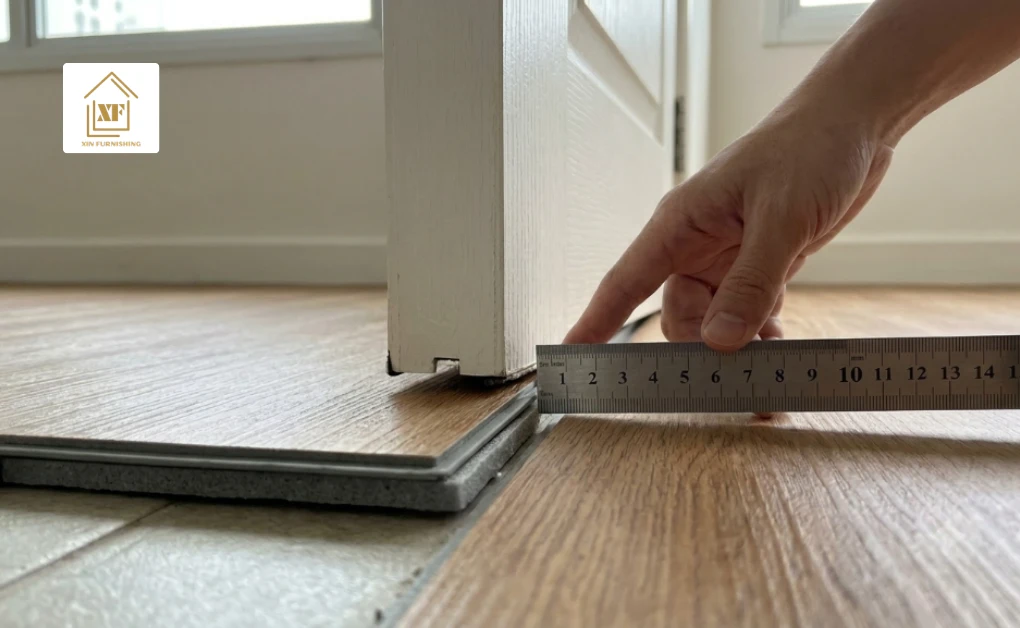
Adding vinyl flooring increases your total floor height, especially when underlay is involved. If your doors were fitted to your existing flooring, that added thickness can stop them from opening or closing properly. Check your door clearance before you purchase anything.
Mistake 2: Choosing a Colour in Showroom Lighting
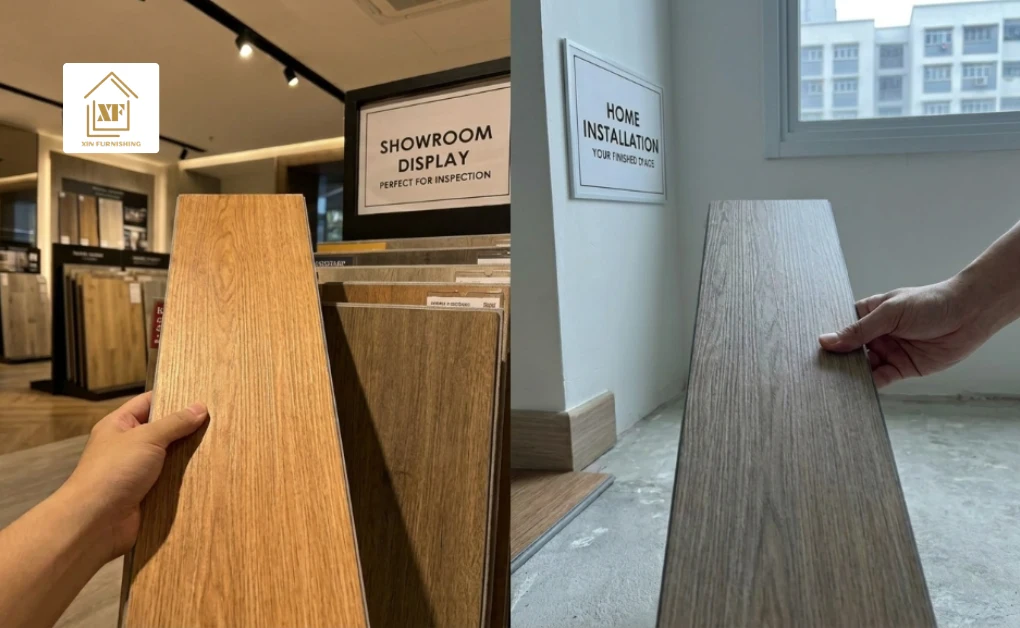
Showrooms use warm, controlled lighting that makes every floor look beautiful. Your home is completely different. North-facing units are cooler and darker, west-facing units get harsh afternoon sun. Always bring a sample home and live with it for a full day before committing to a full order.
Mistake 3: Judging Quality by Showroom Feel Alone
Pressing your foot on a display board tells you very little about long-term performance. Always ask for the wear layer thickness and the AC4 or AC5 durability rating before you buy. A floor that feels premium in a showroom can underperform badly at home without these specs.
Mistake 4: Not Checking Warranty and Local After-Sales Support
Some flooring brands sold in Singapore have no local distributor support behind them. If your floor develops issues after installation, you want a brand with a local team to back it up. Always ask about the Singapore warranty and after-sales support before signing anything.
Conclusion
You came in confused between two options. Now you have everything you need to decide with confidence.
Click and lock gives you flexibility and easy installation. Glue down gives you permanence and rock-solid stability. Neither is the wrong choice. The wrong choice is picking one without understanding which fits your life. Your floor is where daily life actually happens. It deserves a thoughtful decision, not a rushed one.
If you want to know which type of vinyl flooring suits your home best, contact Xin Furnishing, a trusted vinyl flooring supplier in Singapore with a wide range of premium options.
FAQs
1. Can vinyl flooring be installed over existing tiles in Singapore?
Yes, and this is actually one of the biggest advantages of click-and-lock vinyl. It can be laid directly over existing tiles as long as the surface is clean, flat, and dry. This saves you the cost and hassle of hacking out old tiles, which in an HDB also means no hacking permit needed.
2. Is vinyl flooring safe for children and pets?
Good quality vinyl flooring from reputable brands is safe for the whole family. Look for products that are certified free from formaldehyde, heavy metals, and harmful phthalates. Always ask your supplier for the safety certification before purchasing.
3. How long does vinyl flooring last in Singapore?
A good quality vinyl floor with a wear layer of 0.3mm or above typically lasts between 10 to 20 years in a Singapore home with normal use and proper care. Commercial spaces with heavy foot traffic should expect a closer to 8 to 12 years.
4. Does vinyl flooring fade in Singapore’s sunlight?
It can over time, especially in west-facing units that receive strong afternoon sun. Most quality vinyl is UV resistant but prolonged direct sunlight will cause gradual colour change. Using curtains, blinds, or UV protective window film in sun-heavy rooms helps significantly.