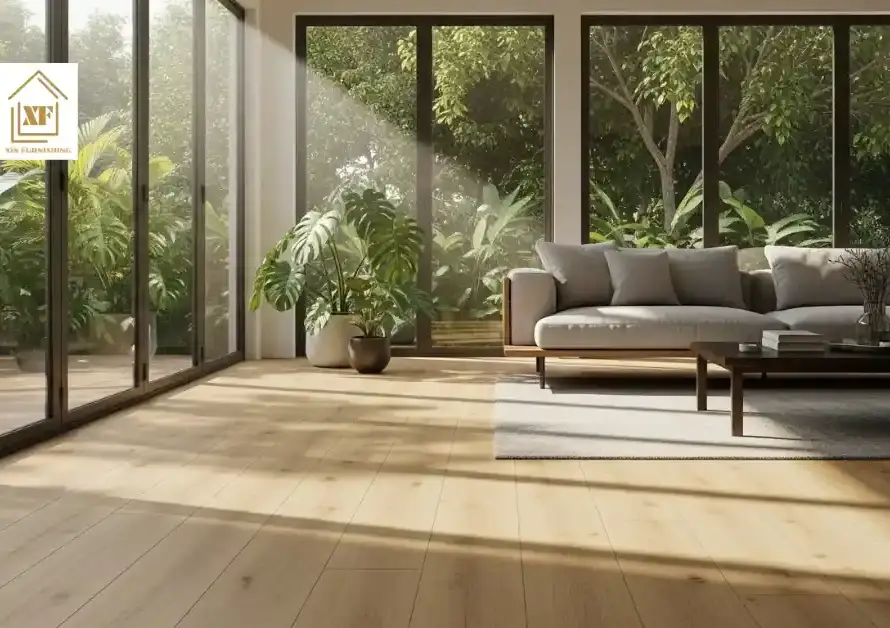
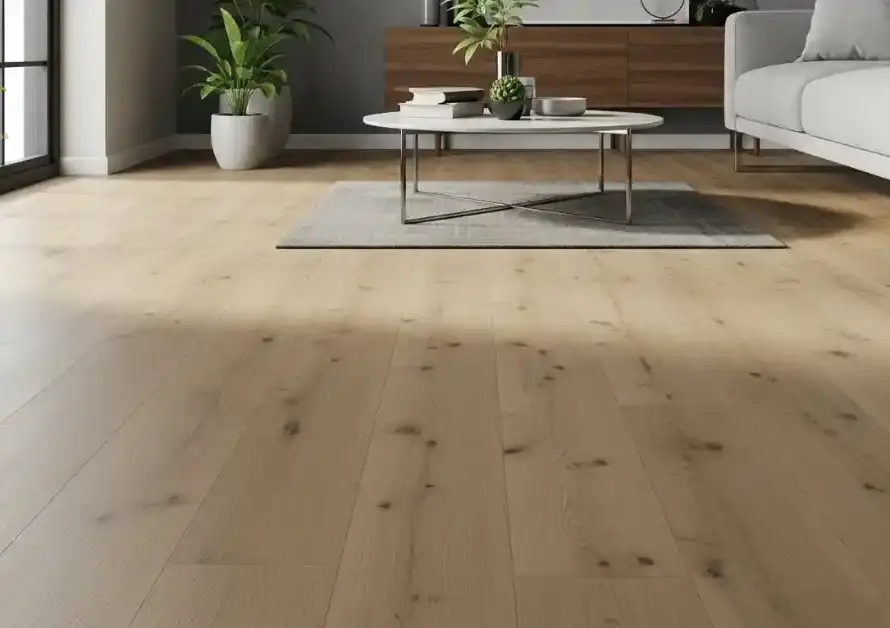
Most homes and flats in Singapore now use vinyl flooring. It has replaced tiles in bedrooms and living rooms, and it is gaining ground in kitchens too.
The reasons are practical, not fashionable. Vinyl fits how renovations actually work here: tight timelines, no hacking, high humidity, and homes that need to be liveable again by the weekend.
Below are the ten Benefits of Installing Vinyl Floors that matter most in 2026, with details on each one.
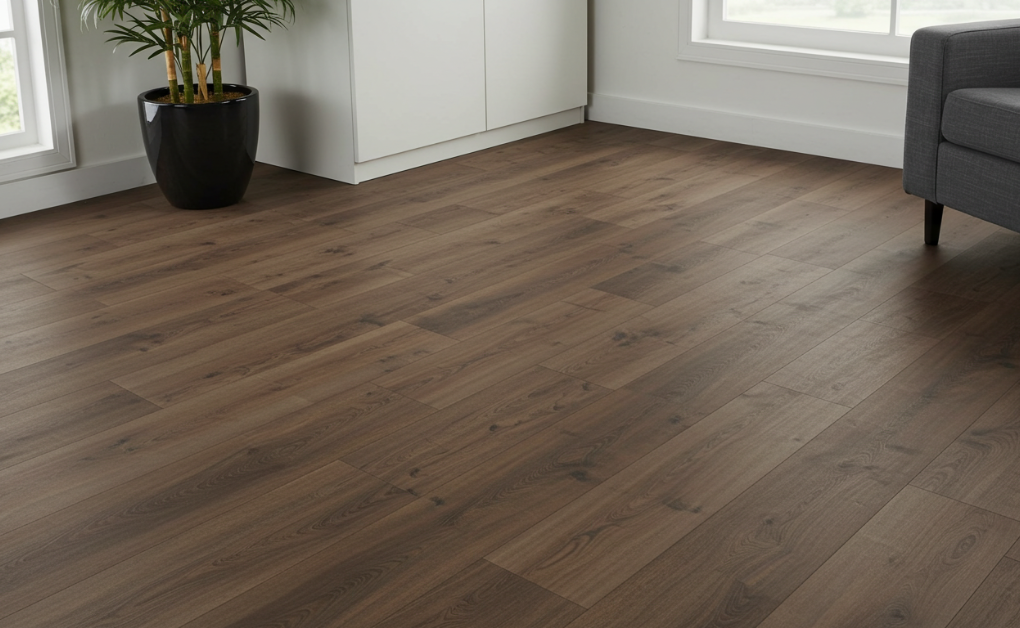
10 Benefits of Installing Vinyl Floors For Singapore Homes
Vinyl can be laid over existing tiles without hacking; most homes are finished in a single day, and it handles humidity without swelling or warping. It is fully waterproof on the surface, quieter underfoot than tile, and costs a fraction of timber or marble while looking much like them.
1. No hacking, so your renovation stays clean and fast
Hacking old tiles is the loudest, dustiest, and most disruptive part of a renovation. It means debris removal, extra permits, more days of work, and neighbours who stop saying hello.
Vinyl usually avoids all of it. Click-lock planks are laid as a floating floor directly over sound, reasonably level existing tiles. The old floor stays in place.
Renovation work in an HDB flat still needs to follow rules on permits and approved works, so check HDB’s renovation guidelines for your specific job before you start. A good contractor will handle the paperwork with you.
2. Most homes are finished in a single day
A full flat of vinyl usually goes down in one day. Our own installations are typically completed within a day, and the floor is walkable straight afterwards. A single-day install also means less time working inside permitted renovation hours, which matters most in flats and condos where neighbours are home during the day.
If the subfloor needs cement screeding or self-levelling first, add a day or two. That is the only common exception.
For anyone renovating a home they are already living in, or a shop that loses money while closed, this is worth real money.
3. It is built for Singapore’s humidity
Timber and laminate both react to moisture in the air. Timber moves and cups. Laminate has a compressed fibreboard core that swells if water reaches it, and swelling is permanent.
Vinyl is a PVC-based product. It does not absorb moisture, so year-round humidity, damp mopping and a wet monsoon season do not affect it. Rigid SPC cores stay dimensionally stable even in west-facing units where the afternoon sun heats the floor for hours.
This is the most important benefit for our climate, and it is the one people appreciate three years later rather than on day one.
4. The surface is 100% waterproof
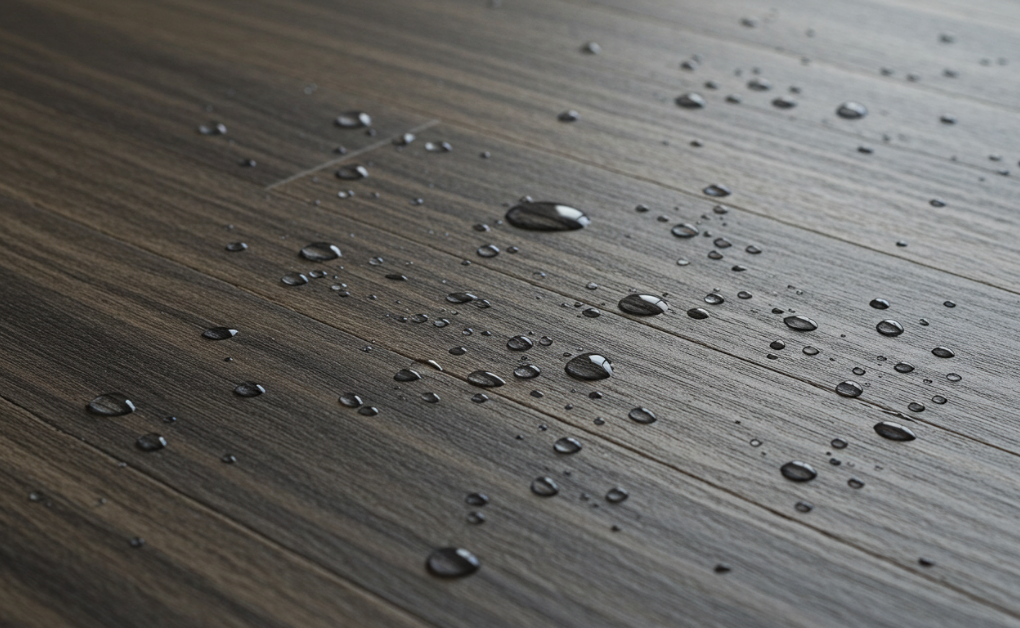
Spills, pet accidents, an overflowing washing machine, kids with drinks. None of it damages the plank surface. Wipe it and carry on.
That makes vinyl a practical choice for kitchens, service yards and laundry areas, where timber would be a mistake.
One honest caveat: a waterproof surface is not the same as a waterproof floor system. Full bathrooms are laid with a gradient to a floor trap and get constant standing water, so tiles remain the right choice there.
5. It stands up to kids, pets and daily traffic
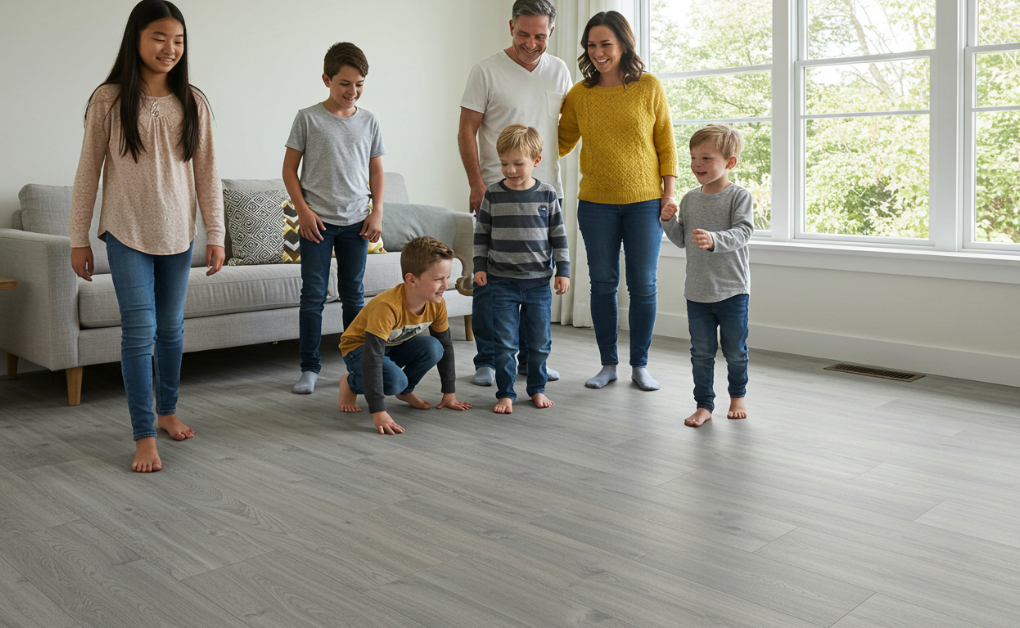
The clear wear layer on top does the work. It resists scuffs from shoes, claws, chair legs and dragged toys, and it wipes clean without staining.
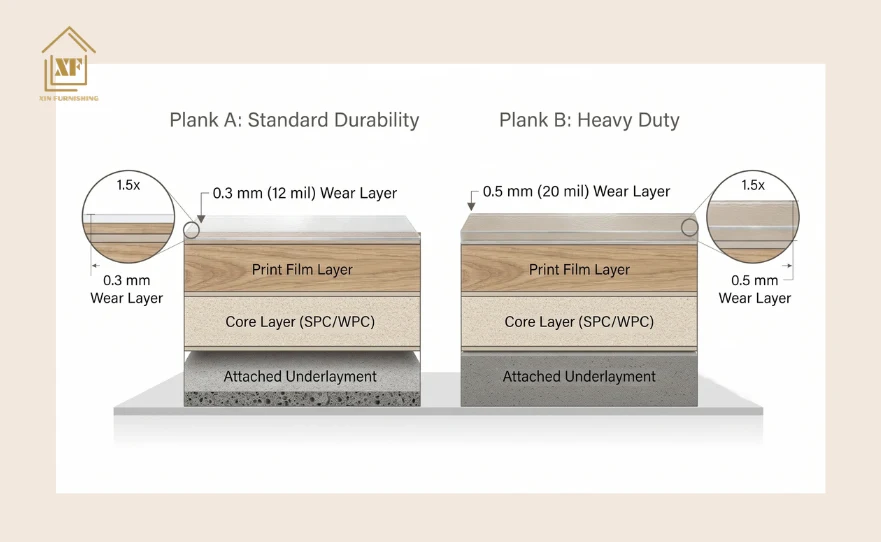
Performance depends entirely on that layer’s thickness. A 0.3 mm wear layer from a budget supplier scuffs through far sooner than a 0.5 mm one, even though they look identical in a showroom. Every plank we supply uses a 0.5 mm wear layer, backed by a 15-year residential warranty.
Vinyl is not indestructible. Heavy furniture on small feet can dent it, and dragging a sofa without felt pads will mark it. Both are easy to prevent.
6. Quieter and warmer underfoot than tile
Tile is hard, cold, and loud. In a high-rise flat, footsteps carry to the unit below, and that causes more neighbour complaints than most people expect.
Vinyl absorbs impact sound rather than reflecting it. Planks with a built-in underlay, like our 6.5 mm range, cut it further without needing a separate layer. It also feels warmer to the touch, which is noticeable in air-conditioned bedrooms.
Flexible LVT is the softest and quietest option, which is why most of our wood vinyl flooring goes into bedrooms and living rooms. Rigid SPC feels firmer underfoot, so choose based on how you use the room.
7. The designs now look genuinely convincing
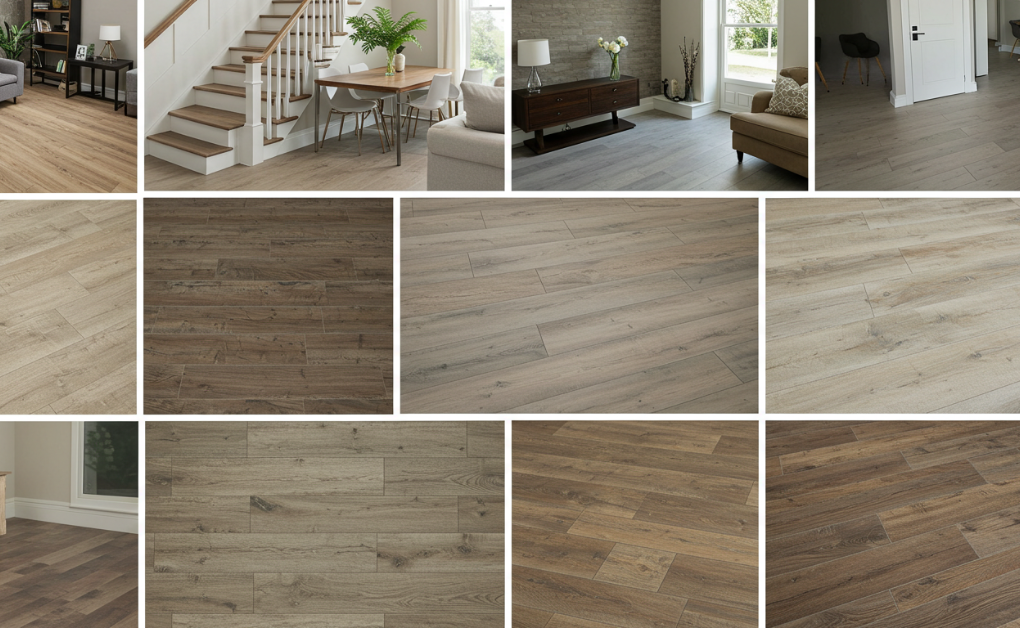
Printing has changed. Modern planks use high-resolution design films with embossed textures aligned to the grain, so the surface you feel matches the pattern you see.
You are not limited to wood, either. Stone and marble tiles give a cooler, more architectural feel, and microcement finishes deliver the seamless concrete look that minimalist interiors are built around, without the cracking and curing time of real microcement.
That means you can match a floor to the interior you actually want, rather than the interior your budget allows.
8. Maintenance is genuinely low
No polishing. No waxing. No refinishing every few years. No grout lines going dark and needing scrubbing.
Sweep or vacuum to keep grit off the surface, then damp mop weekly with a pH-neutral cleaner. That is the whole routine. Our guide to cleaning vinyl floors covers it in full.
Over a ten-year life, ownership costs a mop head and a bottle of cleaner.
9. It costs a fraction of timber or stone
This is where vinyl wins outright. Typical Singapore supply-and-install ranges for 2026:
A full 4-room HDB flat of roughly 860 sq ft typically costs about S$2,600 to S$4,500 in vinyl, installed. The same flat in marble runs into five figures.
Ask for an all-in quote after a site measurement. Screeding, skirting, disposal, and door trimming are often quoted separately, and that is where low headline prices hide their real cost.
10. It is a practical choice for landlords and sellers
If you rent out a unit, you need a floor that survives tenants, cleans easily, and can be replaced room by room without a full renovation. Vinyl does all three, at a cost that makes replacing it between tenancies realistic.
If you are selling, a clean, modern floor lifts how a unit shows without a major spend. Buyers walk in and see a home that has been looked after.
What To Check So You Actually Get These Benefits
Not all vinyl delivers the list above. Three things decide it:
The wear layer
Ask for the figure in millimetres, and treat 0.5 mm as your minimum. Two planks that look identical in a showroom can wear very differently, and this number decides which is which.
The subfloor preparation
A level base is what stops hollow sounds and lifting joints later. We handle cement screeding and self-levelling in-house, so we price it in the quote rather than leaving it as someone else’s problem mid-job.
The installer
The plank matters, and so does the person laying it. Ask whether the team is in-house or subcontracted, and ask what the warranty covers.
Read our full guide on what vinyl flooring is and how to choose it before you compare quotes.
None of these benefits holds if the floor is badly laid, which is why Xin Furnishing keeps its installation and levelling crews in-house. WhatsApp +65 9690 2060 for a free site measurement.
Frequently Asked Questions
Is vinyl flooring worth it in Singapore?
For most homes, yes. It handles humidity, avoids hacking, installs in a day, and costs far less than timber or stone. The main exception is a full bathroom, where tiles remain the better choice.
How long does vinyl flooring last?
With a 0.5 mm wear layer and normal home use, expect 10 to 15 years, and longer in bedrooms and low-traffic rooms. A level subfloor and gentle cleaning extend it further.
Is vinyl flooring good for HDB flats?
It is the most common choice for HDB renovations. Laying over existing tiles avoids hacking, keeps the job quiet, and finishes fast. Check the current renovation rules on the HDB website for your specific works.
Does vinyl flooring increase a home’s value?
It rarely changes a valuation on its own, but a clean, modern floor helps a unit show better and rent out faster.
Is vinyl flooring safe for children and pets?
Yes. The surface is non-porous, easy to sanitise and slip-rated for safety. Ask your supplier for the emissions certification if indoor air quality is a priority for you.
Is vinyl better than tiles?
It depends on the room. Tiles win in bathrooms and where you need a very hard surface. Vinyl wins on comfort, noise, installation speed, and cost everywhere else.