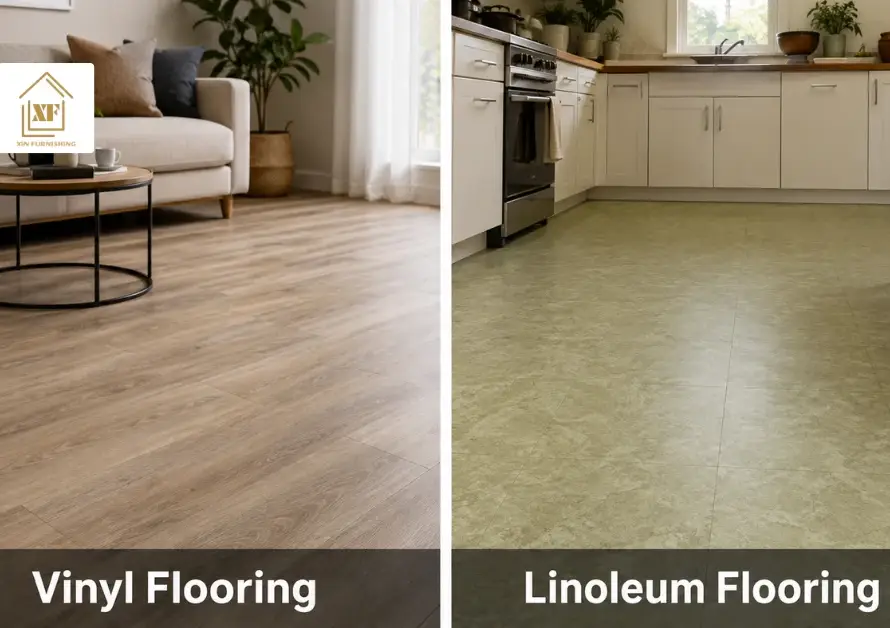
Vinyl flooring is common in many Singapore homes because it is durable, comfortable, and easy to maintain. But over time, everyday use and the humid weather can lead to issues like lifting edges, air bubbles, scratches, or small gaps.
When these problems appear, they usually start small and easy to ignore, but can get worse over time. Most of them can still be fixed without replacing the entire floor.
In this guide, we’ll explain how to fix vinyl flooring and go through the most common issues in Singapore homes, along with simple step-by-step repair methods.
Tools You Need to Fix Vinyl Flooring
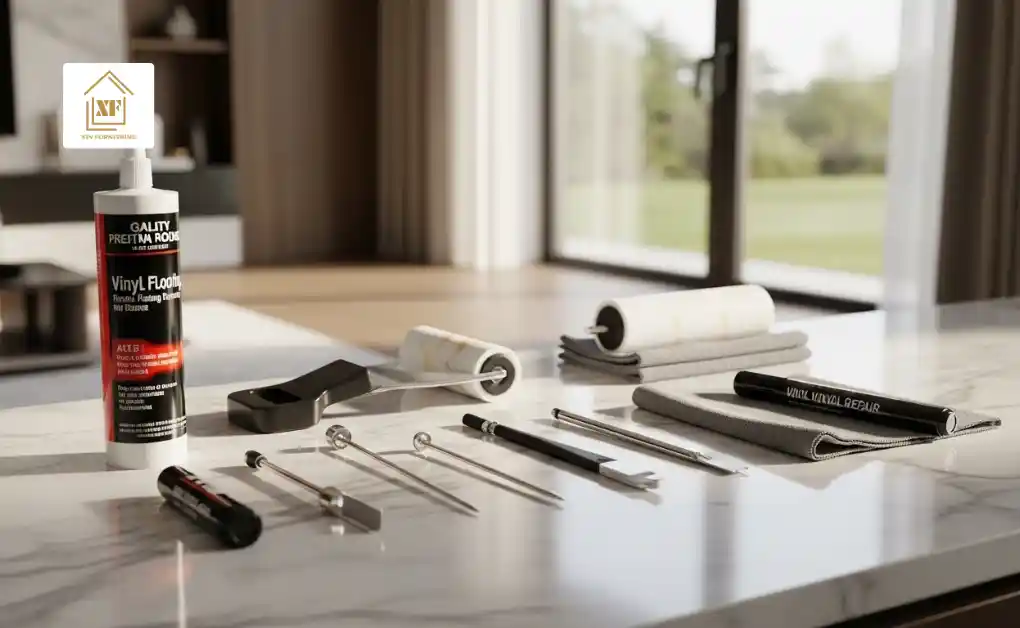
Before getting started with repairing vinyl floors, it helps to have a few simple things ready. You don’t need anything complicated, just basic tools that make the job easier and cleaner.
- Vinyl flooring adhesive is used to fix lifting edges or loose areas
- A roller or something heavy helps press the flooring down evenly
- A pin or needle is used to release air bubbles
- A clean cloth keeps the surface dust-free before fixing
- A vinyl repair kit or marker helps cover scratches
Once these are ready, the actual fixing part becomes much more straightforward and less messy.
Common Vinyl Flooring Problems and How to Fix Them
Most vinyl flooring issues in Singapore homes can be repaired at home if they are identified early and handled correctly. The key is understanding the type of problem before applying the right repair method.
Below are the most common problems and how to repair vinyl flooring step by step.
Lifting or Peeling Edges
This issue is common in high-traffic areas such as doorways, kitchen entrances, corners, or near appliances. Over time, especially in Singapore’s humid climate, the adhesive underneath vinyl flooring can weaken.
How to fix it:
- Lift the loose edge slightly and check underneath
- Remove dust or debris, as even small particles can affect bonding
- Apply a thin, even layer of vinyl flooring adhesive
- Press the flooring down firmly so it sits flat
- Use a heavy object or roller and leave it for 4–6 hours (or overnight in humid conditions)
If it doesn’t hold:
If the edge lifts again after a day or two, the vinyl flooring adhesive bond may have failed, or moisture may be affecting the subfloor. In this case, re-glueing alone may not be a long-term solution.
Air Bubbles or Raised Areas in Vinyl Flooring
Air bubbles in vinyl flooring usually occur when air or moisture gets trapped beneath the surface. This can happen after installation or develop gradually over time due to changes in humidity.
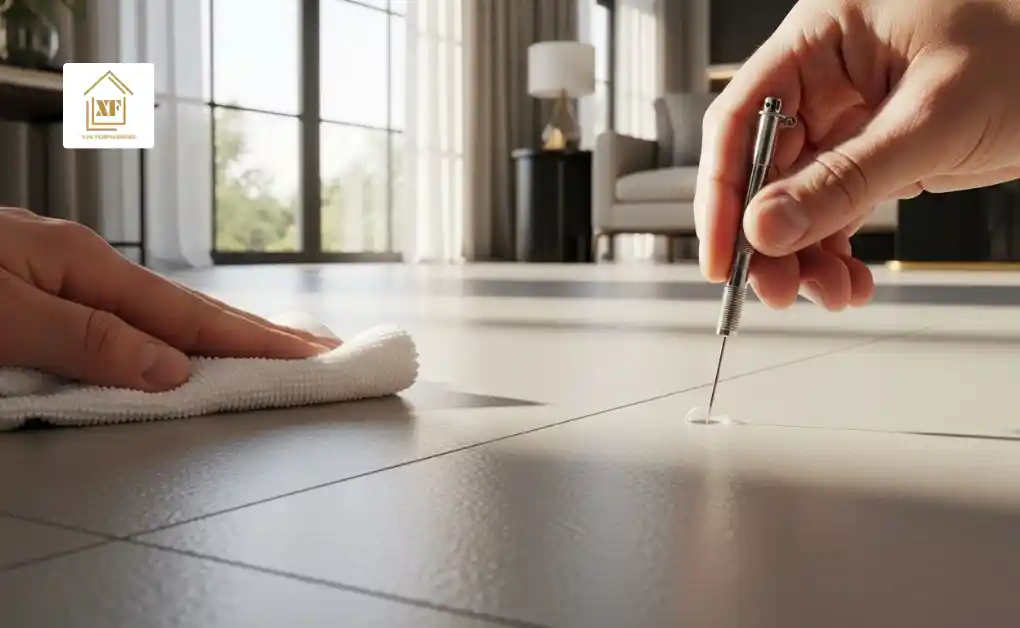
Steps to fix:
- Use a fine needle to make a small hole in the centre of the bubble
- Gently press from the outer edges to release trapped air
- Smooth the surface with a clean cloth once it is flat
- For larger bubbles, place a lightweight on top for a few hours
If it keeps returning:
Recurring bubbles in vinyl flooring usually indicate trapped moisture beneath the surface, which cannot be fully resolved with surface repairs alone.
Scratches and Scuff Marks on Vinyl Flooring
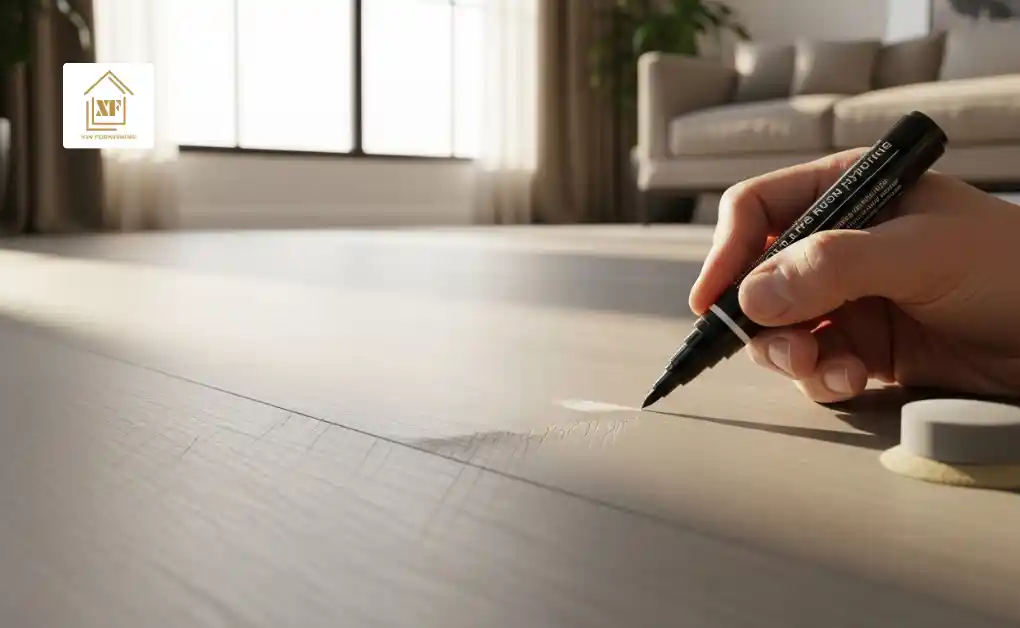
Scratches are common on vinyl flooring, especially in areas with frequent foot traffic or furniture shifting. While they do not affect performance, they can affect appearance.
Quick fix:
- Clean the scratched area to remove dust and residue
- Apply a vinyl repair marker or filler in thin layers or use a kit designed to repair vinyl tile surfaces.
- Allow it to dry completely
- Lightly buff to blend with the surrounding floor
Note:
Deeper scratches that catch your fingernail cannot be fully removed, but vinyl floor repair products can make them much less visible.
If you want to know more, you can check our guide on how to remove scratches from vinyl flooring for detailed methods.
Small Gaps or Loose Vinyl Planks
Gaps in vinyl flooring often form due to expansion and contraction caused by temperature changes and air-conditioning, which is common in Singapore homes.
What to do:
- Gently push vinyl planks back into place by hand
- Apply light pressure to help them settle
- Use a small amount of vinyl adhesive if movement continues
- Avoid forcing planks tightly together
If it keeps happening:
Repeated gaps in vinyl flooring may indicate installation issues or uneven subfloor conditions.
Dents or Pressure Marks in Vinyl Flooring
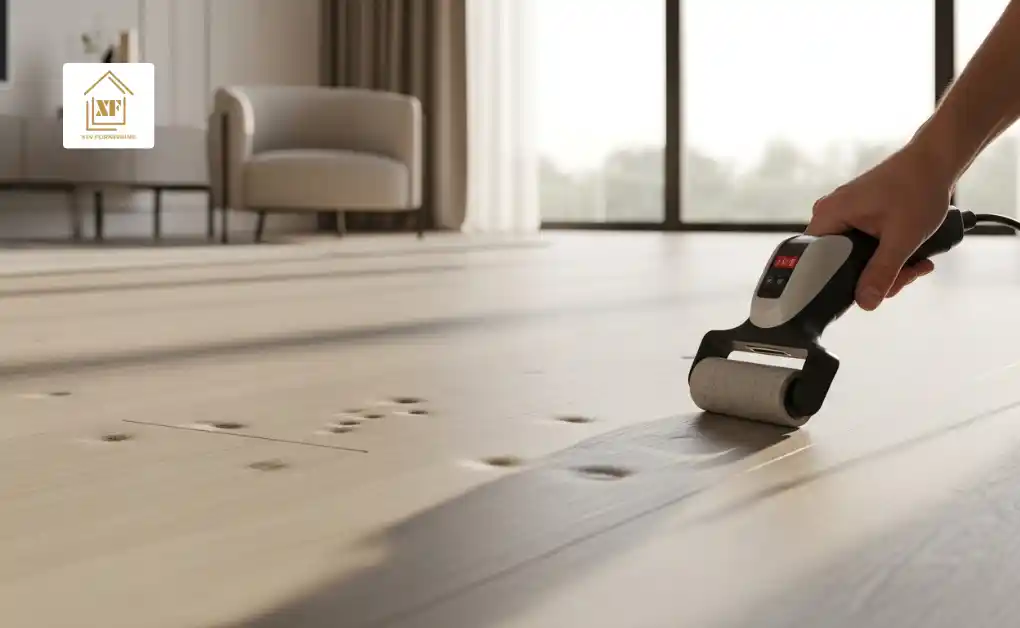
Dents usually occur under heavy furniture such as sofas, beds, or cabinets that remain in one position for long periods.
What you can try:
- Place a slightly warm (not hot) cloth over the dent
- Apply gentle pressure to help the vinyl recover slightly
Note:
Deep dents in vinyl flooring caused by long-term weight may not fully recover, depending on the material thickness.
Warping or Uneven Vinyl Flooring Surface
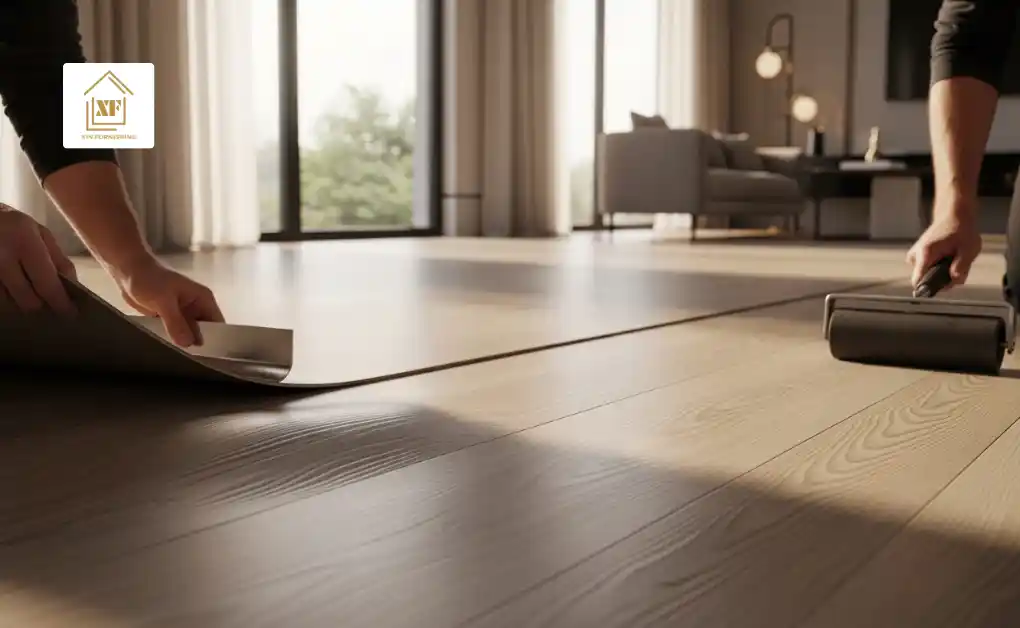
If vinyl flooring looks uneven or slightly wavy, it is often caused by moisture, humidity changes, or an uneven subfloor rather than surface damage.
What to check:
- See if the area improves when the humidity stabilises
- Monitor whether the issue spreads over time
If it persists:
Warping in vinyl flooring usually indicates a subfloor issue that cannot be fixed with surface repair alone.
Tears, Cuts, or Deep Vinyl Flooring Damage
Cuts and tears in vinyl flooring usually result from sharp objects or dragging heavy furniture. These go deeper than surface scratches.
How to fix a tear in vinyl flooring:
- Apply vinyl floor repair compound for small cuts
- Smooth and blend into the surrounding surface
If the damage is severe:
If the cut exposes the base layer, replacing the affected vinyl plank or section is usually the best solution.
Water Damage or Moisture Under Vinyl Flooring
Water damage in vinyl flooring is more serious as moisture can affect both the surface and subfloor.
What this means:
- Check for soft or spongy areas
- Avoid sealing moisture underneath the vinyl flooring
- Allow proper drying if possible
If the issue spreads:
Affected sections of vinyl flooring usually need to be removed, dried, and reinstalled properly.
Discolouration or Fading in Vinyl Flooring
Fading or discolouration in vinyl flooring is usually caused by sunlight exposure, cleaning chemicals, or long-term wear.
What you can do:
- Use rugs or coverings in areas with strong sunlight
- Maintain regular, gentle cleaning routines
Note:
Once vinyl flooring fades, the colour cannot be restored, only managed or covered.
Mistakes to Avoid When Fixing Vinyl Flooring
When doing small vinyl flooring repairs, the way you handle the process matters just as much as the fix itself. A few simple mistakes can weaken the repair or cause the issue to return.
- Using too much adhesive, which can push up from underneath and create uneven surface spots
- Not checking for moisture before repair, especially in areas exposed to spills or humidity
- Using strong or harsh cleaners immediately after repair can affect bonding and curing
- Delaying small issues like minor lifting or bubbles, allowing them to spread into larger damage
When to Call a Professional for Vinyl Flooring Consultation
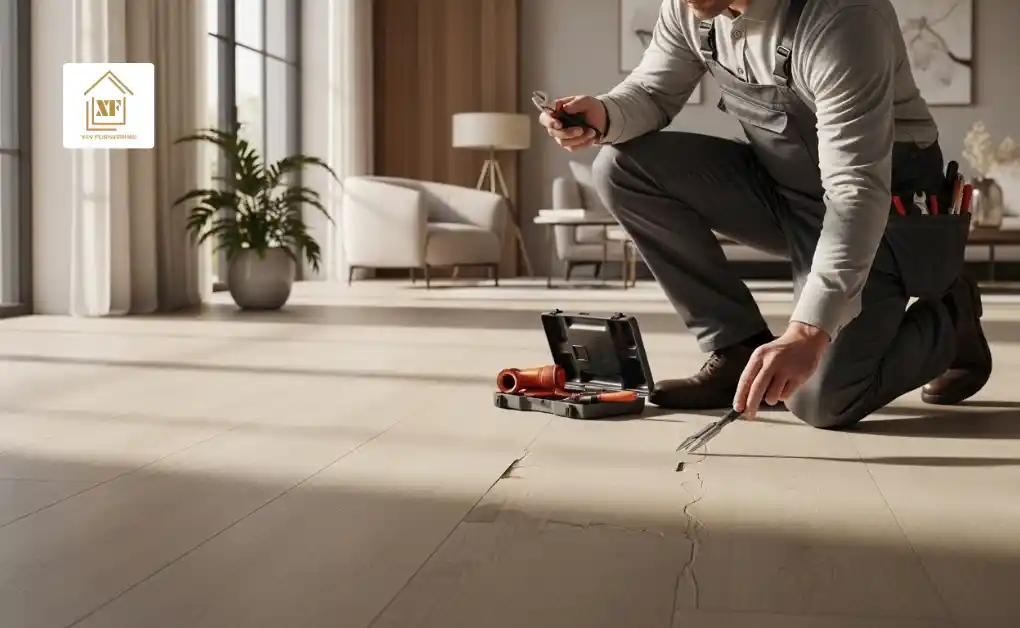
Most minor vinyl flooring problems can be fixed at home. However, some situations require professional repair to avoid further damage.
It’s best to call a professional if large sections keep lifting or bubbling even after repair, if the same area keeps coming loose repeatedly, or if there are signs of moisture trapped under the flooring. You should also seek help if the flooring continues shifting or separating over time.
In these situations, professional guidance can help identify the root cause and ensure a long-term solution. If you are planning to repair or replace your vinyl flooring, consider reaching out to Xin Furnishing, a trusted vinyl flooring supplier in Singapore. Our team can assist you in selecting the right flooring based on your home’s needs, usage, and design preferences, helping you make a well-informed decision.
How to Prevent Vinyl Flooring Damage
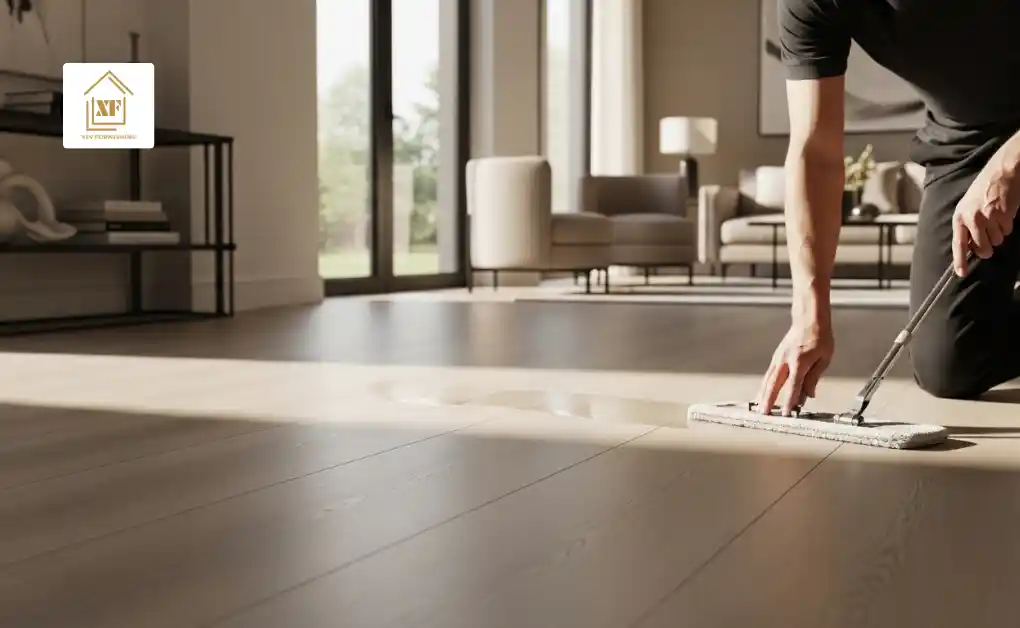
Once vinyl flooring is repaired, a few simple habits can help extend its lifespan, especially in Singapore’s humid climate.
- Clean spills immediately to prevent moisture from seeping underneath
- Use furniture pads under heavy items like sofas, beds, and cabinets
- Avoid dragging furniture across the floor to reduce scratches and edge lifting
- Maintain stable indoor humidity using air-conditioning or ventilation
These small habits help keep vinyl flooring smooth, stable, and long-lasting. You can also check our guide on how to maintain vinyl flooring for more detailed care tips to extend its lifespan.
Conclusion
Vinyl flooring problems are common in Singapore homes due to humidity and everyday use, but most issues can be fixed when handled early with the right methods. Lifting edges, air bubbles, scratches, gaps, dents, and even minor surface damage can often be repaired without needing a full replacement.
Knowing how to fix vinyl flooring properly helps prevent small issues from turning into bigger damage and keeps the floor looking neat and stable for longer. However, when problems are linked to moisture or subfloor conditions, professional inspection is usually the better long-term solution.
FAQs
1. Can vinyl flooring be repaired without replacing it?
Yes, most minor issues like lifting edges, small bubbles, and surface scratches can be repaired without replacing the flooring. Replacement is usually only needed when there is large-scale damage or repeated failure in the same area.
2. How do I know if vinyl flooring damage can still be repaired?
Yes, most vinyl flooring damage can still be repaired if it is only on the surface, such as small lifts, bubbles, or scratches. However, if there is moisture damage, warping, or movement from the subfloor, professional repair may be needed.
3. What is the best adhesive for vinyl flooring repairs?
The best option is a vinyl flooring adhesive designed specifically for vinyl repairs. It ensures strong bonding for loose edges or planks and works better in humid conditions like Singapore.
4. Can I use the same glue for vinyl and laminate flooring repairs?
No, vinyl and laminate flooring require different adhesives. Vinyl flooring uses flexible vinyl adhesive, while laminate flooring often relies on different locking or installation systems. Using the wrong adhesive can weaken the repair.
5. How do I prevent vinyl flooring problems from coming back?
Regular maintenance helps prevent issues. Avoid excess moisture, clean spills quickly, use furniture pads, and maintain stable indoor humidity to reduce expansion and contraction.