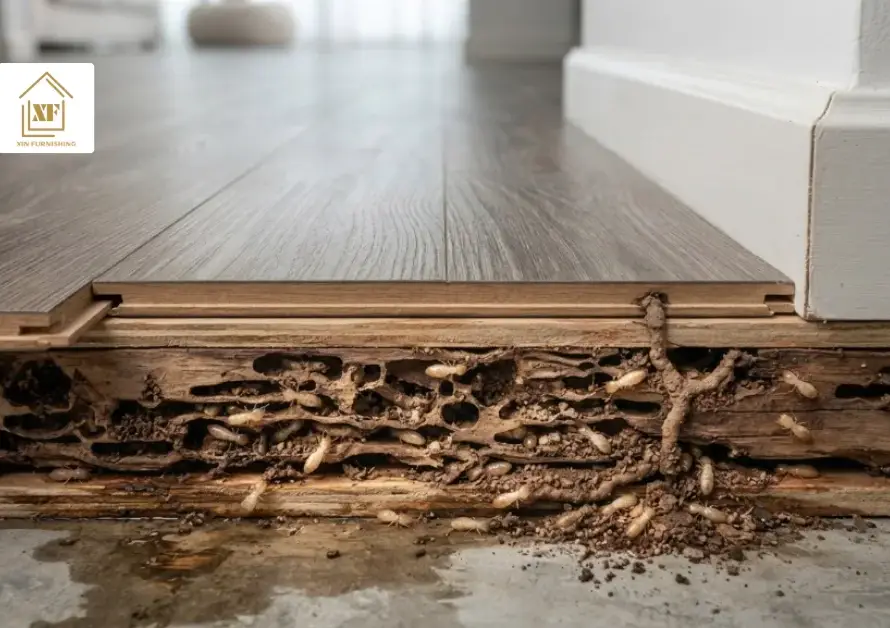
Vinyl is one of the easiest floors to clean, right up until something sits on it overnight. Most stains come out with warm water and a soft cloth. A few need a targeted treatment. And a small number cannot be removed at all because they are not sitting on the floor; they are in it. Knowing which kind you are dealing with saves you from scrubbing a mark that was never going to come out. Good vinyl floor maintenance prevents most of them from arriving in the first place.
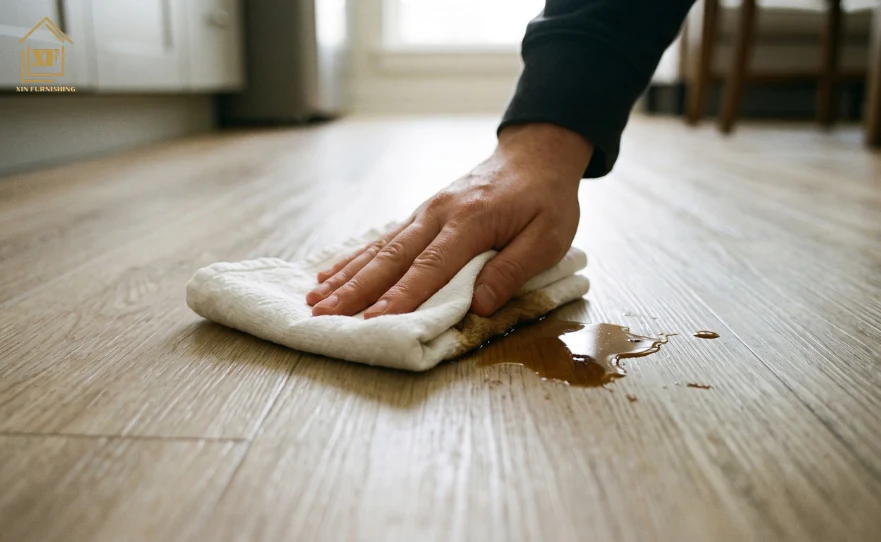
How to Remove Stains From Vinyl Plank Flooring – THE COMPLETE CHART
Blot the spill rather than wiping it, then clean with warm water and a drop of mild dish soap. If the mark stays, use a baking soda paste for food and grease, or isopropyl alcohol on a cloth for ink and dye. Rinse with clean water afterwards. Never use bleach, acetone, abrasive pads or oil-based products.
Find your stain below, then read the section underneath for the full method.
Four Rules Before You Start Removing Stains
Act fast
A fresh spill is a wipe. The same spill left overnight is a project. Light floors and dark liquids are the worst combination.
Blot, don’t wipe
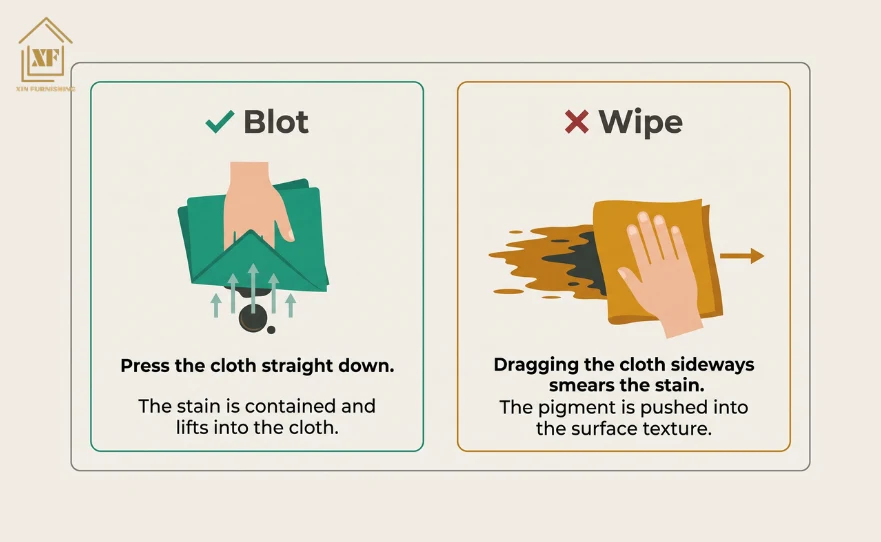
Wiping spreads a stain outward and works it into the surface texture. Press a dry cloth down, lift, repeat with a clean section.
Test in a hidden spot
Inside a wardrobe, behind a door, under the sofa. Try every treatment below there first, especially on dark or matt finishes.
Never soak the floor
The plank surface is waterproof, but pooling water at the joints for hours is not something to invite. Damp cloth, not wet.
One more thing on products: look for a cleaner labelled pH-neutral and rated for vinyl, LVT or SPC. If indoor air quality matters to you, check whether it carries a low-emission certification such as UL GREENGUARD.
Stain Removal By Type
Find your stain below. Each method starts with the gentlest approach, so try it before reaching for anything stronger.
Here’s the whole section rewritten with the label folded into the opening sentence.
Food, drink and kitchen stains
Coffee, tea, wine and soft drinks are the most common spills, and the easiest to deal with if you catch them early. Blot up what you can, then clean with a cloth dampened in warm water with a drop of dish soap. Rinse with clean water and dry. If the mark has already dried on, make a paste of baking soda and water, apply it with a soft cloth, work gently in small circles, then wipe clean.
Curry and turmeric stain light floors because the pigment binds fast, and speed matters more than technique. Blot immediately, then go straight to baking soda paste. If a yellow shadow remains, dab it with isopropyl alcohol on a cloth. Do not scrub, which drives the pigment into the surface texture.
Soy sauce and other dark sauces behave like an ordinary food stain, but they need a more thorough rinse afterwards. The salt content leaves a residue that attracts dirt if you leave it behind.
Cooking oil and wok grease build up gradually near the stove rather than arriving as a single spill, so you often notice it as a dull patch rather than a mark. A few drops of dish soap in warm water cut through it. Rinse with clean water afterwards so no soap film is left, since that film is what makes a floor look dull in the first place.
Ink, dye and cosmetic stains
Ink and marker need dabbing rather than rubbing, because rubbing spreads the pigment outward. Dampen a cloth or cotton ball with isopropyl alcohol and work from the edge of the mark inward. Wipe with a damp cloth afterwards and dry.
Hair dye is the most urgent stain on this list, because the pigment is engineered to bond and it does so quickly. Blot immediately and treat with isopropyl alcohol within minutes. If left to dry, it can become permanent.
Nail polish should be blotted and then treated with isopropyl alcohol, never with acetone or nail polish remover. Acetone can soften the wear layer and leave a dull or tacky patch, which is one of the few cases where the removal product does more damage than the stain.
Lipstick and makeup usually lift with mild dish soap, and isopropyl alcohol handles whatever is left behind.
Wax, gum and sticky residue
Candle wax and joss stick wax should harden completely before you touch them. Warm the hardened wax with a hairdryer on its lowest setting, held a hand’s width away, then lift it with a plastic card or a soft cloth. Clean the area afterwards with mild soap and water.
Chewing gum needs the opposite approach, so harden it with ice in a bag rather than warming it. Lift the edge with a plastic scraper, never a metal one, then treat any residue with isopropyl alcohol.
Tape and sticker residue comes away most easily with gentle heat. Warm it with a hairdryer on low, peel slowly, then wipe the adhesive film with a cloth dampened in isopropyl alcohol.
Pet accidents and odours
Blot pet urine immediately, because the longer it sits, the more likely it is to work into the joints, where the smell persists even after the surface looks clean. Clean with a pH-neutral floor cleaner and rinse.
If the odour lingers after cleaning, use an enzyme cleaner that states it is safe for vinyl, since enzymes break down the compounds causing the smell rather than masking them. If the smell keeps returning, it has reached the joints or the subfloor, and that is a repair question rather than a cleaning one.
Mud, grit and rust
Leave monsoon mud to dry completely before you touch it, because wet mud smears and pushes grit into the surface texture. Once dry, vacuum it up and then damp mop. On wood-look planks with an embossed grain, a soft nylon brush lifts what settles into the texture.
Rust marks usually come from metal furniture legs, a metal shoe rack, or a tool left on a damp floor, and they lift more easily than they look, since rust sits on the surface rather than dyeing it. Start with mild dish soap and a soft brush, working gently in small circles. If that fails, apply a baking soda paste with a soft cloth, leave it a minute, then wipe clean and rinse.
You will find guides recommending lemon juice and salt left on the mark for ten to fifteen minutes. It works, but it means leaving an acid on your wear layer, and on a matte finish that can leave a dull patch. We would rather replace a plank than dull a whole area.
What Never To Use On Vinyl, And Why
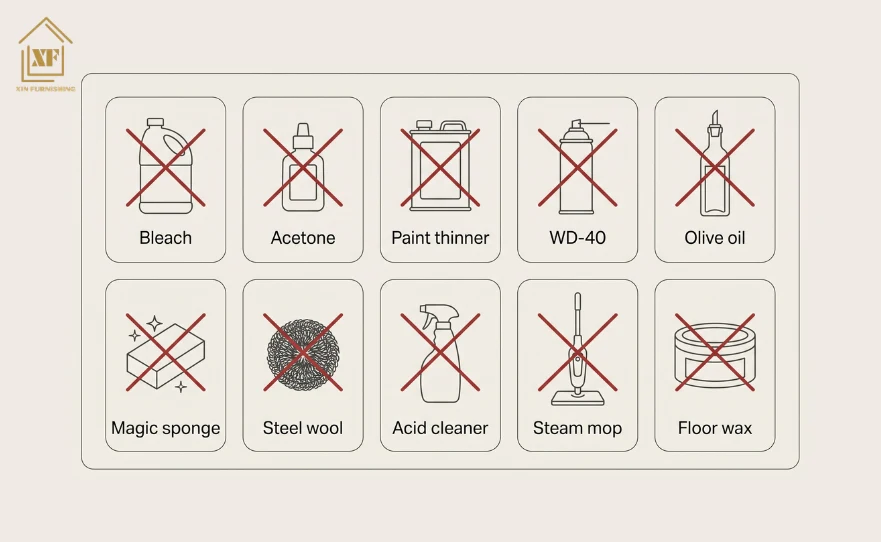
One thing worth knowing: most warranties, ours included, exclude damage caused by solvents, abrasives and steam. Removing a stain the wrong way can cost you more than the stain would have.
What To Do When A Stain Is Permanent
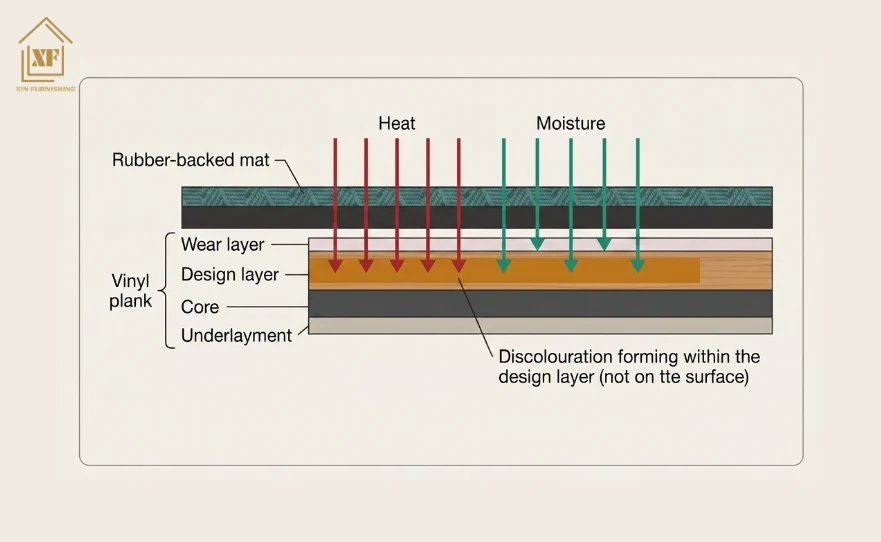
Some marks cannot be removed by anything, because they are not on the floor. They are in it.
Rubber and latex mat backing is the most common cause, and the most misunderstood. Heat and moisture trigger a reaction between the rubber and the vinyl, discolouring the plank from within. The result is a yellow patch in the exact shape of the mat. Scrubbing does nothing, because the change is inside the material.
Use cotton, wool or felt-backed mats instead, and check under any rubber-backed mat already down.
Dye transfer from cheap rugs works the same way, so a dark rug on a light floor can migrate colour into the plank.
Hair dye, nail polish and permanent marker are sometimes recoverable within minutes, but rarely once dry.
Sun fading around a rug or sofa isn’t a stain, so nothing lifts it. The covered area has simply aged less than the rest.
You can replace the affected planks individually. We offer this as a repair service, and we can usually swap one or two planks without disturbing the rest of the room. If you kept spares from the original installation, the colour match will be exact, which is why it is worth asking any supplier to leave you spare planks from the same batch.
How To Prevent Stains On Vinyl Plank Flooring
- Cotton or wool mats at every entrance. Never rubber-backed.
- Wipe spills within minutes. This one habit prevents most of the stains above.
- Check under mats and rugs every few months, especially in sunny or damp spots.
- Use felt pads under furniture legs to prevent rust marks from metal feet.
- Keep spare planks from your original batch, stored flat and in a dry place.
- Follow a proper weekly routine. Sweeping or vacuuming keeps grit off the surface, and a weekly damp mop with a pH-neutral cleaner lifts residue before it sets into the texture. Our guide covers how to clean vinyl floors in full.
Frequently Asked Questions
Does vinegar remove stains from vinyl flooring?
Diluted white vinegar works on mould and mildew marks. It is acidic, so rinse with clean water afterwards and avoid using it regularly, since repeated use can dull some finishes. For everyday cleaning, a pH-neutral cleaner is the safer choice.
Can I use baking soda on vinyl plank flooring?
Yes, as a paste with water, applied with a soft cloth for spot treatment only. It is mildly abrasive, so don’t use it across the whole floor or scrub hard.
Why is my vinyl floor turning yellow in patches?
Usually a rubber-backed mat or rug. Heat and moisture cause a reaction between rubber and vinyl that discolours the plank from inside. You can’t clean it off, and you’ll need to replace the affected planks.
How do I remove a stain that has been there for months?
Start with soapy water, then baking soda paste, then isopropyl alcohol. If none of it shifts the mark, it has likely changed the material rather than sitting on it, and plank replacement is the answer.
Will stain removal void my flooring warranty?
Gentle methods will not. Solvents, abrasive pads and steam mops are common warranty exclusions, so check your terms before using anything stronger than isopropyl alcohol.
What is the difference between a stain and a scratch?
A stain is a colour change you can sometimes lift. A scratch is physical damage to the wear layer, which needs a different approach. Our guide covers how to remove scratches from vinyl flooring.