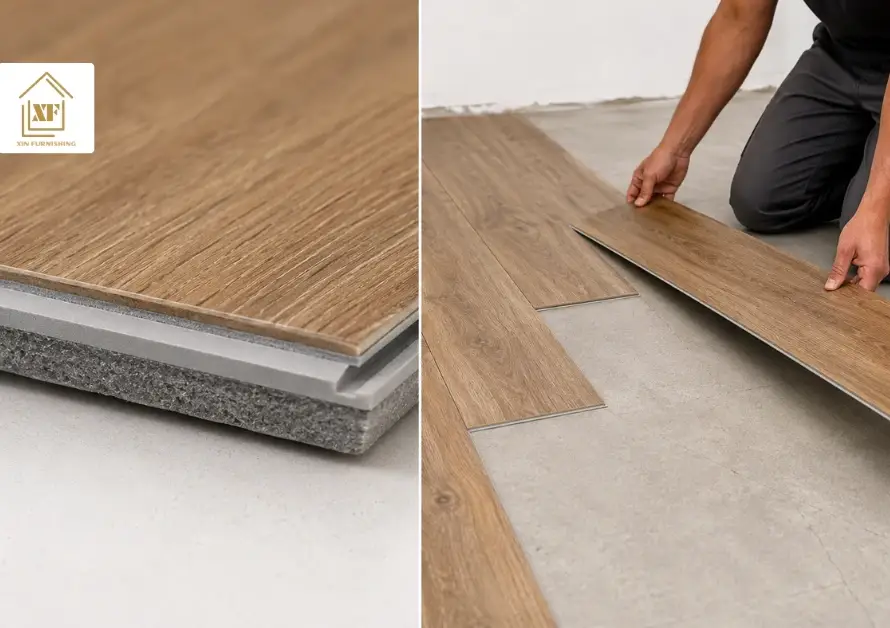
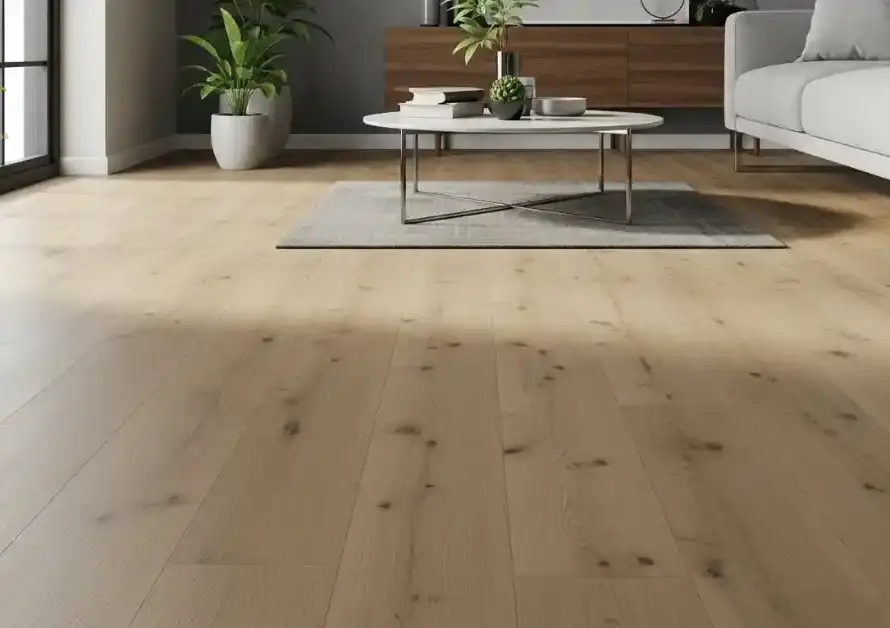
Vinyl flooring is easy to live with. It is waterproof, scratch-resistant, and quick to clean. But the wrong mop or cleaner dulls it fast. This guide shows you how to clean vinyl floors safely, how often to do it, and what to avoid in a humid Singapore home.
How To Clean Vinyl Floors? The Short Answer
First, remove loose dirt with a soft broom, a dust mop, or a vacuum on hard-floor mode. Then mop with lukewarm water and a pH-neutral vinyl cleaner, using a well-wrung microfibre mop. Dry any wet patches straight away. Never use steam, bleach, wax or abrasive pads.
That simple routine keeps most vinyl floors looking new for years. The rest of this guide covers the details.
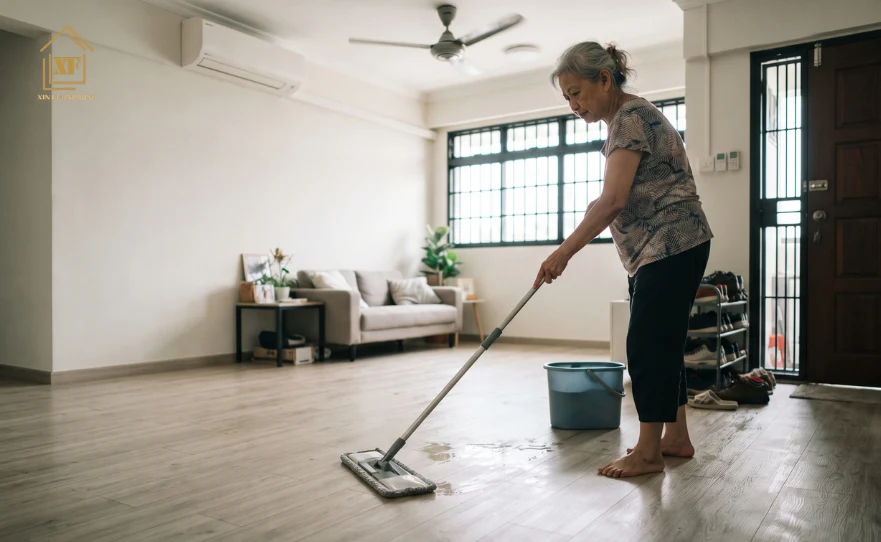
What You Need Before You Start Cleaning
- A soft-bristle broom or dust mop
- A vacuum with a hard-floor setting (beater bar off)
- A flat microfibre mop with spare pads
- A pH-neutral vinyl floor cleaner, made for vinyl, LVT or SPC
- A bucket or spray bottle
- Soft cloths for spot cleaning
- A soft nylon brush for textured surfaces
Skip products made for tiles, marble or timber. They often contain acids, oils, or wax that vinyl doesn’t need. Not sure which bottle to pick? Our guide to the best cleaning products for vinyl floors covers what to buy and what to avoid.
Visit our premium vinyl flooring collection (2026), ready to install.
The Right Way To Clean Vinyl Flooring: Step-By-Step
Step 1: Clear the floor
Move chairs, rugs, shoe racks and pet bowls out of the way. Lift furniture instead of dragging it. Dragging is the most common cause of scratches we see on site.
Step 2: Remove dust and grit
Sweep or vacuum the whole floor. Grit acts like sandpaper under shoes and chair legs. Work from the far corners towards the door. Run the vacuum along the skirting and over the plank edges, where dust collects in the bevels.
Step 3: Mix a gentle cleaning solution
Add a pH-neutral vinyl cleaner to a bucket of lukewarm water. Follow the dilution on the label. More cleaner does not mean a cleaner floor. Too much leaves a sticky film that attracts dirt.
Step 4: Mop with a damp mop, not a wet one
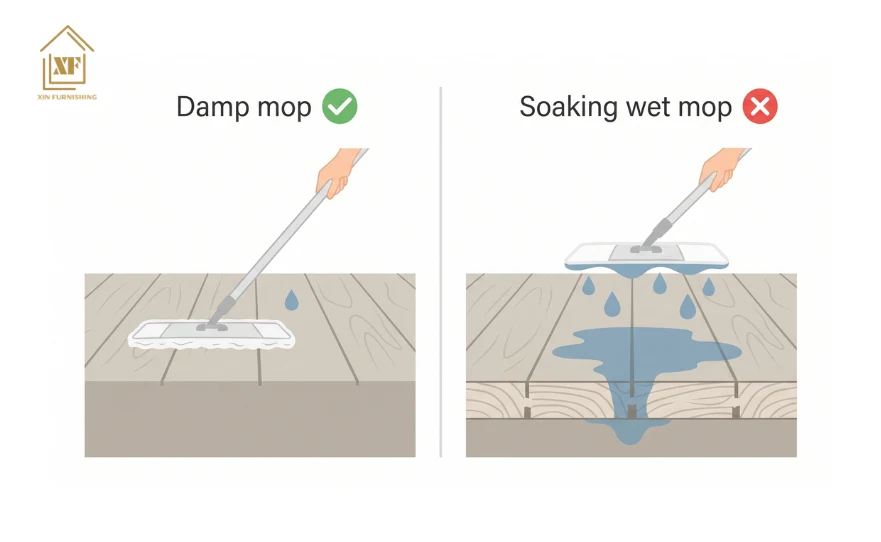
Dip the microfibre pad, then wring it until it only feels damp. Mop in the direction of the planks. Rinse the pad often, and change the water when it turns grey.
Vinyl is waterproof on the surface. Even so, avoid leaving pools of water at the joints or along the walls for hours.
Step 5: Rinse if you see residue
If the floor feels tacky or shows streaks, do a second pass with clean water only. This matters most on dark, matte finishes.
Step 6: Dry the floor and put everything back
Wipe any wet spots with a dry microfibre cloth. Let the floor air-dry for 10 to 15 minutes. On humid days, turn on the fan or air-con to speed it up. Then return the furniture, with felt pads under every leg.
How Often Should You Clean Vinyl Floors?
Homes with young kids, pets or open kitchens may need to mop twice a week.
Wood, Stone Or Microcement Vinyl: Does The Finish Change The Routine?
The routine stays the same. The details change slightly with the surface texture.
Wood-look vinyl
Wood designs have an embossed grain that feels like real timber. Fine dirt can settle into that texture. Mop along the grain, and use a soft nylon brush monthly to lift what the mop misses. Our wood vinyl flooring uses a textured grain finish that hides everyday marks well.
Stone and marble-look vinyl
Stone designs come in tile-sized planks with bevelled edges. Crumbs gather in those edges, so vacuum them first. Light marble shades show footprints faster, so a quick mid-week mop keeps them bright. Browse our stone vinyl flooring range for easy-care marble and stone looks.
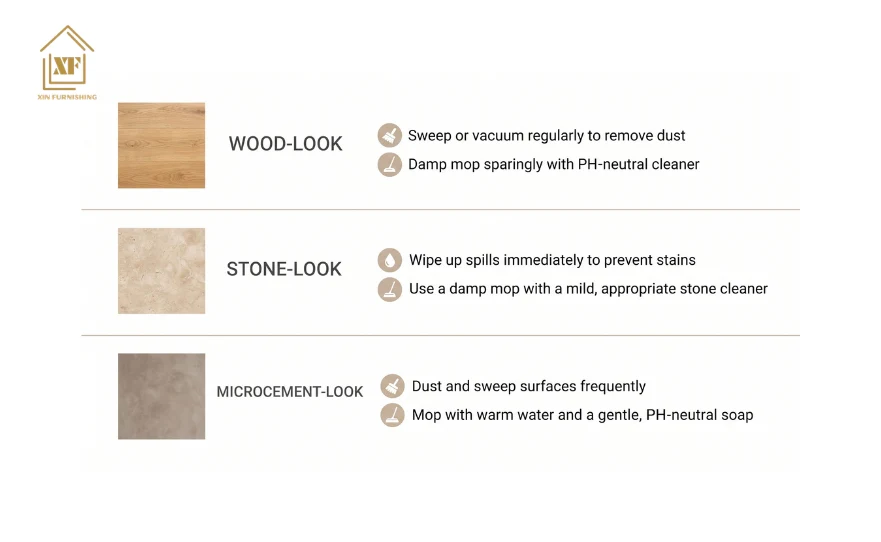
Microcement-look vinyl
Smooth, matt concrete finishes show streaks more than patterned designs do. Use less cleaner and always finish with a clean-water rinse. Dry with a flat microfibre pad for an even look. Our microcement vinyl flooring gives you the seamless concrete look without the upkeep of real microcement.
What Should You Never Use On Vinyl Flooring?
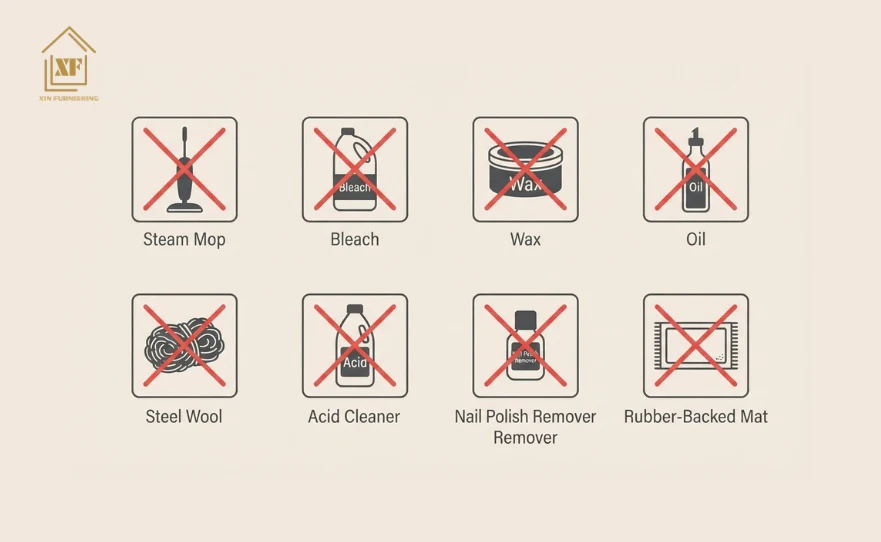
- Steam mops
- Bleach or ammonia-based cleaners
- Wax, polish or “shine” products, which build up and turn cloudy
- Oil soaps or baby oil, which leave a slippery film
- Steel wool, scouring powder or abrasive pads
- Acid-based tile, grout or marble cleaners
- Undiluted vinegar
- Acetone or nail polish remover
- Rubber or latex-backed mats, which can stain vinyl yellow over time
- Soaking-wet mops or buckets of water poured onto the floor
What Are The Quick Fixes For Scuffs And Marks
Black scuff marks
Rub gently with a clean tennis ball or a soft white eraser. For stubborn scuffs, apply a paste of baking soda and water with a soft cloth, then wipe clean.
Ink and marker
Dab a little isopropyl alcohol onto a soft cloth and gently work it into the mark. Test it on a hidden spot first.
Sticky residue from tape or stickers
Warm it with a hairdryer on low, peel it slowly, and wipe away what’s left with a damp cloth.
For coffee, wine, rust and other tough marks, follow our guide on how to remove stubborn stains from vinyl plank flooring.
How To Make Your Vinyl Floor Last Longer
Protect it from furniture
Put felt pads under every leg. Use a clear chair mat under office chairs with casters. Workplaces face heavier daily wear, and our guide to commercial vinyl flooring covers how to plan for it.Control strong sunlight
Afternoon sun through large windows can fade any floor over time. Blinds or UV film help, especially in west-facing units.Keep shoes at the door
Most Singapore homes already do this, and it is the single best way to keep grit off the floor.Follow your care guide
Our floors have a 0.5 mm wear layer that protects the design underneath. Gentle cleaning keeps that layer intact and keeps your 15-year residential warranty valid.
Frequently Asked Questions
What is the best cleaner for vinyl floors?
A pH-neutral cleaner made for vinyl, LVT or SPC floors. It lifts dirt without attacking the protective top layer. Mix it with lukewarm water at the dilution shown on the label.
Can I clean vinyl floors with vinegar?
A weak vinegar solution occasionally won’t harm most vinyl floors. But vinegar is acidic, and regular use can dull some finishes. A pH-neutral vinyl cleaner is the safer everyday choice. If you use vinegar, dilute it well and rinse afterwards.
Is floor disinfectant safe for vinyl?
Most household floor disinfectants are safe when diluted as directed on the label. Avoid bleach-based products. Rinse with clean water afterwards to remove residue.
How do I make dull vinyl floors shine again?
Vinyl does not need polish. A dull floor usually has cleaner residue. Mop with clean, lukewarm water, then buff it dry with a microfibre cloth. The natural finish comes back.
Can vinyl flooring get wet?
Yes. Our vinyl floors are 100% waterproof on the surface, so spills and mopping won’t harm them. Still, wipe up standing water quickly, especially along the walls and at door thresholds.
How do I clean vinyl floors with grooves or texture?
Vacuum first to pull dirt out of the texture. Then gently scrub with a soft nylon brush and a pH-neutral cleaner, then rinse with clean water. Once a month is enough for most homes.
Can I use a robot vacuum on vinyl floors?
Yes. Robot vacuum-mops suit vinyl well, and they are now common in Singapore homes. Set yours to hard-floor mode and the lowest water flow, and use only the cleaning solution the manufacturer approves. Wash or replace the mop pads often, since dirty pads leave streaks and can smell, especially in humid flats. Cordless wet-dry vacuums also work well on the lowest water setting, with a soft roller.
Can I use a steam mop on vinyl floors?
No. Steam forces heat and moisture into the joints, which can weaken the click-lock system over time and dull the protective top layer. Many vinyl warranties exclude steam damage. A damp microfibre mop cleans just as well without the risk.